SOUTH24 CENTER FOR NEWS & STUDIES
SOUTH24 CENTER FOR NEWS & STUDIES


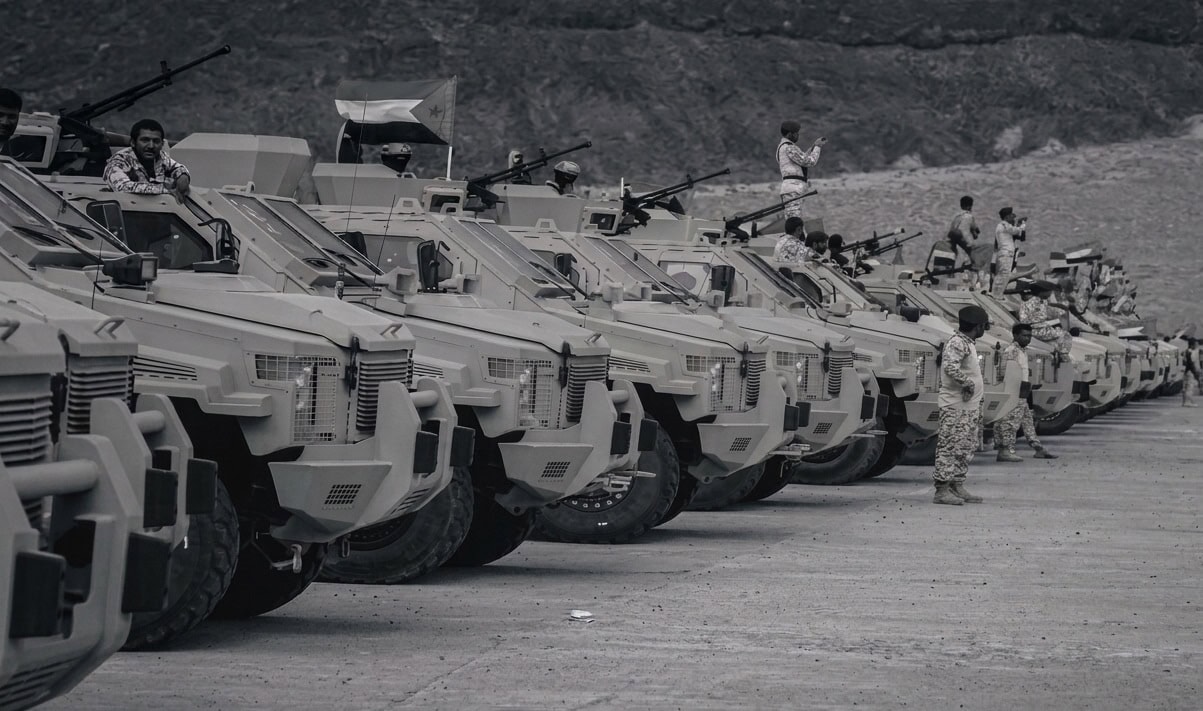
Southern Armed Forces (Deraa Aljanoob (South Shield)
21-04-2026 at 10 PM Aden Time

Abdullah Al-Shadli (South24 Center)
Since early December 2025, the contours of a new security landscape have begun to take shape in South Yemen, driven by a series of rapid developments that have gone beyond the redeployment of military forces to directly impact one of the most sensitive files of the past decade: counterterrorism.
On December 3, Southern forces affiliated with the Southern Transitional Council entered Wadi Hadramout as part of “Operation Promising Future.” At the time, the move appeared to be a natural continuation of a long trajectory of operations led by these forces, with regional backing, which had contributed to reducing Al-Qaeda’s in the Arabian Peninsula (AQAP) influence and weakening its field structure in key governorates such as Abyan, Shabwa, and Hadramout.
During this deployment, Southern forces began targeting illicit funding sources linked to smuggling networks and armed groups. On December 24, the 5th Support and Reinforcement Brigade announced the seizure of four illegal oil refining sites in the Al-Khashaa area of Wadi Hadramout. The operation was described as targeting networks working outside official frameworks, amid accusations that these sites served as a source of funding for extremist groups, alongside possible links to broader smuggling operations.
However, this field progress proved short-lived. Early January 2026 marked a sharp turning point, as Southern forces’ positions in Hadramout and Al-Mahra came under Saudi airstrikes, coinciding with movements by Riyadh-backed forces. This ultimately led to the withdrawal of Southern forces from their deployment areas after a presence that lasted no more than one month.
This shift coincided with a broader restructuring of regional oversight of the security file. UAE teams withdrew from positions considered among the most sensitive in counterterrorism operations, including the “Murra” base in Shabwa and Al-Rayyan International Airport in Mukalla. These sites had served for years as key hubs for managing security and intelligence operations against AQAP. The withdrawal came at the request of the Yemeni government and under Saudi pressure. Meanwhile, Saudi Arabia’s role expanded, with the deployment of “Nation’s Shield” forces and Yemeni emergency units into Wadi Hadramout and Al-Mahra in early January.
Amid this rapid transformation, signs of a security vacuum have emerged almost immediately. On January 4, 2026, Mukalla and the vicinity of Al-Rayyan Airport witnessed looting and chaos affecting military camps, weapons depots, and sensitive sites. Local reports indicated the involvement of armed elements arriving from Marib, alongside tribal groups and civilians, in seizing weapons and equipment. According to informed sources speaking to South24 Center, some of these weapons are believed to have later reached AQAP strongholds in Wadi Obaida in Marib via tribal intermediaries and smuggling networks, reviving concerns over the proliferation of weapons outside state control and their potential reuse in extremist activities.
At the same time, measures taken by Presidential Leadership Council member and Hadramout governor Salem Al-Khanbashi, in coordination with Yemeni Defense Minister Taher Al-Aqili, targeted hundreds of soldiers from the Barashid Brigade in Mukalla, one of the strongest Hadrami Elite units that defeated AQAP in 2016 and expelled it from the Hadramout coast. The measures included the dismissal of around 1,500 officers and soldiers from southern governorates and extended to include the Security Support Battalion that had also been deployed in Mukalla.
Security indicators also expanded to other areas. In January, Al-Mahra governorate witnessed a drone strike targeting a Somali national believed to be affiliated with Al-Shabaab (Al-Qaeda’s branch in Somalia), in a relatively rare incident reflecting growing concerns that these areas could become transit corridors for cross-border networks, particularly given the open geography of coastlines and land crossings.
Abyan governorate، long one of the main arenas of confrontation with AQAP, also returned to the spotlight. In early April, Hussein Al-Maisari, head of the Southern Transitional Council in Mudiyah district, survived an assassination attempt but later died from his injuries, underscoring the fragility of the security situation in areas that had previously seen a notable decline in militant activity.
In this interconnected context, these developments are no longer viewed as isolated incidents, but as part of a broader shift in the security environment in South Yemen. Between rapid military advances followed by sudden withdrawals, shifts in regional oversight, the departure of key counterterrorism actors, and the emergence of security gaps in critical locations, a complex picture is emerging—one that suggests the pressure system that had constrained AQAP’s activity in recent years is no longer functioning with the same effectiveness.
As these indicators grow, a central question arises: Is South Yemen witnessing a temporary repositioning within a broader struggle for influence, or does this mark the beginning of a real erosion in the counterterrorism architecture built over the past decade?
“Silent Reconstruction”
Assessing AQAP’s situation in South Yemen goes beyond the binary of “weakness” or “resurgence.” According to expert analysis, the group appears to be entering a more complex phase, one that can be described as a shift from sustained attrition to “silent reconstruction,” taking advantage of recent developments.
Over recent years, the organization suffered a series of heavy blows. Journalist and researcher on jihadist movements Asem Al-Sabri described these as “severe,” particularly strikes targeting its leadership, along with operations carried out by Southern forces with UAE support in Abyan and Shabwa, which significantly weakened its structure and created multiple crises, including security breaches and financial challenges.
However, this weakened state did not mark the end of the organization. Instead, according to Al-Sabri, it prompted a behavioral shift. Developments in South Yemen since December 2025 have provided the group with “an opportunity to reorganize its ranks and catch its breath,” benefiting from reduced security pressure and the distraction of competing political and military conflicts. He noted that this shift is reflected not only in improved internal cohesion but also in renewed recruitment efforts, particularly in Shabwa, Abyan, Marib, and Al-Bayda.
This assessment aligns with that of another researcher specializing in armed groups, who spoke anonymously due to the sensitivity of the file. He argued that the blows suffered by the organization did not fully dismantle it but rather reshaped its operational model. Under sustained pressure, the group reduced its visible presence and adopted more cautious movements—leading to the exposure and targeting of some of its leaders.
He emphasized that local forces in South Yemen played a direct role in weakening the organization and exposing its movements, enhancing the effectiveness of U.S. airstrikes that relied heavily on ground pressure. However, the problem now lies in the decline of operational tempo, creating a critical window that the group can exploit.
The researcher warned that “the suspension or slowdown of military and security campaigns provides the organization with a valuable opportunity to reorganize and regain some of its capabilities,” stressing that the danger lies not in an immediate resurgence, but in gradual rebuilding that may go unnoticed in its early stages.
Al-Sabri further noted that AQAP is not currently inactive out of weakness but is acting based on calculated tactical considerations. The group reportedly maintains a list of targets, including security and military figures, but has refrained from executing operations, not due to incapacity, but to avoid drawing attention or engaging in premature confrontation.
He added that the organization “does not seek to provoke a direct crisis with Saudi Arabia at this stage,” reflecting a more cautious approach focused on managing conflict rather than engaging in open confrontation.
Meanwhile, the researcher indicated that the group has already begun investing in capability development, particularly in training related to explosives and electronics, suggesting a shift from a phase of “survival” to one of “preparation.”
He also warned that the most dangerous aspect of this phase lies in the overlap between security dynamics and political calculations, cautioning that “the impact of political or economic disputes in freezing counterterrorism efforts represents a serious risk.”
He drew a parallel with a previous experience in Yemen, noting that what began as small outlaw groups in the mountains of Saada eventually evolved into a reality where the Houthis control northern Yemen and threaten international shipping, highlighting the risks of underestimating transitional phases in the evolution of armed groups.
He also pointed to “growing concerns about indirect intersections or enabling environments” involving the Houthis and extremist organizations in the region, including AQAP and Al-Shabaab, adding a regional dimension to the potential risks, even if such links remain indirect.
Regional Entanglement
Concerns about the future of counterterrorism in South Yemen extend beyond local field setbacks. Recent analyses from multiple research institutions suggest that the transformations since December 2025 could pave the way for a more complex threat landscape, one that goes beyond the traditional notion of an “AQAP resurgence.”
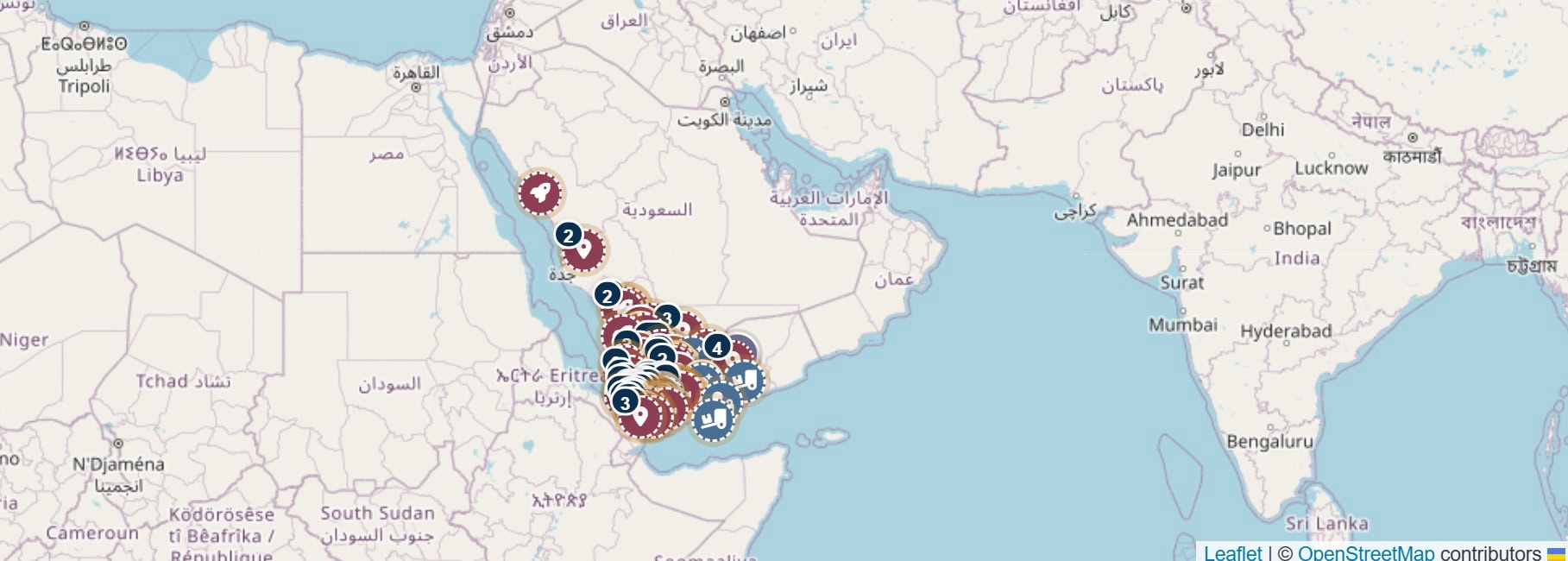
A January 15, 2026, report by ACLED on South Yemen noted that developments in Hadramout and Al-Mahra were not merely localized shifts, but part of a broader crisis reshaping the balance of power within the anti-Houthi camp, including areas previously associated with counterterrorism efforts.
Another ACLED report on AQAP’s “new normal” in Yemen concluded that the group has not been definitively defeated, but has demonstrated strategic continuity and adaptability, shifting toward a quieter, more flexible model that exploits local tensions and security gaps rather than engaging in direct confrontation.
A report by the Jamestown Foundation, published on April 17, adds another layer of analysis, linking internal Yemeni dynamics to growing pragmatic ties between the Houthis and AQAP, as well as connections with Al-Shabaab in Somalia. According to the report, these relationships are not ideological but transactional, involving arms transfers, smuggling routes, training, and drone components, expanding the issue from a local security vacuum to a potentially more complex regional network spanning the Gulf of Aden and the Horn of Africa.
This dimension is particularly relevant when considering eastern South Yemen, especially Al-Mahra, Hadramout, and Shabwa, not just as fragile security zones, but as potential transit corridors within cross-border smuggling networks.
Finally, a February 2026 report by Just Security noted that airstrikes against AQAP in Yemen are likely ongoing, but under a framework marked by increased ambiguity and reduced public transparency compared to previous periods. This suggests a shift in how counterterrorism is managed internationally: while it remains a priority, it is now conducted in a less coordinated and less transparent environment, adding further complexity to the overall landscape.
Previous article
Next article