SOUTH24 CENTER FOR NEWS & STUDIES
SOUTH24 CENTER FOR NEWS & STUDIES


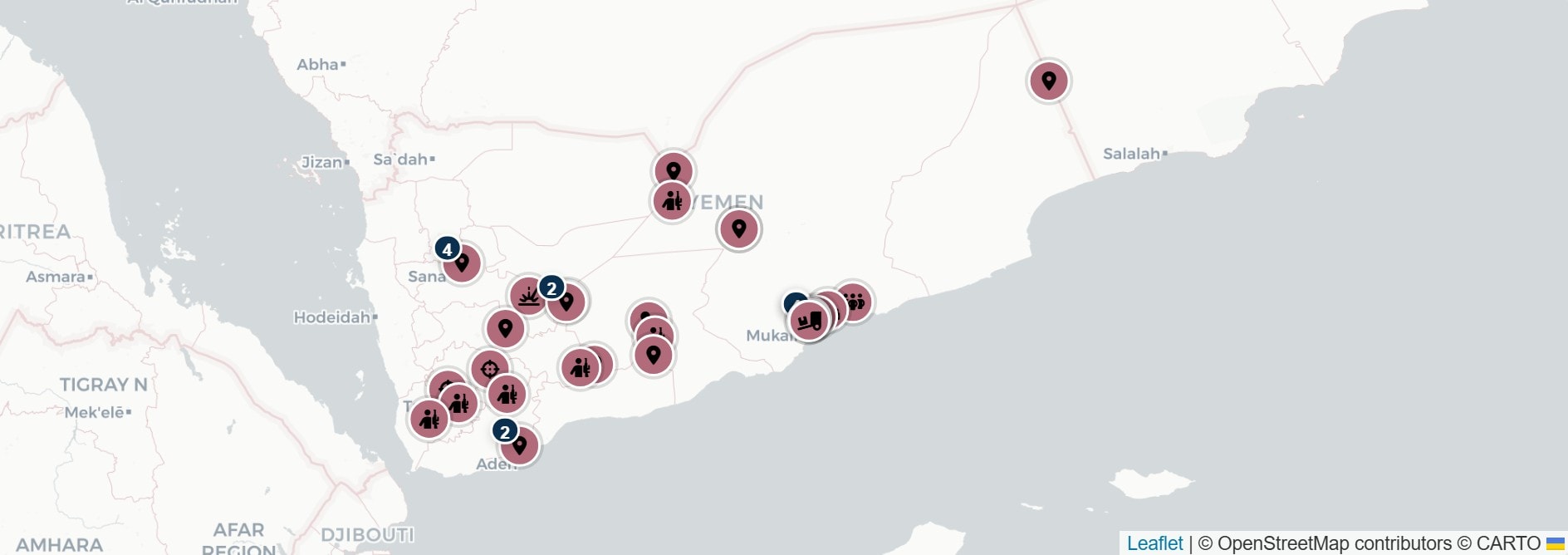
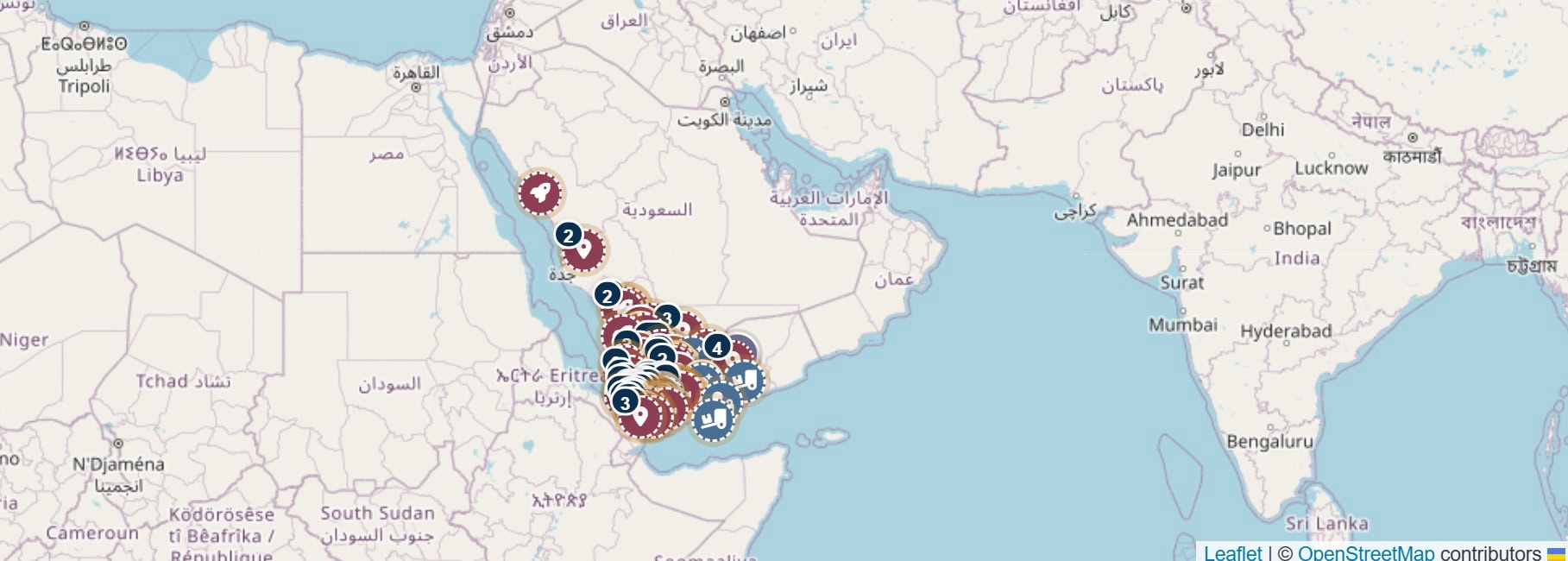
Interactive Map – By South24 Center © OpenStreetMap
18-04-2026 at 11 AM Aden Time

South24 | Aden
Several Yemeni governorates witnessed a notable escalation in security and military incidents between April 4 and 16, 2026, with a heavy concentration in Hadramout, which emerged as a primary hotspot for widespread security crackdowns linked to protests opposing Saudi-backed authorities.
According to field data collected by South24 Center, two people were killed and four others injured in the city of Mukalla on April 4 after security forces opened live fire to disperse a pro–Southern Transitional Council (STC) protest in the Khour Mukalla area. The city also saw a wide arrest campaign targeting dozens, including academics and journalists, some of whom were later released.
In Aden, the Criminal Prosecution issued a compulsory arrest order against Wadih Al-Halmi, Acting Secretary-General of the Southern Transitional Council, at the request of the governor and the security director.
STC spokesperson Anwar Al-Tamimi described the arrest warrant as an escalatory step lacking legal justification, framing it as part of what he called a political targeting of the council and its leadership.
Al-Tamimi said the council’s leadership was surprised by the order, suggesting it came in response to Al-Halmi’s political role in reorganizing the council’s internal structure and activating its institutions. He added that what he described as “enemies of the southern project” had failed to achieve their goals and resorted to pressuring influential leaders.
In Hadramout, a platoon commander from the “Nation Shield” forces was killed and five soldiers were injured on April 14 when their vehicle came under armed attack in the Al-Abr area. The governorate also witnessed other incidents, including armed robberies against travelers on the Al-Wadiah–Al-Abr road, seizures of weapons and ammunition shipments, and the disruption of smuggling attempts.
On the frontlines with the Houthi group, a southern forces soldier was killed on April 10 by Houthi sniper fire in the Al-Fakher front, north of Al-Dhalea.
In Shabwa, the Shabwa Defense Forces announced on April 6 that they had repelled a Houthi attack in the Al-Qawim front in Bayhan. On April 16, they reported the killing of one of their personnel following a Houthi drone strike targeting the same front. Civilian injuries were also recorded in tribal clashes in Wadi Yashbam in Al-Saeed district.
In Taiz, a 14-year-old boy was killed by a Houthi sniper in Al-Rawdah neighborhood on April 5. On the same day, a soldier was killed and three others injured in an attack targeting a security checkpoint in Al-Wazi’iyah district. On April 11, two soldiers were killed and three others injured while repelling a Houthi attack in the Al-Salou front.
In Abyan, clashes broke out in the city of Lawdar on April 9 between security forces and armed men. A soldier was injured during a security campaign in Al-Mahfad district on April 11. Meanwhile, Hussein Dahha Al-Maysari, head of the STC in Mudiya district, died from injuries sustained in a prior assassination attempt.
In Al-Bayda, Sheikh Mohammed Hussein Al-Masoudi, a member of the General People’s Congress permanent committee, was killed on April 12 in an assassination in front of the Radaa court building.
In parallel, the Houthi group announced carrying out missile and drone attacks targeting Israel, including Ben Gurion Airport and the city of Eilat, alongside claims of dismantling espionage cells in Sanaa.
These developments reflect a clear overlap between internal unrest and military escalation, with continued attacks on frontlines and tightened security measures in major cities, pointing to a complex and fluid security landscape across multiple regions.
For detailed event breakdowns and their geographic distribution, readers can explore South24’s interactive map below.
Next article