SOUTH24 CENTER FOR NEWS & STUDIES
SOUTH24 CENTER FOR NEWS & STUDIES


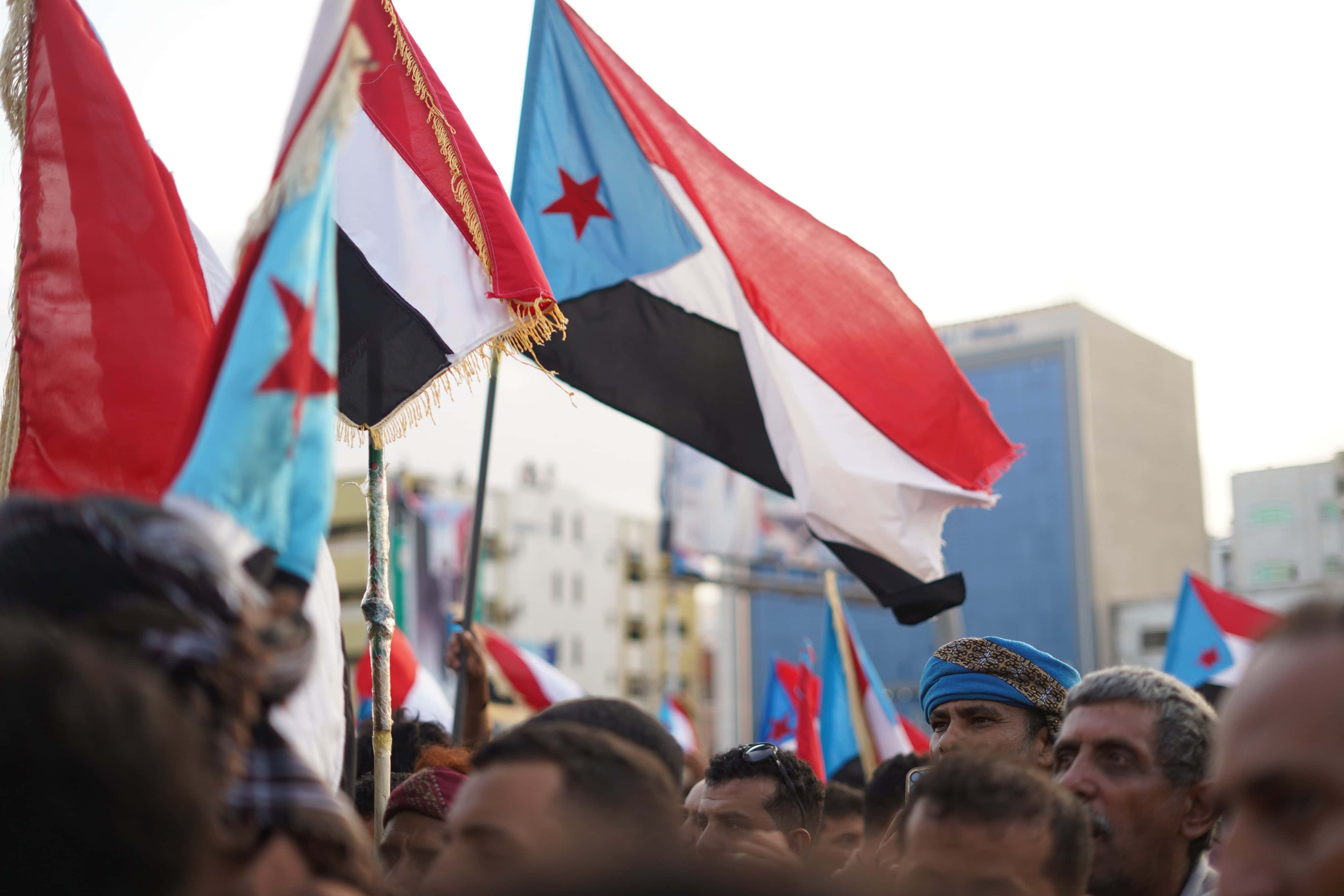
Photo of South24 Center, Aden Khormaksar, December 21, 2025
29-12-2025 at 3 PM Aden Time

Karen Dabrowska (South24 Center)
Elvis Presley’s song It’s Now or Never serves as a warning to the head of the Southern Transitional Council (STC), Aidarus Al-Zubaidi: if he does not declare independence for South Yemen now, the opportunity may be lost forever.
The STC has operated within the Internationally Recognised Government (IRG), a body that has proved wholly unfit for purpose. Established in 2022, the IRG is a loose coalition of rivals with competing agendas. It lacks cohesion, is entirely dependent on Saudi Arabia, and is incapable of governing those parts of Yemen not controlled by the Houthis. The currency has collapsed, inflation is rampant, salaries go unpaid, coordination with humanitarian and development agencies is weak, and there is little effective oversight of ports, customs, or oil and gas revenues.
In 2011, Yemen’s future appeared promising. The Arab Spring protests against corruption and economic hardship forced long-time president Ali Abdullah Saleh to step down under a Gulf-brokered deal, leading to the appointment of Abdrabbuh Mansur Hadi as transitional president. Yet Hadi’s government quickly became bogged down by stalled reforms and factional paralysis.
This vacuum allowed the Houthis—a Zaydi Shia movement from northern Saada province—to seize Sanaa in 2014 with backing from Saleh loyalists. Hadi fled first to Aden and then to Saudi Arabia, prompting Riyadh to form a military coalition in March 2015, strongly supported by the UAE. The coalition sought to restore Hadi’s government and counter Iran’s growing influence through the Houthis. Although Aden was recaptured, the war settled into a brutal stalemate. Houthi resilience and Saleh’s assassination in 2017 enabled the Houthis to consolidate control over the north, including Sanaa and the critical port of Hudaydah.
From the beginning, fractures plagued the anti-Houthi camp. The UAE, prioritising Southern security and the fight against jihadist groups such as Al-Qaeda in the Arabian Peninsula (AQAP), backed Southern activists who formed the Southern Transitional Council in 2017 after Hadi dismissed Aden’s governor, Aidarus Al-Zubaidi. The move sparked mass protests and drove Southern political forces to rally behind the STC under Al-Zubaidi’s leadership.
It soon became clear that long-standing Southern grievances stemming from the 1990 unification—marginalisation, land confiscations, exclusion from power, and economic neglect—were not being addressed by the IRG. Conditions deteriorated further. Aden, once a major commercial hub of the Arabian Peninsula, now faces a slow economic implosion. Salaries have disappeared, the currency is collapsing, and living costs rise relentlessly. Most southerners have concluded that restoring the independent South Yemen state that existed from 1967 to 1990 is the only viable path for the southern governorates outside Houthi control.
In 2019, fighting erupted in Aden as STC forces expelled Hadi loyalists and Saudi-backed Islah Islamists, leading to the Riyadh Agreement on power-sharing. The creation of the Presidential Leadership Council (PLC) in 2022, with Al-Zubaidi appointed vice president, was intended to unify the coalition. Instead, it papered over fundamental divisions. Supported by the United Nations, the PLC continued to cling to the vision of a unified Yemen, while the STC pressed for southern self-determination.
A fragile balance was maintained through UN-brokered truces and Saudi-Houthi backchannel talks that swapped airstrikes for fuel access, reducing major violence. That calm collapsed in late November when the Saudi-aligned Hadramaut Tribal Alliance seized Yemen’s largest oil company, PetroMasila, demanding a greater share of revenues from the PLC for local services.
The STC grew increasingly alarmed by what it described as lawlessness in Hadramaut and the persistent presence of extremist groups such as AQAP and the Islah Party—Yemen’s Muslim Brotherhood affiliate—linked to Houthi weapons and drug smuggling networks.
In response, the STC launched the “Promising Future” offensive on 3 December, capturing much of Hadramaut province, including Mukalla port and key oil facilities. It then moved into neighbouring Mahra, seizing a strategic border crossing with Oman, and took control of the presidential palace in Aden, the nominal headquarters of the PLC.
The STC now controls nearly 90 percent of South Yemeni territory, most of Yemen’s oil production, and vital ports such as Aden. The revenues generated far exceed the PLC’s budget and provide the STC with the means to establish parallel governing institutions in the South.
On 17 December, southern federations, unions, and civil society groups—316 organisations in total—urged Al-Zubaidi “to respond to the will of his people and take the historic decision to declare the State of South Arabia within its internationally recognised borders prior to 1990.” On 21 December, several ministries and government bodies in Aden announced their support for the STC’s expansion and “the aspirations of the people of the South.” As the South Yemeni flag was raised across the region, thousands filled the streets demanding independence.
“The STC didn’t consult anyone—not the Saudis and not the Emiratis—they simply moved ahead,” said a long-time observer of Yemeni politics.
The United Nations, lacking the leverage to manage this multi-layered crisis, and the PLC responded as they have since the Houthis seized power: by ignoring realities on the ground. On 23 December, the Security Council reiterated its “strong commitment to the unity, sovereignty, independence and territorial integrity of Yemen,” and to the PLC and the Government of Yemen.
When Saudi Arabia launched airstrikes against STC positions in Hadramaut on 26 December, the IRG—apparently oblivious to the overwhelming Southern support for the STC—called on the Saudi-led coalition to back its forces there. Around 15,000 Saudi-backed Yemeni fighters have since gathered along the edges of STC-controlled territory near the Saudi border. Undeterred by Saudi strikes and demands to withdraw from Hadramaut and Mahra, the STC has insisted it will continue its campaign to restore an independent South. A new reality has been created on the ground, and the moment has arrived to declare independence and end a stalemate that has crippled development in non-Houthi areas for 15 years.
Yemen is a broken state. Saleh looted the south after unification, planting the seeds of failure. His successor, Hadi, proved largely incompetent, exacerbating the crisis through decisions such as splitting the central bank. The Saudi-dominated PLC is paralysed by infighting and indecision. The STC’s vision—of a South unified under a single leadership, shielded from the Houthis, able to harness oil and gas revenues, and capable of building a stable state—offers the only realistic future for South Yemen.
Following a declaration of independence, a unified administration will be essential to prevent simmering internal disputes from undermining this historic step. An inclusive conference in Aden, bringing together all political forces, is necessary to agree on a transitional authority until elections can be held. As a transitional body, the STC has a critical role to play in guiding this process. South Yemen faces only two choices: independence or continued descent into chaos.
Declaring independence now would shift the south from a reactive posture to a proactive one, enabling it to shape its destiny rather than bargain for survival within a collapsing system. It would clarify authority, strengthen governance, preserve unity, and establish the South as a credible regional and international actor. In a conflict marked by missed chances, failing to seize this moment would be a grave error for Al-Zubaidi. It is now—or never.