SOUTH24 CENTER FOR NEWS & STUDIES
SOUTH24 CENTER FOR NEWS & STUDIES


Credit: Saleh Al-OBEIDI / AFP via Getty Images
Last updated on: 13-02-2026 at 10 AM Aden Time
Dr. Abdul Galil Shaif
For months, South Yemen’s political future has been confined to competing narratives: one of imminent statehood whispered by some Southern figures, and another of rising Saudi influence dressed as a negotiated settlement. The gulf between these narratives — between rhetoric and reality — is now impossible to ignore.
Despite proclamations from external actors that progress is underway, events on the ground tell a starkly different story. What Riyadh presents as a “Southern conference” or dialogue track is not a genuine South–South political process but rather a managed gathering aimed at compelling Southerners to accept a new political and military reality: deeper Saudi control and a weakened internationally recognised Yemeni government. Crucially, serious discussion of Southern independence is absent from the agenda.
Even more concerning is the side-lining — some would say the contested dissolution — of the Southern Transitional Council (STC), historically the most organised and popular political entity representing Southern aspirations. In January 2026, a Saudi-facilitated announcement declared that the STC had disbanded following talks in Riyadh — a claim that was immediately rejected by STC spokespeople and described as made under pressure.
Long-Held Grievances and Broad Popular Support
Southern grievances are neither abstract nor rhetorical. They are rooted in blood, displacement, and loss. Tensions escalated sharply in late 2025 when the STC advanced into Hadramout and al-Mahra provinces, seizing territory that includes key oil resources and strategic points. Riyadh viewed these moves as a threat to its security and responded with military pressure to push STC forces back.
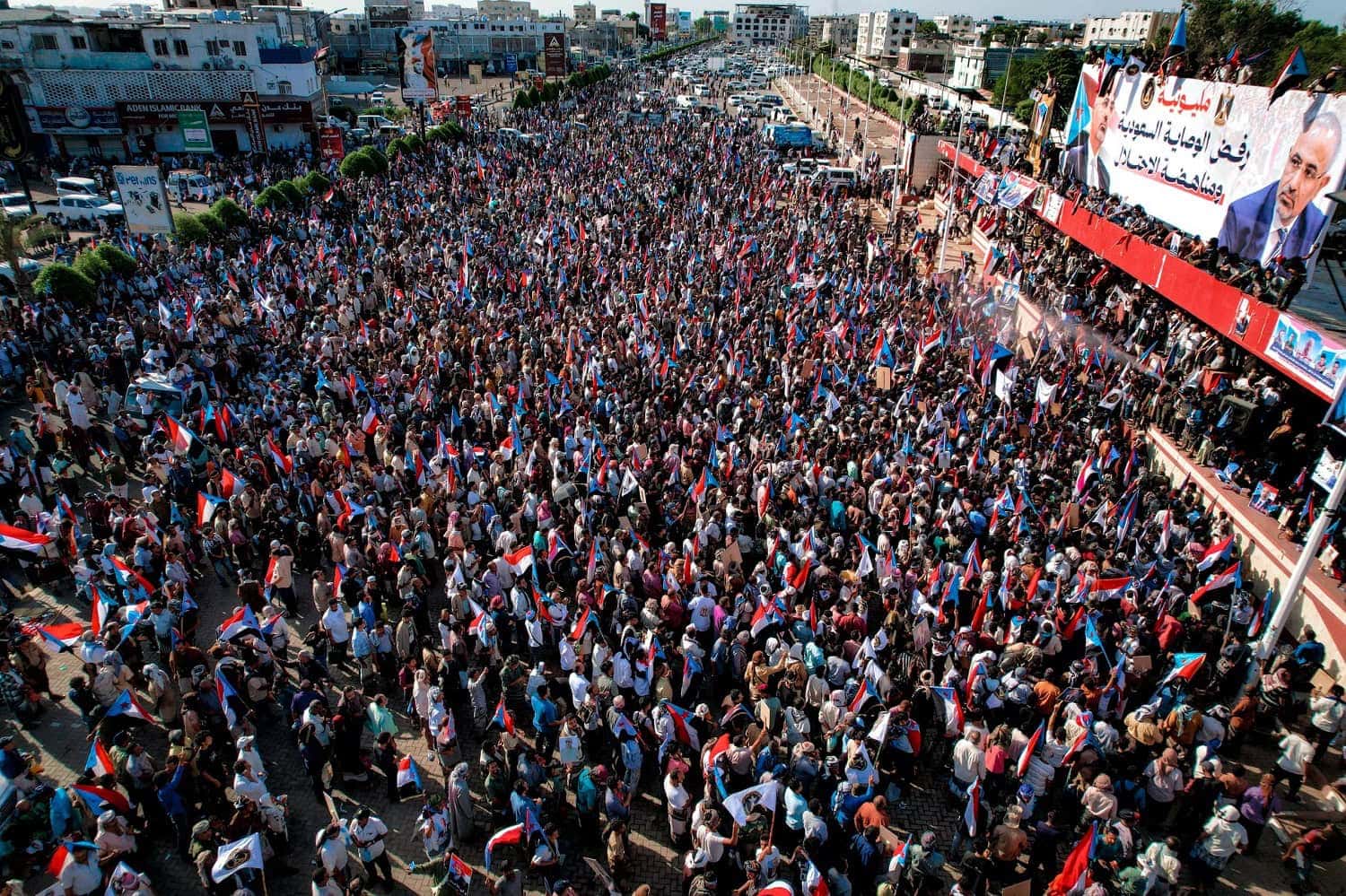
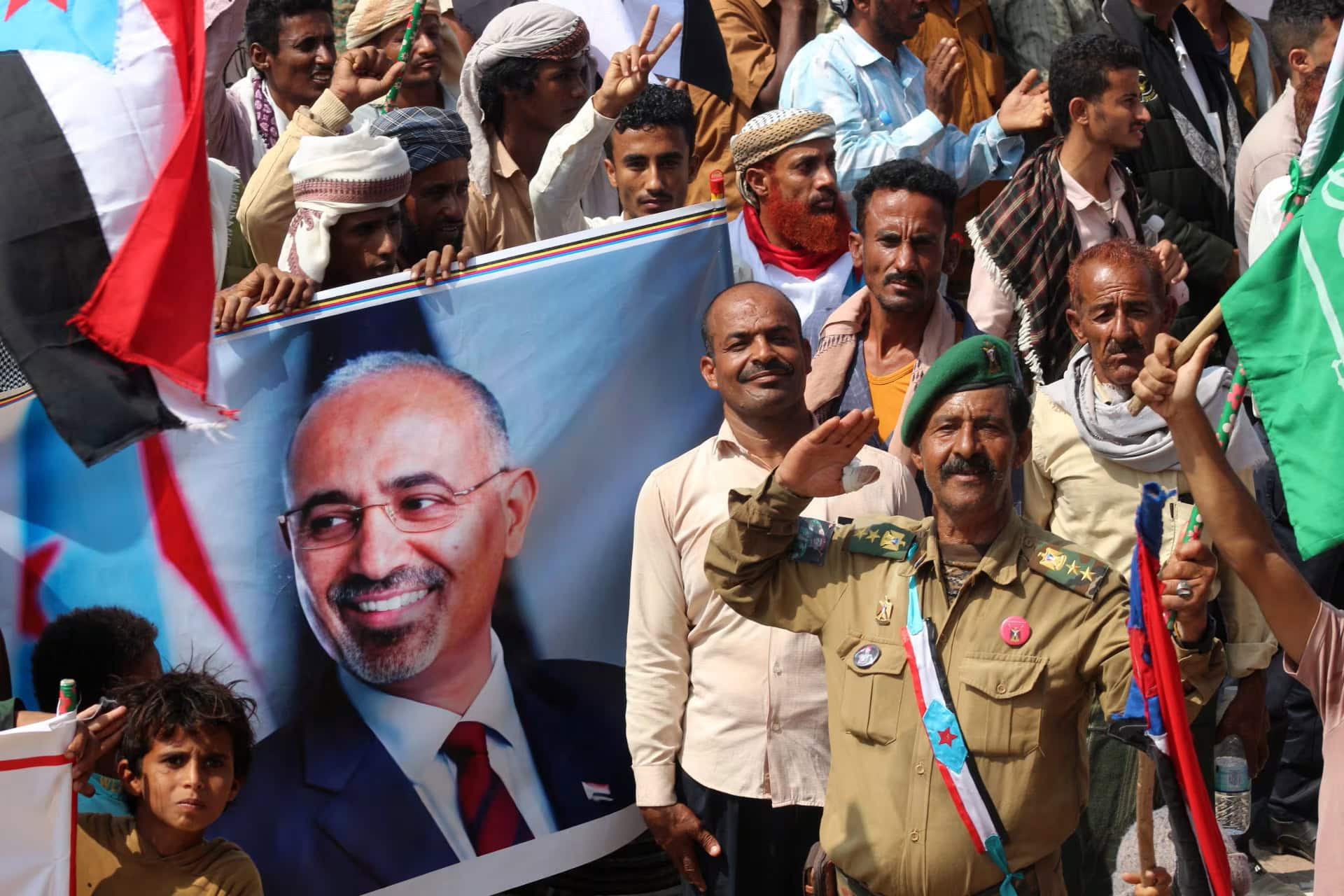
Crucially, when government forces recaptured these areas, thousands of Yemenis marched in support of the STC in Aden and other Southern cities, waving the old South Yemen flag and chanting for self-determination.
These gatherings were not minor demonstrations. In Aden and Mukalla — historic centres of Southern political identity — large crowds turned out in early January 2026 to signal rejection of external control and reaffirm popular support for the STC’s leadership and programme.
The Contested “Dissolution” of the STC
The announcement of the STC’s dissolution came from a faction of its leadership in Riyadh, but it was immediately contested by senior STC spokespeople abroad and activists on the ground who insisted the organisation remained legitimate and that its decision-making structures had not authorised the move.
This episode represented not a true political closure but a power play: Saudi Arabia leveraged its influence to remove the STC as an independent actor in negotiations, while supporters in Yemen continued to reject the dissolution. This disconnect between official proclamations and grassroots reality deepens political distrust and fuels mobilisation.
The Unintended Beneficiaries
One of the most troubling consequences of sidelining Southern political expression is the strategic advantage this gives to the Houthi movement (Ansar Allah) in the north. With the South’s leadership fragmented and its political legitimacy eroded, the Houthis now perceive a politically unsettled South as an opportunity for further expansion under the guise of “national reunification.” Multiple analysts note that fragmentation among anti-Houthi actors weakens resistance to Houthi influence and may allow them to exploit power vacuums.
Control of the South by a fragmented or externally managed authority could leave a political void that stronger, more cohesive northern actors might attempt to fill — undermining any narrative that Riyadh’s approach serves Yemeni unity.
What Riyadh Has Accomplished — and What It Has Undermined
In late 2025 and early 2026, Saudi Arabia and its allied Yemeni government forces regained control of Southern territories previously under STC influence, including Aden and Hadramout, while the STC’s organisational cohesion dissipated amid internal disagreements and leadership displacement.
Official Saudi messaging portrays these developments as a restoration of unity and stability. But the cost has been to marginalise the only major actor capable of organising and representing Southern aspirations for autonomy or self-determination — even as popular backing for the STC remains significant.
History shows that when a popular movement is driven underground, it does not disappear — it hardens, radicalises, and becomes far more unpredictable. Ignoring legitimate Southern grievances and treating them as a security problem to be managed will only sow the seeds of future instability.
Short-term tactical gains — such as territorial control — cannot substitute for political legitimacy. Without genuine inclusion, meaningful dialogue, and credible political pathways for Southerners, Riyadh risks perpetuating the very cycles of conflict it claims to be ending.
A Role for the United States
This is where U.S. diplomatic engagement could make a decisive difference.
Washington retains significant leverage with Riyadh, the internationally recognised Yemeni government, and other Gulf partners. A recalibrated U.S. strategy should aim to:
1. Encourage genuinely inclusive negotiations: The U.S. can use its diplomatic weight to push for negotiations that bring all major Southern constituencies — including the STC leadership, civil society actors and tribal representatives — into direct dialogue rather than managed assemblies.
2. Elevate political solutions over military ones: American diplomacy must emphasise the political roots of Southern grievances and promote mechanisms such as referenda, federal arrangements, or phased autonomy models, approaches with precedent in complex peace processes.
3. Leverage multilateral institutions: Working with the United Nations and the Gulf Cooperation Council (GCC), the U.S. can help craft an international roadmap that respects Yemen’s territorial integrity while addressing demands for self-determination and security guarantees.
4. Tie humanitarian relief to political progress: Any diplomatic track must link governance improvements with humanitarian assistance and reconstruction, signalling that peace is not merely the absence of war, but the presence of opportunity and dignity.
Such an approach does not prioritise one faction over another; it recognises that durable peace in Yemen requires legitimate representation, political accommodation, and trust-building. Without this, any imposed settlement will be as brittle as the fragile ceasefires that have collapsed before.
If the Saudi regime seeks long-term stability, it must reflect on its strategic miscalculations — especially the side-lining of the STC without offering a credible alternative path for Southern voices. Riyadh has the opportunity to mend trust not by asserting control, but by enabling a political framework where Southerners feel their aspirations are recognised and respected.
Reopening political space and addressing legitimate Southern grievances is not a concession — it is a strategic necessity. Without this, support for the STC will continue to grow, and the conditions that favour expansionist forces like the Houthis will intensify.
There is still time for a more sustainable path — but only if diplomacy is placed firmly at the centre of policy, with the United States and other partners acting as honest brokers, not bystanders to imposed realities.
Previous article