SOUTH24 CENTER FOR NEWS & STUDIES
SOUTH24 CENTER FOR NEWS & STUDIES


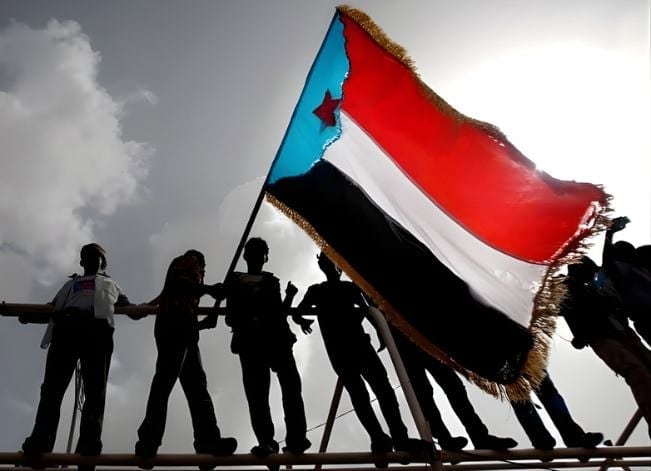
Southern protesters raise the flag of South Yemen in Aden, January 13, 2013 (Hani Mohammed, AP)
21-12-2025 at 12 AM Aden Time

“The South’s future will not be decided by armored vehicles or warning statements, but through a political process that acknowledges realities on the ground and integrates genuine actors into a balanced regional equation.”
South24 Center – Editorial
As debates about Yemen’s future continue to resurface, particularly in Saudi commentary, a set of arguments has gained traction that treats geography and demography as fixed “determinants” of political outcomes. These assumptions are used to warn against taking certain paths, especially in South Yemen. While such reasoning may appear pragmatic, treating these factors as immutable laws ignores the political and social realities that have evolved over more than two decades of profound change in South Yemen.
Geography certainly influences politics, and Saudi Arabia remains a key regional actor in the Yemeni equation -- due to history, shared borders, and mutual interests. But turning this role from strategic partnership into a prerequisite for political legitimacy, or worse, a form of guardianship over popular will, risks stripping domestic projects of their national substance. It reduces politics to crisis management rather than conflict resolution and deepens tensions rather than resolving them.
Experience across the region consistently shows that sustainable stability is not built on external permission, but on balancing local agency with regional interests. When regional support becomes a condition for political existence rather than a stabilizing factor, it weakens local causes, makes them hostage to shifting calculations that may not always align with state-building or the welfare of people.
At its core, the Southern cause, anchored in the goal of restoring the Southern State that existed until 1990, is neither a fleeting reaction nor the product of military adventurism. It reflects a long political trajectory, beginning with the North’s reversal of Yemeni unity, the 1994 war, exclusion, state collapse, and the failure of centralized governance to manage diversity, and the absence of credible models of good governance. Treating the Southern Cause as a “geographical inconvenience” or a “leadership issue” reduces a deeply rooted political and social phenomenon to an oversimplification that fails to engage with the region’s history and lived reality.
The past years have also demonstrated that “legitimacy” in Yemen is no longer an abstract legal concept. It has become inseparable from the ability to provide security, prevent chaos, and manage the most basic affairs of daily life. Within this context, the Southern Transitional Council (STC) has emerged as an actor that filled a genuine governance vacuum in South Yemen. It has promoted dialogue over the Southern issue and differing visions for its resolution, while also establishing a security and military reality based on international partnership in combating terrorism, smuggling, and shared threats, “most notably the Houthis”, alongside serious actors in Yemen, the region, and the world. Whether one agrees or disagrees with its performance, ignoring this reality does not weaken the STC so much as it undermines any serious attempt to construct a realistic vision for stability.
Reducing the Southern Cause to the actions of individual leaders or a specific political moment overlooks the structural nature of the conflict. Major national issues do not arise or endure because of individuals, but because of deep imbalances in state structures and the repeated failure of past governance models to manage plurality and equilibrium. Even if leaderships change, the central question will remain: what political framework can accommodate the South’s aspirations and guarantee a fair and sustainable partnership? And is targeting the leadership of national projects truly the safest path to securing shared regional interests?
Debates surrounding Hadramout and Al-Mahra further highlight the complexity of South Yemen, which requires calm political vision, not rhetorical or media-driven mobilization that risks fueling local conflict. Diversity within the South is not evidence of fragility; it is a natural feature of any society seeking to redefine its system of governance after prolonged conflict. The real challenge lies not in the existence of differences, but in the absence of an inclusive framework to manage them, something that cannot be achieved through warnings or intimidation, but through dialogue, guarantees, and support for local efforts that have already shown success.
Historical experience, including the British colonial era in South Yemen, proves that forced containment or external administration does not produce lasting stability. Stability emerges when local actors are treated as partners rather than instruments, and when their projects are discussed as negotiable political options, not as threats to be suppressed.
From this Perspective, the South’s future will not be decided by armored vehicles or warning statements, but through a political process that acknowledges realities on the ground and integrates genuine actors into a balanced regional equation. Saudi Arabia, by virtue of its weight, can serve as a guarantor of this balance, not its guardian. And the South, shaped by bitter experience, will not accept a return to formulas that have already proven their failure.
The search for a realistic alternative does not begin with asking who erred, but with a more fundamental question: which system of governance has demonstrated its ability to provide security and stability, and to prevent the South from becoming an open arena of conflict? To date, no more realistic option has been presented than a political process that recognizes existing actors and integrates them into a clearly defined regional settlement, rather than gambling on the reproduction of failed models.
Ignoring reality does not create stability, it merely postpones it at a higher cost. Likewise, overlooking the hundreds of thousands of southern Yemenis who repeatedly gather across the region, including in Al-Mahra and Hadramout, calling on brothers before friends to respect their national will and their legitimate right to build an independent state, only perpetuates flawed approaches to a cause that has matured over decades. It has been shaped by geography, demography, and history, and by a unified popular will that neither accepts doubt nor intimidation, and by a leadership willing to shoulder its responsibility at a decisive moment.
Previous article