SOUTH24 CENTER FOR NEWS & STUDIES
SOUTH24 CENTER FOR NEWS & STUDIES


South24 Center
Last updated on: 17-12-2025 at 9 PM Aden Time
“The reemergence of a South Yemeni state is not an ideological project but a functional one… A self-reliant South Yemen embedded in regional security arrangements fits more naturally within this doctrine than the perpetuation of a hollow central state incapable of securing its territory.”
Hani Mashoour (South24 Center)
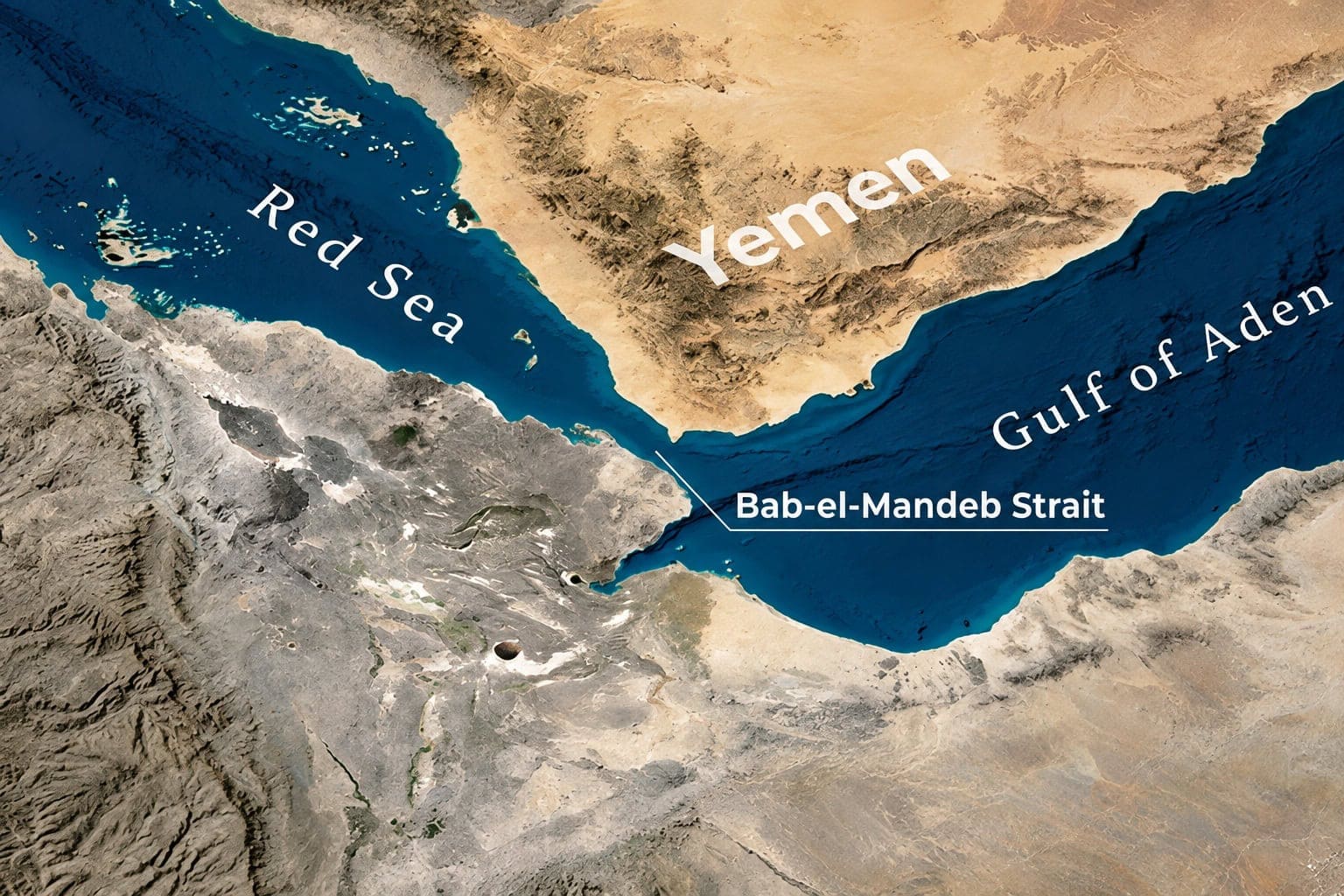
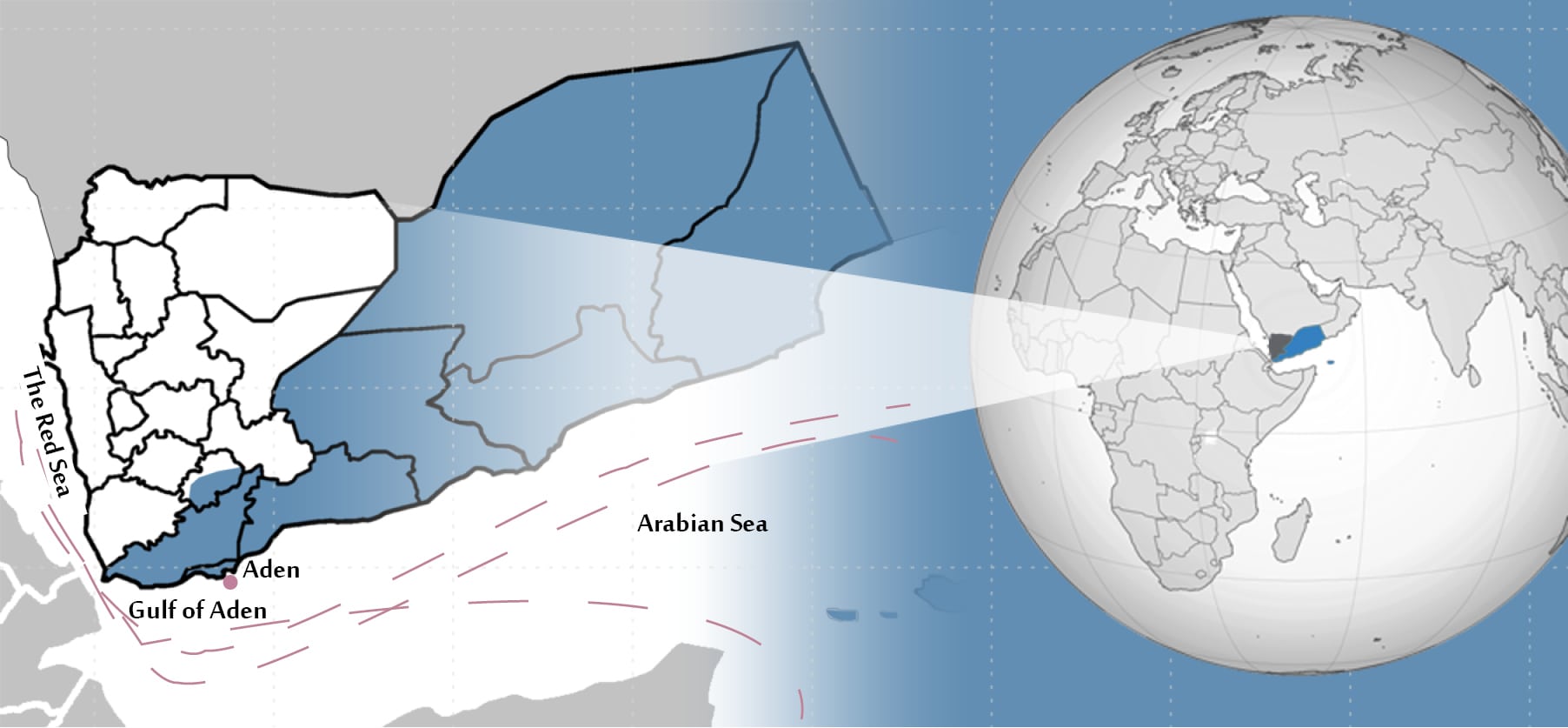
The recent military advances by the Southern Transitional Council (STC) across eastern South Yemen are not simply another development in the country’s long-running conflict. They represent a deeper structural shift in how power is exercised along one of the world’s most critical maritime corridors — the Bab al-Mandab Strait — with direct consequences for regional security, global trade, and Iran’s strategic positioning.
What makes these developments especially significant is Tehran’s reaction. Iran issued an unusually explicit official statement rejecting the STC’s actions in Hadramout and Al-Mahra. This was not routine diplomatic signaling. States rarely respond so openly unless their core strategic interests are being disrupted. In this case, Iran recognizes that South Yemen’s consolidation threatens to constrict — and potentially sever — long-established logistical and smuggling routes that have sustained Houthi military capabilities for years.
For much of the past decade, Yemen’s internationally recognized government exercised little meaningful authority outside Houthi-held areas. Eastern and Southern provinces were governed through fragile arrangements, overlapping jurisdictions, and informal power brokers. This prolonged governance vacuum created permissive environments for smuggling networks, illicit financing, and armed non-state actors to operate with minimal constraint. The absence of effective state control was not a temporary anomaly; it became a structural feature of Yemen’s political landscape.
The STC’s recent advances did not create this reality — they emerged in response to it. By asserting control over strategic coastal zones, ports, and inland transit corridors, South Yemen has positioned itself as a de facto security actor capable of enforcing order where the formal state had long ceased to function. This is why these developments matter far beyond Yemen’s internal political debates or identity disputes.
Critics often argue that Southern consolidation risks strengthening the Houthis by deepening Yemen’s fragmentation. This argument misunderstands both causality and consequence. The Houthis did not rise because Yemen fragmented; they rose because the state collapsed under corruption, institutional decay, and hollow power-sharing arrangements. Yemen’s formal unity neither prevented the fall of Sana’a in 2014 nor stopped Iran from entrenching a heavily armed proxy on the Arabian Peninsula.
On the contrary, South Yemen’s consolidation directly undermines one of the Houthis’ key strategic advantages: diversified supply routes. Hadramout and Al-Mahra long functioned as loosely governed spaces through which weapons, components, and financing could transit with limited oversight. Tightening control over these areas compresses Iran’s leverage into a single, exposed axis — the Houthis’ northwestern stronghold — making Tehran’s proxy strategy more visible, more vulnerable, and more costly to sustain.
This strategic reality explains Iran’s objections. Tehran’s rhetoric about Yemen’s “unity” is not principled diplomacy; it is a defensive response to the erosion of operational depth. A more cohesive Southern authority does not eliminate the Houthi threat overnight, but it significantly reduces Iran’s flexibility by limiting alternative logistical pathways and increasing the risks associated with proxy warfare.
The implications extend well beyond Yemen’s borders. The Bab al-Mandab Strait is not a local waterway; it is a global chokepoint through which roughly 12 percent of world trade passes. Disruptions here reverberate across energy markets, supply chains, and maritime insurance regimes. This is why the Red Sea has become a central arena of strategic competition involving Iran, Israel, Gulf states, and Western naval forces.
From a security perspective, sovereignty is not defined by constitutional language or inherited borders but by effective control. Maritime security is produced by actors who can police coastlines, secure ports, and deny hostile forces the ability to weaponize shipping lanes. In this sense, South Yemen’s emergence as an organized security actor matters more than the legal fiction of a unified but non-functional state.
Much of the commentary surrounding these developments frames the STC’s rise as an extension of Emirati influence. This interpretation oversimplifies the dynamics at play. The United Arab Emirates did not manufacture Yemen’s collapse; it adapted to it. Abu Dhabi’s strategic approach prioritizes maritime security, counterterrorism, and the protection of commercial shipping routes. Supporting capable local partners in South Yemen aligns with that logic, particularly in a region where centralized governance has repeatedly failed.
Saudi Arabia now faces a more complex strategic dilemma. Riyadh’s long-standing preference for preserving Yemen’s formal unity and pursuing de-escalation with the Houthis was shaped by border security concerns and the desire to halt cross-border attacks. Yet maintaining alliances built around weakened institutions and eroding legitimacy carries increasing risks as power realities on the ground evolve faster than diplomatic frameworks.
What is emerging in South Yemen, however, is not a revival of classical separatist ideology. It is a pragmatic, security-driven model that reflects a broader shift in Middle Eastern geopolitics. President Donald Trump’s 2025 doctrine — which calls on regional actors to assume primary responsibility for their own security through regional frameworks such as the Abraham Accords — has altered the logic of statehood and alliance-building. Effectiveness, burden-sharing, and regional self-reliance now matter more than abstract commitments to inherited political formulas.
Within this framework, the reemergence of a South Yemeni state is not an ideological project but a functional one. It reflects a post-intervention reality in which maritime control, counter-proxy capacity, and security delivery outweigh theoretical unity. A self-reliant South Yemen embedded in regional security arrangements fits more naturally within this doctrine than the perpetuation of a hollow central state incapable of securing its territory.
History provides an important corrective to the instinctive discomfort many policymakers feel toward political reconfiguration. Transformations of state structures are not anomalies; they are the norm. Yugoslavia once existed as a single federal state before fragmenting into multiple internationally recognized countries. The Soviet Union collapsed into fifteen sovereign republics without ending global order. Even Great Britain transitioned from an empire on which the sun never set into a modern nation-state through strategic adaptation rather than ideological collapse.
These precedents underscore a basic truth: stability is not preserved by freezing borders in place, but by aligning political authority with functional control. The question surrounding South Yemen is therefore not whether change is occurring — history suggests that it always does — but whether the emerging configuration enhances regional security and reduces systemic risk along critical maritime corridors.
By that measure, South Yemen increasingly represents not a problem to be managed, but a reality to be engaged. Iran has already drawn its conclusions. The remaining question is whether Washington and its partners will adjust their analytical frameworks accordingly — or continue to approach Yemen through outdated assumptions that no longer reflect how power is exercised along the Red Sea.