مركز سوث24 للأخبار والدراسات
مركز سوث24 للأخبار والدراسات


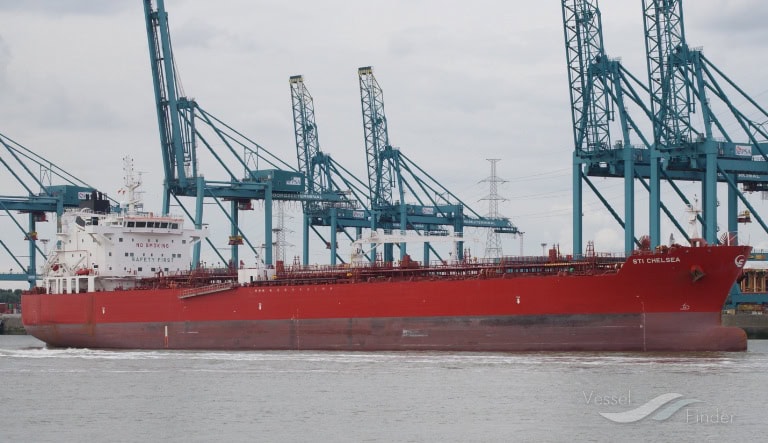
Saudi tanker NCC MASA, pictured under its former name STI CHELSEA. Saudi Arabia said it sustained minor hull damage in a Red Sea attack on July 24, 2026. (MarineTraffic/Rene van Quekelberghe)
آخر تحديث في: 25-07-2026 الساعة 4 مساءً بتوقيت عدن
Aden (South24 Center)
Saudi Arabia and the Iran-backed Houthi militias exchanged military attacks on Saturday, July 25, as the group claimed two large-scale operations against Saudi Aramco facilities in Jizan and Yanbu, hours after Saudi airstrikes targeted Houthi-controlled sites in Hodeidah and a third Saudi commercial vessel was attacked in the Red Sea.
In a televised statement issued on Saturday afternoon, the Houthi military spokesman said the first operation targeted what he described as “sensitive facilities” belonging to Saudi Aramco in Jizan using dozens of ballistic missiles and drones.
He said a second operation targeted sensitive Aramco facilities in Yanbu using ballistic and cruise missiles, as well as drones, claiming that both attacks achieved their objectives and caused “precise and direct” hits.
The group did not identify the specific facilities targeted, provide an exact number of weapons launched, or present evidence confirming the extent of the claimed damage. Saudi Arabia and Aramco did not immediately issue a detailed response to the latest Houthi statement.
The Houthis also claimed that their air defenses had engaged a formation of Saudi aircraft after they entered Yemeni airspace during the strikes on Hodeidah and prevented them from carrying out further attacks. This claim could not be independently verified.
The group reaffirmed that its declared maritime blockade against Saudi Arabia remained in effect and threatened to expand its military operations and escalate its actions in response to developments during the coming hours and days.
The detailed claim followed reports that Saudi air defense systems had intercepted two ballistic missiles launched from Yemen toward oil refineries in Yanbu. Greek security sources told Reuters that a Patriot battery operated by Greek military personnel also shot down a drone approaching the same area.
Saudi authorities did not immediately report casualties or material damage in Yanbu.
The Saudi Civil Defense issued several early warnings to residents of Yanbu and the coastal city of Jizan, urging them to move to safe locations because of a potential threat, before announcing shortly afterward that the danger had passed.
Before the formal Houthi statement, media affiliated with the group said a missile attack launched from Yemen had caused fires in Jizan, without initially providing details about the weapon used or the location targeted.
Reuters and Agence France-Presse verified footage showing large clouds of smoke rising from the direction of Saudi Aramco’s refinery in Jizan. Two Asia-based trading sources said they had received information indicating some damage at the facility, although Saudi authorities and Aramco had not officially confirmed the damage.
Satellite-based fire-detection data also indicated fires east of the Jizan refinery early on Saturday, but their cause could not be independently established.
The attacks followed Saudi airstrikes late Friday on sites controlled by the Houthis in Hodeidah Governorate. The Saudi-led coalition said the operation targeted military facilities connected to threats against commercial shipping in the Red Sea.
Saudi military spokesman Major General Turki Al-Maliki described the strikes as a proportionate military response against legitimate Houthi military targets.
Al-Maliki said the operation had achieved its planned objectives and concluded. He denied that Hodeidah port had been targeted and said the ports of Hodeidah, Ras Isa and Al-Salif remained open to commercial navigation and continued to receive vessels carrying food, fuel, goods and construction materials.
He warned that Saudi Arabia would continue taking the necessary measures to protect its vessels and national interests and would respond without leniency should the Houthis continue their attacks.
Houthi-affiliated Al-Masirah television presented a different account, saying the strikes targeted facilities belonging to the Public Telecommunications Corporation in Hodeidah city, as well as sites on Kamaran Island.
The channel said an employee at the telecommunications facility and a woman on Kamaran Island were injured.
Agence France-Presse cited a Yemeni security source as saying that the strikes targeted a naval base in Hodeidah and a military position on Kamaran Island. Witnesses also reported hearing several explosions and seeing smoke rising near the port area.
The Houthi-run Foreign Ministry described the strikes as the beginning of a phase of “escalation for escalation” and held Saudi Arabia responsible for subsequent developments.
The Hodeidah operation came shortly after Saudi Arabia confirmed that the Saudi vessel NCC MASA had been attacked while sailing in the Red Sea on Friday.
The Saudi Transport General Authority said the vessel sustained minor hull damage but continued toward its destination after inspections confirmed the safety of the ship and its crew.
The Houthis did not immediately issue a statement specifically claiming responsibility for the attack on the NCC MASA. However, the incident occurred within the area covered by maritime restrictions the group had announced against vessels linked to Saudi Arabia.
The NCC MASA was the third Saudi vessel reported targeted within approximately two days.
On Thursday, the Houthis claimed attacks on the oil tankers ENCELIA and LAYLA, saying they used ballistic and cruise missiles, as well as drones, because the vessels had violated the maritime blockade declared by the group.
Saudi Arabia confirmed that the ENCELIA had been attacked and that a fire broke out at its bow. It said all crew members were safe and that measures had been taken to secure the ship and prevent environmental damage.
Maritime security reports placed the incident about 70 nautical miles southwest of Al-Shuqaiq, near the Saudi port of Jizan.
The Houthis also claimed that they had forced around ten vessels to turn back, while shipping data reviewed by Reuters showed that at least five tankers changed course following the group’s warnings.
The latest escalation began after the Houthis announced on July 20 what they described as a “ban on Saudi maritime navigation.”
The group warned shipping companies against loading or unloading cargo at Saudi ports and threatened vessels that failed to comply with possible targeting.
The Houthis said the measure was a response to restrictions they accuse Riyadh of imposing on areas under their control and to the targeting of Sanaa International Airport earlier in July.
Saudi Arabia rejects the Houthi claim that it is imposing a blockade.
In an earlier statement, Al-Maliki said more than 300 commercial vessels entered the ports of Hodeidah, Al-Salif and Ras Isa during the first half of 2026, carrying food, fuel, goods and construction materials.
He accused the Houthis of obstructing flights from Sanaa airport and rejecting initiatives aimed at resuming regular air travel.
Continued Houthi attacks on Saudi vessels or facilities in Jizan and Yanbu could threaten the Kingdom’s energy exports and increase risks to global shipping through the Red Sea.
The warnings have already affected commercial navigation. Several tankers altered their routes following the Houthi threats, while some vessels avoided the Bab Al-Mandab Strait or adopted additional security precautions.
The escalation places the relative calm established after the April 2022 truce under its most serious pressure in four years.
Although the truce was never transformed into a comprehensive peace agreement, it largely halted direct attacks between Saudi Arabia and the Houthis and reduced fighting along the main front lines.
As of Saturday afternoon, there had been no official or independently verified confirmation of additional Saudi strikes on Sanaa, Al-Jawf or Marib following the Houthi attacks against Jizan and Yanbu.


قبل 3 أشهر

قبل 1 شهر