SOUTH24 CENTER FOR NEWS & STUDIES
SOUTH24 CENTER FOR NEWS & STUDIES


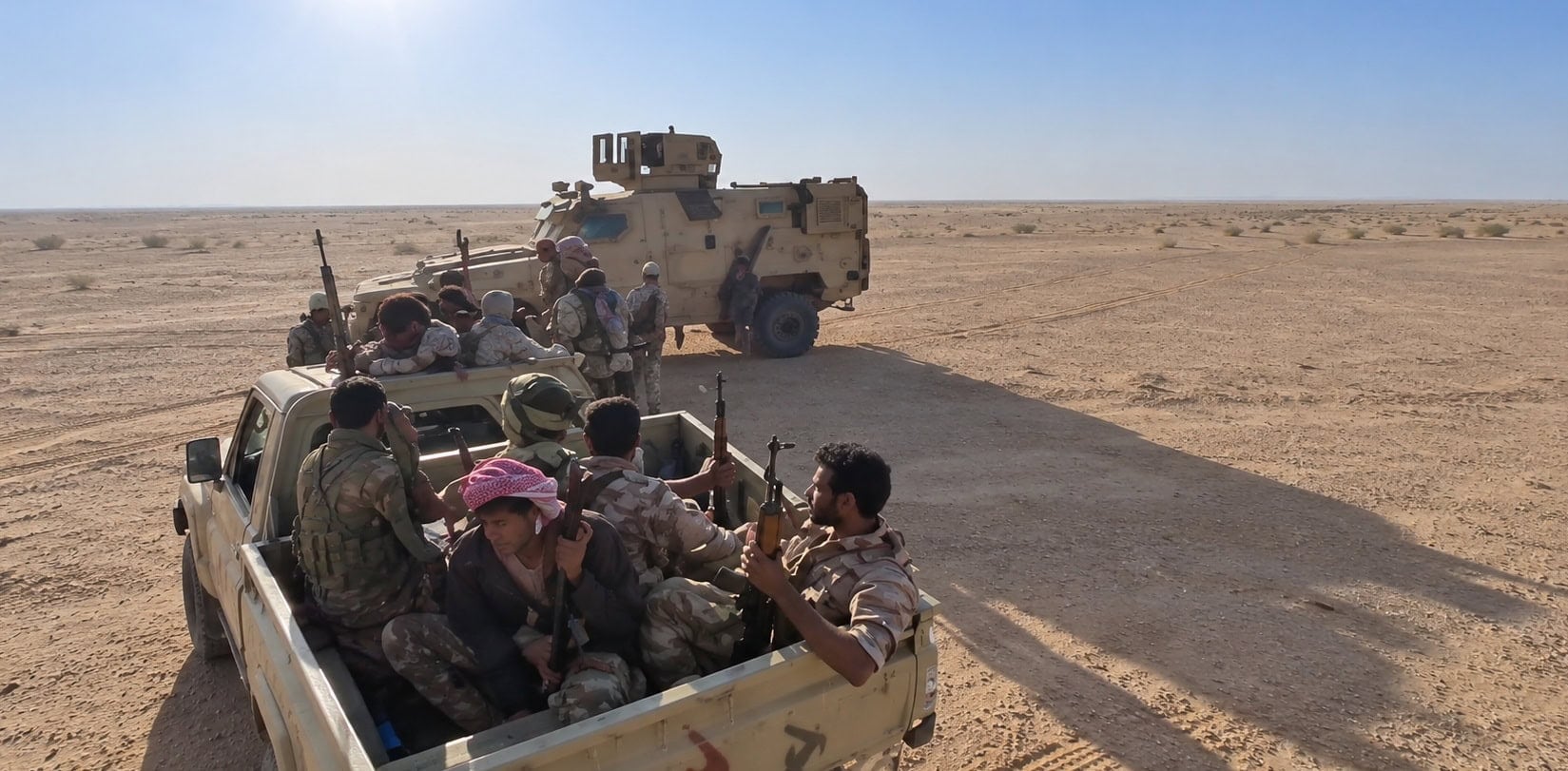
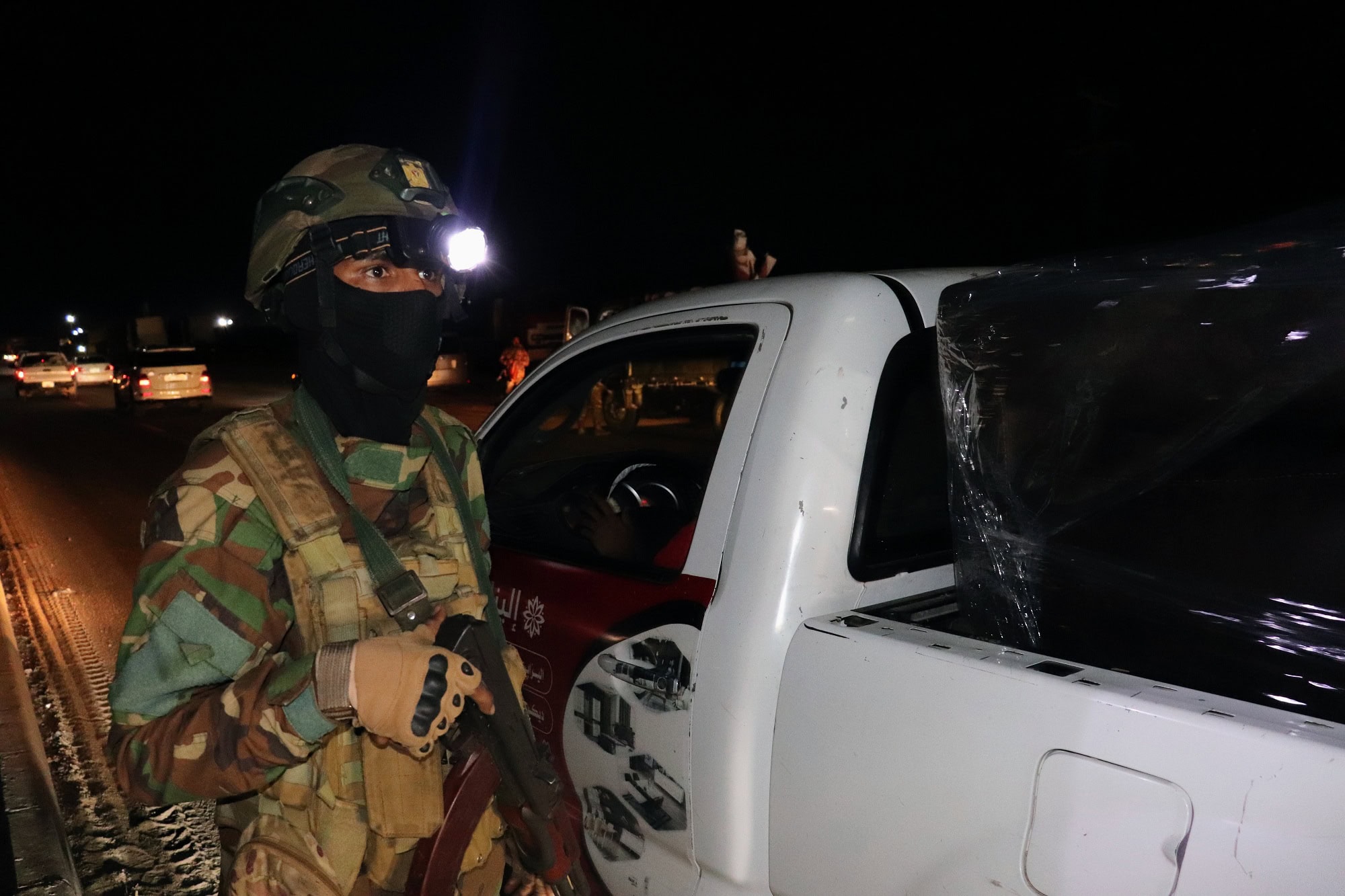
Government-aligned Yemeni forces near the outskirts of Al-Labanat Camp in Al-Jawf Governorate, according to footage circulated online. Image extracted by South24 Center and enhanced using AI. September 7, 2026.
09-09-2026 at 5 PM Aden Time

Abdullah Al-Shadli (South24 Center)
In recent days, military operations targeting the Houthis have expanded across multiple Yemeni fronts in recent days, stretching from western Taiz and the Western Coast to Al-Bayda and Al-Jawf, alongside the resumption of airstrikes providing air support to ground operations. These developments mark the most severe military escalation since the 2022 truce, which halted large-scale hostilities without yielding a political settlement or addressing the root causes of the war.
The latest round began on September 3 with a large-scale Houthi offensive in western Taiz and southern Hodeidah. The group initially made gains in Maqbanah, Al-Kadha, and positions overlooking roads linking the Taiz fronts with the Western Coast. The Southern Giants Forces, National Resistance Forces, and units affiliated with the Taiz Military Axis subsequently launched counterattacks, before fighting expanded to Al-Barh, Al-Wazi’iyah, and Jabal Habashi, with Nation’s Shield Forces joining operations on some axes. The fighting was accompanied by airstrikes that government military media said were carried out by “warplanes of the Armed Forces,” while the Houthis blamed Saudi Arabia for the strikes.
On September 7, the Southern Giants Forces opened an additional front in Al-Bayda Governorate and announced the capture of positions in Al-Zahir District. At the same time, government and tribal forces launched another operation in Al-Jawf, stating that it concluded with the entry into saying they had entered the Al-Yatama area in Khabb and Al-Sha’af District. Although government statements have described simultaneous advances across several governorates, the scale of the territorial changes remains unclear, and most claims of captured positions and casualties could not be independently verified.
The ground operations come at the height of a renewed direct escalation between the Houthis and Saudi Arabia, after the group resumed missile and drone attacks against cities and facilities inside the Kingdom. The latest escalation was preceded by a Houthi declaration of what the group described as a naval blockade against Saudi Arabia, followed by missile and drone attacks targeting a number of Saudi vessels in the Red Sea. Riyadh, however, has not officially acknowledged any role in the recent airstrikes against Houthi positions.
Against this backdrop, a key question has emerged: Do these operations mark the beginning of an all-out war against the Houthis, or are they part of a broader Saudi pressure strategy following the resumption of Houthi attacks against Saudi territory and vessels after years in which Riyadh pursued containment while Oman mediated with the group? And where could these military and political confrontations lead if they continue and expand?
A Government Decision or a Saudi Tactic?
Since the UN-brokered truce expired in October 2022, most frontlines had remained under an undeclared state of de-escalation, while cross-border attacks between the Houthis and Saudi Arabia largely ceased. During this period, Riyadh entered direct talks with the group through Omani mediation, leading to understandings that later became known as the “Roadmap,” while Yemen’s internationally recognized government remained outside the direct negotiations.
That relative calm began to unravel in July 2026 amid a dispute over Iranian flights to Sanaa Airport. After the airport runway was struck to prevent an Iranian aircraft from landing, the Houthis blamed Saudi Arabia and resumed attacks on its territory before announcing a blockade on shipping linked to the Kingdom under what they described as a “blockade for blockade” equation.
During August, the escalation spread to government-held areas and forces inside Yemen, with Houthi attacks targeting military positions in Marib and Hadramout, as well as missile and drone strikes against the city and port of Al-Mokha. These developments paved the way for the military eruption in western Taiz and along the West Coast in early September, followed by the expansion of operations to additional fronts.
Ahmed Nagi, a researcher with the International Crisis Group, believes the current government-aligned military operations came in response to this escalation and have taken on a coordinated character involving Saudi Arabia, the Yemeni government, and local anti-Houthi forces. He told South24 Center that the degree of coordination between Riyadh and these parties has been reflected in movements across the various fronts, while Saudi Arabia remains the actor leading the coalition and shaping its overall direction.
According to Nagi, the initial objective was not to launch an all-out war, but rather to deter the Houthis and send a message that anti-Houthi forces inside Yemen are now capable of applying simultaneous pressure and advancing on more than one front. The use of drones has also demonstrated that these forces have acquired new qualitative capabilities, after drones had for years been one of the Houthis’ most significant sources of military advantage.
However, the widening scope of the clashes has begun to alter the nature of the operations and push them beyond their initial deterrent purpose. Nagi believes that continued Houthi attacks on Saudi Arabia could lead to an expansion of military operations inside Yemen and the opening of additional fronts, turning what began as a limited response into a longer and broader military campaign.
Commenting on the latest Houthi attacks against targets in southern Saudi Arabia, which included energy facilities and left 73 civilians injured according to the official Saudi account, Saudi Foreign Minister Prince Faisal bin Farhan said the Houthis had “opened a door they cannot handle,” while leaving open the possibility of a return to diplomacy.
What Is Happening on the Ground?
The latest operations have reactivated frontlines that had remained largely static for years and demonstrated the ability of anti-Houthi forces to open several fronts within a short period. However, the advances reported in Al-Bayda, Al-Jawf, and western Taiz are not yet sufficient to indicate a decisive shift in the balance of power.
In Al-Bayda, the Southern Giants Forces advanced inside Al-Zahir District toward Dhi Na’im, while government and tribal forces entered Al-Yatama in Al-Jawf. The Houthis later announced that they had entered Al-Yatama market and regained control of the area. The group also launched attacks in Murays, north of Al-Dhalea Governorate, while continuing pressure on the Al-Kadha and Al-Wazi’iyah fronts in Taiz.
Military expert Brigadier General Faisal Al-Najjar believes that assessing the impact of the operations first requires determining their political and military objective: Are they aimed at retaking Sanaa, or at establishing a new balance of power and protecting strategic areas, including oil-producing regions, Bab Al-Mandeb, and maritime shipping lanes? Each objective carries different requirements, he said, and battlefield results cannot be assessed separately from the purpose for which the operations were launched.
Al-Najjar told South24 Center that a war aimed at retaking Sanaa would require more than military superiority. It would also require popular support, an integrated war effort, strong morale, and an effective political opposition within Houthi-controlled areas. He described retaking Sanaa as “a political objective before it is a military one,” arguing that territorial control cannot become a lasting gain without a political and social environment capable of sustaining it.
He noted that government forces had advanced in previous rounds of fighting, only to later halt their operations or return to their staging areas as ceasefire initiatives emerged. Positions have repeatedly changed hands without producing a decisive victory because of the intersection of local, regional, and international interests. As a result, the Houthis losing or retaking a position is not, by itself, a sufficient measure of the overall direction of the war.
According to Al-Najjar, anti-Houthi forces could expand their advances if the necessary political will and military decision are present and if their formations are unified under a common command-and-control structure and joint operations room. Conversely, the continued existence of multiple decision-making centers and differing priorities across the fronts could turn simultaneous operations into scattered gains that are difficult to consolidate or build upon.
At the same time, the gap in qualitative military capabilities continues to favor the Houthis, who possess a larger arsenal of drones, ballistic missiles, and rockets, allowing them to target infrastructure, economic facilities, and maritime routes. Al-Najjar believes Saudi Arabia is capable of providing local forces with comparable capabilities, but has not done so at a sufficient level because of regional calculations and policies.
In recent weeks, the Southern Giants Forces, Nation’s Shield Forces, and Emergency Forces have released footage showing their possession and use of drone capabilities to strike Houthi targets, after years in which the Houthis largely monopolized such capabilities. However, the scale of these assets remains unknown compared with the Houthi arsenal, which has demonstrated an effective ability to strike targets inside Saudi Arabia and attack vessels passing through Bab Al-Mandeb.
Where Are the Operations Heading?
Brigadier General Faisal Al-Najjar believes that opening fronts stretching from Marib, Al-Jawf, Al-Bayda, and Taiz to Yafa and Karsh places significant pressure on the Houthis, who, in his words, possess no “magic force” that would prevent them from being pushed back. If the operations maintain their momentum, he believes they could push the group toward accepting a political agreement that returns them to the Roadmap.
Such a scenario would not necessarily require the military defeat of the Houthis or government forces reaching Sanaa. A more realistic objective may be to alter the terms of a settlement through battlefield pressure. However, Al-Najjar warns that any eventual settlement would not necessarily be fair to all parties, noting that, in his view, the South cause has not been given the place it deserves in the political arrangements currently under consideration.
Saudi Arabia carried out airstrikes against Southern forces in Hadramout at the beginning of this year and has worked actively to marginalize the Southern Transitional Council (STC) and exclude it from the political scene and the internationally recognized Yemeni camp. The STC recently announced its rejection of the involvement of the Southern Armed Forces in battles outside the borders of the South.
Ahmed Nagi agrees that increasing pressure and improving the position of anti-Houthi forces are two clear objectives of the current operations. However, he believes that identifying their ultimate goal remains difficult because of the rapidly changing situation.
Nagi expects the fighting to spread to additional areas and continue for a longer period before the balance of power becomes clearer. He sees two main possible trajectories: either one side makes sufficient gains to impose its political and military terms, or the fighting reaches a stalemate in which neither side is able to achieve a decisive breakthrough.
In the event of a stalemate, negotiations and de-escalation could once again move to the forefront, but from bargaining positions different from those that existed before the latest escalation. Nagi compares this possibility with what happened in 2022, when the truce followed a major round of fighting without addressing the roots of the conflict or producing a final settlement.
The possible outcomes therefore range from expanding military pressure to force the Houthis into concessions, to sliding into a longer war whose boundaries would become increasingly difficult to control. If the fronts remain without a unified objective, the latest round could ultimately end in another exchange of territory. But if the current operations develop into an organized and sustainable campaign, they could reshape the terms of future negotiations with the Houthis even without achieving a comprehensive military victory.
Recent developments also reinforce the possibility that Saudi Arabia is moving away from a policy of containment toward building a broader response to the Houthis. CNN cited a source familiar with Saudi thinking as saying that Saudi diplomats told US lawmakers in August that political channels with the group had broken down and that the Houthis were preparing to escalate against the Kingdom. The diplomats also sought Washington’s support in pushing back against the militia.
The source added that Riyadh is aligned with the US Central Command (CENTCOM) on the next steps and has also briefed its European partners on its plans. Saudi Arabia is additionally working to involve other countries that had previously been reluctant to participate out of concern that they might appear to be joining the US war with Iran. CNN said, however, that the form and intensity of any Saudi response remain unclear.