SOUTH24 CENTER FOR NEWS & STUDIES
SOUTH24 CENTER FOR NEWS & STUDIES


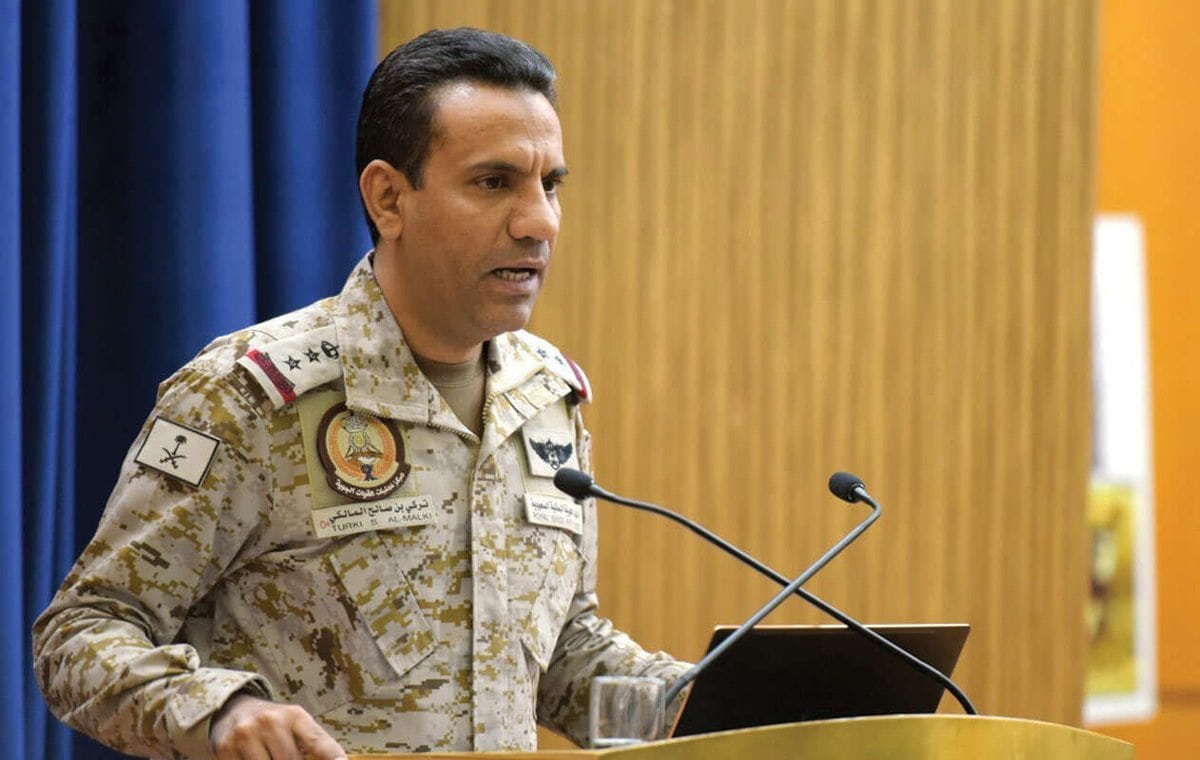
Saudi military spokesman Major General Turki Al-Maliki. (File photo)
08-09-2026 at 4 PM Aden Time
Aden (South24 Center)
Saudi authorities said on Tuesday (September 8) that 73 civilians, including women and children, were injured in Houthi attacks targeting civilian and economic sites and energy facilities in Abha, Khamis Mushait, Jizan, and Najran.
The casualty figure was announced in a statement issued by Major General Turki Al-Maliki in his capacity as spokesman for the Coalition to Support Legitimacy in Yemen. The Saudi-led coalition described the attacks as a “dangerous escalation” and said it would take the necessary operational measures to deter further attacks and respond to their sources.
The continued use of the coalition’s name is notable, although the military framework operating today under that title differs substantially from the multinational coalition established by Saudi Arabia in March 2015.
The UAE was previously the coalition’s second principal military pillar and led or supported military operations and local armed formations across large parts of South Yemen and the West Coast. However, Abu Dhabi announced the withdrawal of all its remaining military personnel from Yemen in early January 2026, following a dispute with Riyadh and a demand by the Riyadh-based Yemeni government that Emirati forces leave the country within 24 hours.
According to Al-Maliki’s statement, the latest Houthi attacks targeted civilian and economic sites and posed a threat to Saudi citizens and residents. However, Saudi authorities did not provide a breakdown of the injuries by city or specify how many women and children were among those injured.
In a separate statement, the Saudi Ministry of Foreign Affairs condemned the attacks and affirmed the Kingdom’s right to take the necessary measures to defend its sovereignty and protect its population and national assets.
In another statement, an official source at the Saudi Ministry of Energy said several energy-sector facilities and utilities in the Kingdom’s southern region had been targeted on Tuesday morning.
According to the ministry, the attacks caused fires at several locations and temporarily halted some operational activities. It added that citizens and residents sustained injuries of varying severity and that specialized teams were working to contain the fires, secure the sites, and assess the damage.
The ministry did not identify the affected facilities or say whether the attacks had disrupted oil production, refining capacity, electricity supplies, or exports. Saudi Aramco had not issued a detailed public assessment of the reported damage as of publication time.
Later, Houthi military spokesman Yahya Saree claimed responsibility for what he described as a large-scale operation carried out using dozens of ballistic missiles and drones.
Saree said the group targeted Saudi Aramco facilities in Abha, Najran, and Jizan, along with what he described as the “Economic City” in Jizan and King Khalid Air Base in Khamis Mushait. He claimed that the attacks achieved direct hits and caused extensive damage.
The Houthi spokesman said the operation came in response to what he described as 121 Saudi airstrikes carried out over three days against targets in Marib, Al-Bayda, Al-Hodeidah, Taiz, and Al-Jawf. He claimed that the aircraft involved had operated from King Khalid Air Base in Khamis Mushait and King Fahd Air Base in Taif.
Saudi Arabia has not publicly confirmed carrying out the reported airstrikes. The Saudi-led coalition has also not announced any recent air operations in Yemen, while the Yemeni Ministry of Defense attributed some of the strikes to what it called “the Armed Forces’ aircraft,” without identifying the aircraft, the bases from which they operated, or the command responsible for their deployment.
Military sources previously told South24 Center that Saudi Arabia may have carried out some of the strikes. However, the identity of the aircraft and the extent of any direct Saudi involvement remain unconfirmed.
The attacks on Saudi territory followed a rapidly accelerating military escalation inside Yemen. On Monday, the Houthi authorities accused Saudi Arabia of striking the Central Correctional Facility in Al-Hazm, the capital of Al-Jawf Governorate, killing seven people, including a child, and injuring at least seven others, according to their account.
Saudi Arabia did not immediately comment on the allegation, and the circumstances of the strike could not be independently verified. The Associated Press reported that Houthi-run media broadcast footage showing extensive damage to the facility.
The Houthis also released footage on Monday that they said documented ballistic missile strikes on trucks carrying military equipment from Saudi territory near the Al-Wadiah border crossing. Neither Saudi nor Yemeni government authorities immediately confirmed the incident, while the footage does not independently establish the nature of the vehicles or their cargo.
In Al-Jawf, military sources told South24 Center on Tuesday that government-aligned forces, supported by local tribal fighters, had entered Al-Yatama in Khabb wa Al-Sha’af District near the Saudi border. The forces later announced that they had taken control of the area from the Houthis.
Footage circulated online purported to show government-aligned forces entering Al-Yatama. However, South24 Center could not independently verify the extent of the advance, the identity of all participating units, or the casualties resulting from the operation.
The operation coincided with fighting in Al-Bayda, where the Southern Giants Brigades announced advances against Houthi positions in Al-Zahir District, as well as continued clashes involving the Southern Giants Forces, the National Resistance, and other government-aligned formations in Taiz and along the West Coast.
The widening confrontations have triggered a new wave of displacement. The International Organization for Migration said approximately 18,500 people had fled their homes in Taiz and Al-Hodeidah within 72 hours after fighting escal dahilanated on September 3.
The latest escalation follows the collapse of a period of relative calm that had largely prevailed since the 2022 truce. Cross-border attacks resumed in July after Yemeni government forces struck the runway at Sanaa International Airport to prevent an Iranian aircraft from landing. The Houthis responded by resuming missile and drone attacks against Saudi Arabia and expanding their threats against vessels linked to the Kingdom in the Red Sea.