SOUTH24 CENTER FOR NEWS & STUDIES
SOUTH24 CENTER FOR NEWS & STUDIES


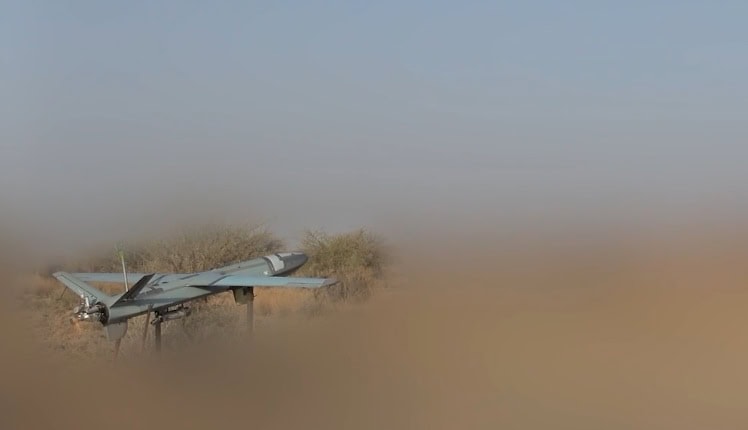
A Houthi drone used during an attack on the port and city of Mokha in Taiz Governorate, August 9, 2026 (Houthi Military Media)
Last updated on: 17-08-2026 at 3 PM Aden Time

Abdullah Al-Shadli (South24 Center)
The escalation between Saudi Arabia and the Houthi group has entered a more dangerous phase, following nearly four years of informal de-escalation that began after the UN-brokered truce expired in October 2022. Within a matter of weeks, the confrontation has evolved from a dispute over Iranian flights to Sanaa Airport into missile and drone attacks on facilities and areas inside Saudi Arabia, attacks on vessels linked to Saudi, and reciprocal strikes inside Yemen. The operations have since expanded again into Marib, Hadramout, the western coast, and the Bab al-Mandab Strait.
The current round began after an unauthorized Iranian flight was prevented from reaching Sana’a, followed by the bombing of the airport runway on July 13. The incident prompted the Houthis to resume attacks on Saudi Arabia and raise the level of threats to maritime navigation in the Red Sea. On July 20, the group announced what it described as a “naval blockade” of Saudi Arabia. In the following days, it claimed attacks on vessels and oil facilities in Jizan and Yanbu, while Saudi Arabia responded with strikes on Houthi-controlled sites.
The escalation took a more serious turn on August 6, when at least 60 soldiers from Saudi-backed Yemeni emergency forces were killed in Houthi attacks targeting positions and military camps in Marib and Hadramout. Eleven civilians were also wounded in Saudi Arabia’s Najran region in attacks Riyadh said were carried out by the Houthis. Three days later, seven people, including three civilians, were killed and 30 others wounded in a large-scale missile and drone attack on the city of Mokha. The attack coincided with a fire at an Aramco refinery in Jizan following a Houthi drone attack, which Saudi authorities said was extinguished without causing casualties.
In response, government forces and other anti-Houthi forces stepped up their military operations. On August 8, the Ministry of Defense announced an operation targeting Houthi positions and military capabilities across several fronts along the lines of contact. The operation coincided with strikes by Shabwa Defense Forces on the Harib front in response to Houthi attacks, as well as artillery strikes targeting Houthi command centers and fortifications south of Hodeidah. During these operations, Majed Abdullah Al-Nazili emerged as the new official spokesperson for the government forces.
The escalation also extended to the sea on August 11, when four crew members of the cargo vessel Tihamah were killed in an attack as the ship passed through the Bab al-Mandab Strait. Two coast guard personnel were also killed and three others wounded during an operation to rescue the crew. Yemeni authorities attributed the attack to the Houthis.
Despite this escalation, the confrontation has not yet developed into an open war on the scale witnessed during the early years of the conflict. This report examines the drivers of the current escalation, its links to the broader regional confrontation with Iran, and the objectives the Houthis seek to achieve through military pressure on Saudi Arabia and the Yemeni government, whose members are largely based in Riyadh.
Reasons Behind the Current Escalation
The crisis over Iranian flights to Sanaa Airport does not appear sufficient on its own to explain the current escalation. Rather, it seems to have served as a trigger that reopened broader disputes over several issues and preliminary understandings between Saudi Arabia and the Houthis under what is known as the “Roadmap,” as well as questions surrounding the limits of the Saudi-Houthi relationship after years of de-escalation.
The broader regional context, however, also provides a plausible framework for understanding the Houthis’ actions. Iran appears to be the biggest beneficiary of the current escalation against international maritime traffic through the strategic Bab al-Mandab Strait.
In this regard, journalist Salman Al-Maqrami told South24 Center that Iran and the Houthis sought to reactivate the Bab al-Mandab card as a means of exerting pressure on the United States and its allies, while testing whether the “unity of fronts” between Iran and its allies could also apply to the Houthis in their confrontation with Saudi Arabia and the Yemeni government. He added that Tehran sought through the escalation to test Riyadh’s ability to respond to recent regional developments.
Military expert Colonel Mohsen Naji Musaed shares this assessment, arguing that the Houthis are operating within the political and military framework pursued by Iran through its allied groups across the region. In comments to South24 Center, he described the competition over maritime routes as a “war of straits” stretching from the Strait of Hormuz to Bab al-Mandab. He argued that targeting Saudi-linked maritime traffic is intended to pressure energy exports and generate an impact extending beyond Yemen’s borders.
The regional factor has been compounded by an important internal development: the transformations in South Yemen since December 2025, including airstrikes against Southern forces and their withdrawal from oil-rich Hadramout. These developments were accompanied by the breakdown of the previous alliance involving Saudi Arabia, the UAE, and the Southern Transitional Council, followed by Riyadh’s efforts since the beginning of the year to restructure the anti-Houthi camp under its exclusive and unilateral leadership.
From this perspective, the Houthis may have viewed the division among their opponents as an opportunity, while simultaneously seeing Saudi Arabia’s efforts to rebuild a more Riyadh-dependent internal front as a threat. This is particularly relevant given Saudi Arabia’s growing reliance on Salafi forces and their expanding role within government institutions and the military and security apparatus. This may have been an important factor behind the Houthis’ decision to increase pressure before these Saudi arrangements could be fully consolidated.
Political researcher Saeed Obaid Al-Jamahi believes the Houthi decision is closely tied to Iranian calculations. He said Tehran is using the group as a low-cost, high-impact pressure tool, taking advantage of its position along the Red Sea and Bab al-Mandab. In comments to South24 Center, he added that the Houthis are seeking to strengthen their regional presence and increase their leverage in the deterrence equation, while pressuring Saudi Arabia to secure political and economic gains in any future negotiations.
Calculated Escalation or the Beginning of War?
Despite the rising intensity of attacks and retaliatory strikes, the confrontation still appears closer to a calculated escalation than a decision to launch an all-out war. However, the room for controlling the escalation has narrowed as the scope and costs of the operations increase.
Salman Al-Maqrami believes Iran and the Houthis want to keep the escalation within calculated limits, while leaving room for it to evolve depending on developments. He added that attacks on vital infrastructure and revenue sources could push the confrontation to a higher level, even as Saudi Arabia has strengthened its defensive capabilities and mechanisms for dealing with Houthi and Iranian threats.
Colonel Mohsen Naji Musaed shares this assessment, describing the escalation as closer to a calculated confrontation driven by regional considerations and aimed at reshaping the rules of engagement while raising the ceiling of political and military pressure. He warned, however, that miscalculations or crossing red lines could trigger a broader confrontation with major costs for Yemen and Saudi Arabia, as well as for energy security and maritime navigation.
Saeed Obaid Al-Jamahi, meanwhile, believes the Houthis understand that an all-out war with Saudi Arabia would be costly. He therefore expects military operations to remain a tool for exerting pressure and extracting political and economic gains within a state of “no war, no peace.” He argues that the failure of previous sanctions and strikes to produce a fundamental change in the group’s behavior has strengthened its confidence in its ability to use force, maritime traffic, and energy as leverage to improve its negotiating position.
Nevertheless, the expanding scope of the attacks is making this balance increasingly difficult to sustain. Each strike raises the possibility of a broader response, while mass casualties or an attack on a strategic target could be enough to shift the confrontation from calculated escalation to a conflict that becomes increasingly difficult to contain.
Possible Scenarios
A continuation of the confrontation without sliding into all-out war appears to be the most likely scenario in the near term. Attacks and retaliatory strikes are likely to remain at a high level, with each side seeking to impose greater costs on the other.
In this context, Salman Al-Maqrami believes Saudi Arabia and the Yemeni government may move toward shifting the confrontation into Houthi-controlled areas by exploiting the group’s vulnerabilities and applying political, tribal, and social pressure, rather than limiting the conflict to an exchange of long-range strikes. In his assessment, maintaining this approach could deepen the Houthis’ internal crises and reduce their ability to sustain external escalation.
At the same time, continued escalation increases the risk of a broader confrontation, particularly if strikes cross thresholds that either side can no longer absorb. Colonel Mohsen Naji Musaed warns that Yemen will bear the greatest cost if the war expands, with ports, oil export facilities, and maritime routes facing growing risks, further exacerbating the country’s economic and humanitarian crises. He believes the governorates of South Yemen will become an essential part of any new security and military arrangements to protect coastlines, ports, and energy infrastructure, making it difficult to exclude Southern forces and their role on the ground from any new security equation.
The third possibility is a return to negotiations following a period of mutual pressure, but under conditions different from those of previous understandings. Saeed Obaid Al-Jamahi argues that the weakness and corruption of the Yemeni government, along with the lack of seriousness among the Houthis’ opponents, have contributed to strengthening the group and prolonging the conflict. He also notes that previous understandings granted the Houthis concessions that strengthened their position. In his assessment, the Houthis’ emergence as a regional actor is as much a result of their opponents’ mistakes as it is of the group’s own capabilities.
Ultimately, the next phase will depend on the parties’ ability to control the level of retaliation and on whether the escalation is used to impose new negotiating terms or gradually pushes the conflict toward a broader confrontation that becomes increasingly difficult to contain.