SOUTH24 CENTER FOR NEWS & STUDIES
SOUTH24 CENTER FOR NEWS & STUDIES


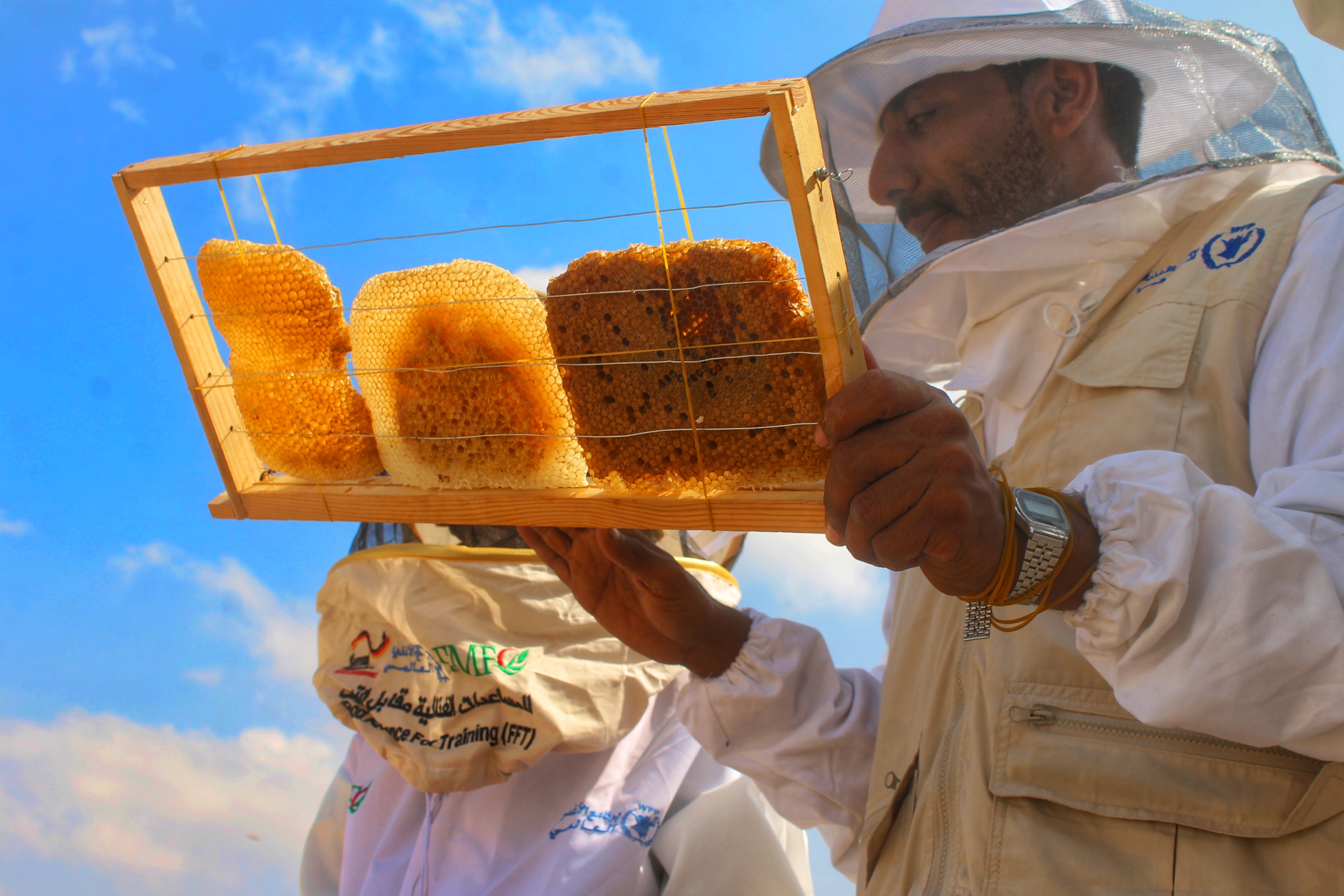
A bee farm in Hajar District, Hadramout Coast, March 7, 2023. (Omar Badhibyan)
16-06-2026 at 6 PM Aden Time
Seiyun (South24 Center)
A wave of bee colony deaths in Hadramout has triggered growing concern among beekeepers and agricultural authorities, after complaints linked the losses to Brazilian sugar circulating in local markets and used as alternative feed for bees.
Local authorities in Hadramout Wadi and Desert have launched precautionary measures to impound quantities of the sugar pending laboratory tests, while beekeepers say the incident threatens one of Yemen’s most important honey-producing regions.
The Ministry of Industry and Trade office in Hadramout Wadi said Tuesday, June 16, that field teams carried out inspections at several wholesale outlets, in coordination with the Yemeni Standards and Metrology Organization, the Agriculture and Irrigation Office, and the Hadramout Wadi Chamber of Commerce and Industry. It said the impounded quantities would remain under hold until laboratory testing is completed.
The move followed reports submitted by beekeepers and affected parties over the death of bee colonies, as well as preliminary findings from the National Center for Central Public Health Laboratories. Officials stressed that only final laboratory results would determine whether there is a direct link between the sugar in circulation and the reported colony deaths.
The issue had been raised earlier this month during a meeting of local authorities in Seiyun, where officials discussed reports of poisoning and deaths among bee colonies in several areas of Hadramout Wadi. The meeting reviewed field visits to affected apiaries and the collection of samples from bees and feeding materials for testing at central public health laboratories.
In Al-Abr District, beekeepers reported the death of around 50 bee colonies after using sugar suspected of being unfit or contaminated. According to local media, the beekeepers filed a complaint with the Agriculture and Irrigation Office, calling for field inspection of the affected apiaries, laboratory testing of feeding samples, documentation of losses, and legal action against any party found responsible.
The Hadrami Beekeepers Union has also sounded the alarm, saying hundreds of colonies had reportedly died in parts of Hadramout, particularly in Al-Shihr District, amid suspicion over a shipment of adulterated sugar. In a letter cited by Yemeni media, the union urged the Chamber of Commerce and Industry to act quickly, warning that the incident could endanger Hadramout’s beekeeping sector.
In recent days, beekeepers in Hadramout have circulated videos and testimonies showing losses in their apiaries after using the sugar as feed. Some local accounts have suggested the problem may be linked to a specific shipment, though no competent authority has yet issued final findings confirming or ruling out that claim.
The concerns have also spread beyond Hadramout. Local reports from Shabwa said regulatory authorities in Al-Rawda moved to impound quantities of Brazilian sugar after complaints about its quality, indicating that the controversy is no longer confined to Hadramout alone.
Despite the mounting complaints, specialists caution that bee deaths can result from several factors, including disease, pests, climate stress, high temperatures, poor nutrition, pesticides, or contaminated feeding materials. This makes laboratory analysis essential before assigning direct responsibility for the colony losses.
The incident carries particular significance for Hadramout, Yemen’s foremost honey-producing region. The districts of Dawan, Yabuth, Wadi Amd, and Wadi Hajar are known for producing high-quality Sidr honey, which has a strong reputation in local and international markets.
According to data obtained by South24 Center from the Honeybee Center at Seiyun University in 2023, Hadramout produces about 1,067 metric tons of honey annually, with between 50 and 60 percent exported to Arab and international markets. Beekeeping is therefore a key source of income for thousands of families in the governorate.
Yemeni beekeepers have already been facing growing challenges in recent years, including climate change, declining vegetation cover, water shortages, weak inspection systems, and limited laboratory capacity. Specialists say these pressures directly affect the sustainability and quality of honey production, while the latest die-off has intensified calls for stronger oversight of imported commodities used in agricultural and livestock-related sectors.
Previous article