SOUTH24 CENTER FOR NEWS & STUDIES
SOUTH24 CENTER FOR NEWS & STUDIES


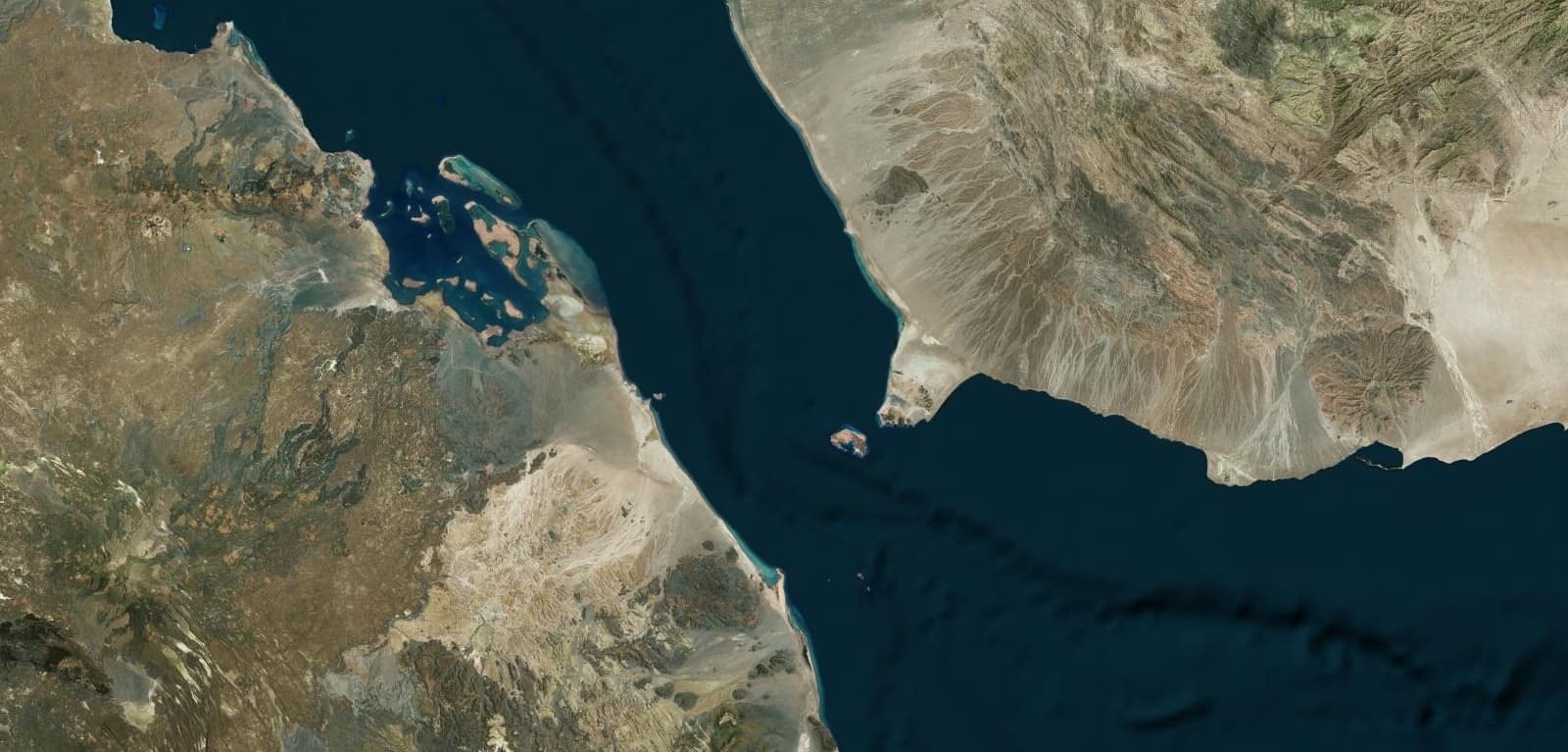
Image: The strategic Bab al-Mandab Strait (Alhurra)
16-06-2026 at 4 PM Aden Time
Aden (South24 Center)
Two commercial vessels came under armed attack off Yemen on Monday, in the latest sign of a widening security threat across the Gulf of Aden and nearby waters between Yemen and Somalia, amid growing concern over a possible resurgence of maritime piracy.
The United Kingdom Maritime Trade Operations (UKMTO) said it received a report that a container vessel was attacked about 14 nautical miles south of the Yemeni coast. A small skiff approached the vessel, and armed individuals on board opened fire and attempted to board it. Maritime authorities said investigations were ongoing.
Maritime security firm Vanguard Tech identified the vessel as the Greta Star, a Panama-flagged container ship. According to maritime reports, the vessel increased speed and implemented counter-piracy measures, preventing the boarding. No injuries were reported.
Hours later, UKMTO reported a second incident involving a tanker about 111 nautical miles southeast of Aden. The tanker’s master said a small skiff carrying four-armed men approached the vessel and opened fire with a rocket-propelled grenade. No immediate casualties were reported.
The incidents came one day after another armed encounter near the Somali coast, where two small boats approached a cargo ship and exchanged fire with the vessel’s armed security team for about 30 minutes before withdrawing, according to maritime security reports.
They also followed a separate incident five days earlier, northwest of the port of Balhaf in Shabwa Governorate, where a small boat carrying six armed men approached a commercial cargo ship before retreating after an exchange of fire with onboard security personnel.
The latest pattern has reinforced concerns among maritime security monitors that armed groups and suspected pirate networks are again becoming more active in the waters between Yemen and Somalia, at a time when regional shipping lanes are already under pressure from Houthi attacks in the Red Sea and uncertainty surrounding the broader U.S.-Iran confrontation.
South24 Center had published an extensive analysis on June 14 titled “From Somalia to Bab al-Mandab: The Return of Maritime Piracy,” warning that the resurgence of piracy off Somalia’s coast represents an “early warning” that one of the most serious threats to global trade over the past two decades is returning. The analysis said the new wave should not be viewed as isolated criminal activity, but as part of a broader deterioration in the maritime security environment across the Red Sea, the Gulf of Aden, and the Horn of Africa.
Read more at: From Somalia to Bab al-Mandab: The Return of Maritime Piracy
The analysis linked the resurgence to weakening international anti-piracy deterrence, Somalia’s fragile state capacity, the diversion of naval resources toward countering the Houthi threat, and the growing convergence of smuggling and conflict economies across both shores of Bab al-Mandab. It also pointed to reports of expanding channels between the Houthis and Somalia’s Al-Shabaab movement, despite their ideological differences.
Maritime concerns have been mounting since the hijacking of the oil tanker MT Eureka off the coast of Shabwa Governorate in early May. The New York Times reported, citing officials and experts, that the operation was carried out by Somali pirates, with suspicions of coordination or cooperation with elements linked to the Houthi movement.
While no party has claimed responsibility for Monday’s attacks, the use of small skiffs, attempted boarding, small-arms fire, and the response by private armed security teams point to a pattern more consistent with piracy or armed robbery at sea than the missile-and-drone attacks associated with the Houthi campaign in the Red Sea.
The escalation comes as shipping routes across the Red Sea, Bab al-Mandab, the Gulf of Aden, and the wider Indian Ocean face overlapping threats, including piracy, Houthi maritime attacks, and uncertainty over the implementation of a preliminary U.S.-Iran understanding aimed at ending their military standoff and easing restrictions on navigation through the Strait of Hormuz. Reuters reported that the two sides have announced a preliminary memorandum, but key details remain unclear.
Previous article