SOUTH24 CENTER FOR NEWS & STUDIES
SOUTH24 CENTER FOR NEWS & STUDIES


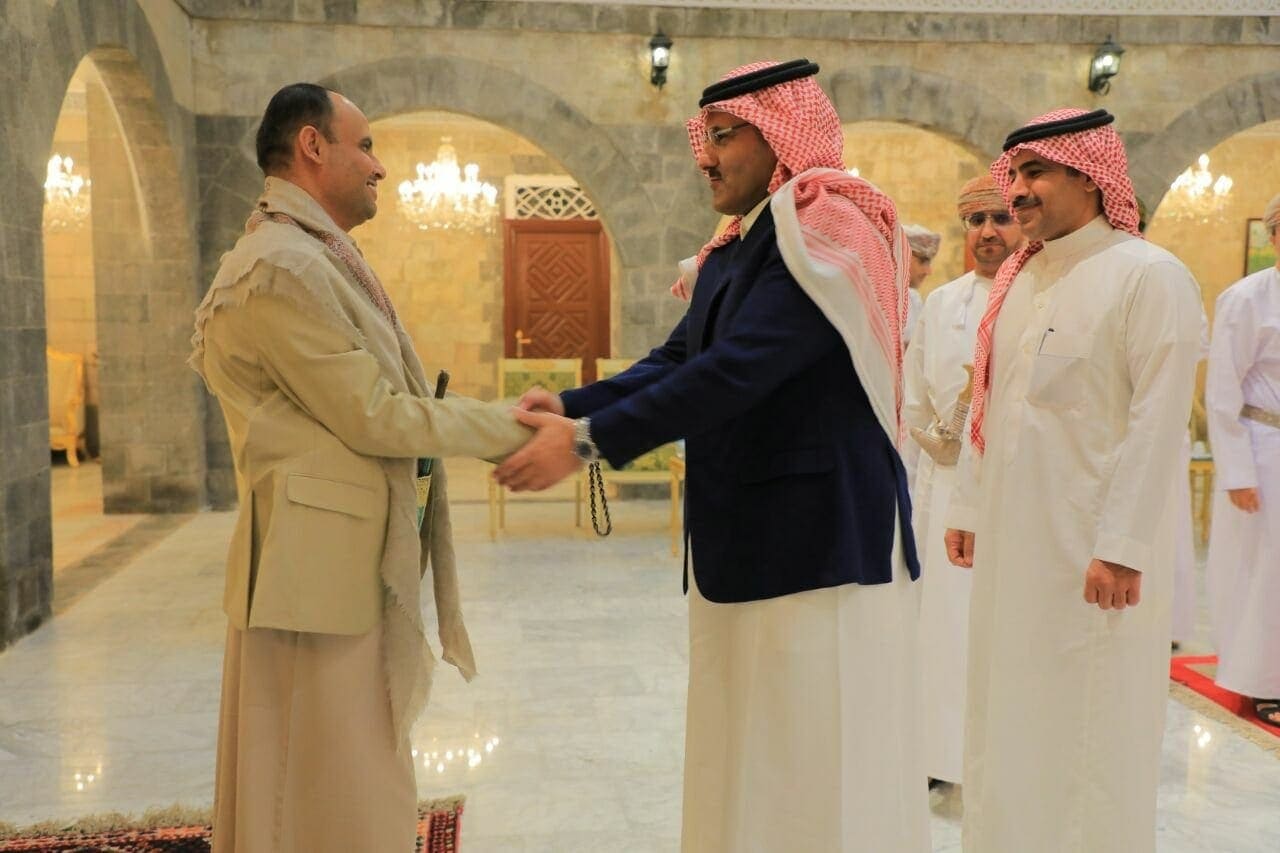
Saudi Ambassador to Yemen, Mohammed AL-Jaber, shakes hands with Houthi Political Council President Mahdi Al-Mashat in Sanaa, April 9, 2023 (Houthi Media).
16-05-2026 at 3 PM Aden Time

Abdullah Al-Shadli (South24 Center)
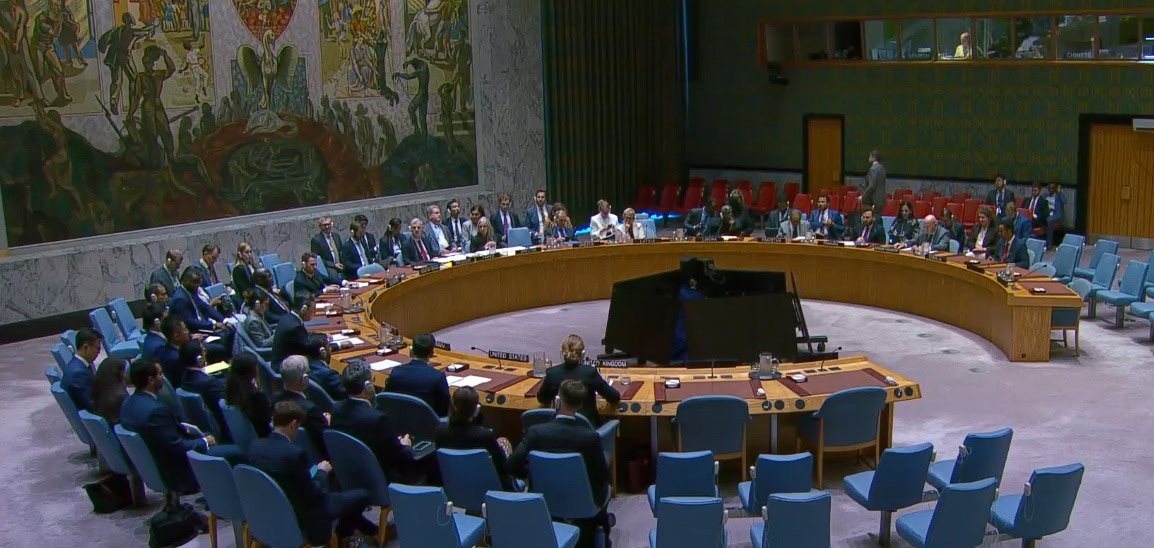
The recent meetings of the Military Coordination Committee, held in the Jordanian capital, Amman, on April 19–20, 2026, under the auspices of the UN Special Envoy’s Office to Yemen, revived discussions about the stalled roadmap between the Kingdom of Saudi Arabia and the Houthis after months of stagnation caused by regional developments linked to the Red Sea and the war in Gaza. The meetings came at an extremely sensitive time, coinciding with mounting Houthi pressure on Riyadh to revive previous agreements, particularly following threats issued by Mahdi Al-Mashat, Chairman of the Houthi Supreme Political Council, on March 25. In those remarks, he warned of a return to military escalation if Saudi Arabia failed to fulfill what he described as the “agreed entitlements.”
Renewed discussion of the roadmap did not emerge in a political or military vacuum. Rather, it followed dramatic developments that have shaken South Yemen since December 2025, when Hadramout and Al-Mahra entered an unprecedented phase of escalation that reshaped the balance of power within the anti-Houthi camp.
In late December, large areas of Hadramout witnessed confrontations and rapid military movements after Southern forces backed by the Southern Transitional Council advanced toward Wadi Hadramout and Al-Mahra, expelling Northern forces previously stationed there.
Early January 2026 brought an even more dangerous turn when Saudi Arabia directly intervened against the Southern forces. It deployed loyal formations, foremost among them the Northern Emergency Forces, into Hadramout, alongside airstrikes targeting Southern forces positions and movements. The intervention was accompanied by a political and media campaign against the Southern Transitional Council, including declarations by some members of the STC delegation in Riyadh announcing the Council’s dissolution in an attempt to ease tensions with Saudi Arabia. The campaign also included the closure of the Council’s headquarters in Aden and Hadramout for several weeks before Southern protesters reopened them in early April.
At the same time, political activity increased around the anticipated Southern dialogue expected to take place in Riyadh, alongside Saudi support for reactivating Southern factions that had previously joined under the umbrella of the Southern Transitional Council, as well as the creation of new political entities.
Amid these developments, the roadmap returned to the forefront, reigniting controversy, particularly in Southern circles. The roadmap originated from negotiations that began with the Saudi initiative announced in March 2021 before evolving into direct and undisclosed talks between Riyadh and the Houthis under Omani mediation. The process was accompanied by repeated visits by Saudi Ambassador Mohammed Al-Jaber to Sanaa during 2022 and 2023.
However, the process suffered a major setback after the Houthis escalated maritime attacks in the Red Sea and Gulf of Aden following the outbreak of the Gaza war and the subsequent US and British strikes against Houthi positions. This gradually linked the Yemeni conflict to broader regional calculations involving Iran, the United States, and Israel, making the roadmap part of a wider regional confrontation rather than a purely local issue.
In recent months, developments related to the prisoner file and discussions surrounding a prisoner exchange deal involving nearly 2,900 detainees from various parties have renewed efforts by the United Nations and regional powers to push preliminary de-escalation measures aimed at reviving the political process. However, the collapse of some understandings and continued disputes over lists and implementation mechanisms reinforced the perception that confidence-building efforts remain fragile and vulnerable to collapse at any moment.
Yet the greatest concern remains concentrated in the South, where the roadmap is not viewed merely as a preliminary step toward a political process, but rather as part of broader political, security, and military arrangements that could reshape Yemen in line with Saudi and Houthi interests without the participation of Southern forces or consideration of the Southern Cause.
These concerns are growing amid a widespread belief among many Southerners that the issue is being managed through bilateral understandings focused primarily on securing Saudi borders and containing Houthi threats rather than addressing the roots of the crisis, foremost among them the Southern Cause, which dates back to 1994 and for which the Riyadh consultations that established the Presidential Leadership Council in 2022 stipulated a special negotiating framework.
This concern becomes even more sensitive regarding oil and sovereign resources, particularly in the governorates of Hadramout and Shabwa, which represent the South’s primary economic base. As the Houthis push to use oil and gas revenues to pay employees and fighters in areas under their control, these resources are viewed as a Southern red line, as previously described by the Southern Transitional Council.
The Houthi rhetoric accompanying consultations with the Saudis has also raised additional concerns in the South, especially given the group’s insistence on framing the talks as direct understandings between “Sanaa and Riyadh,” alongside media and political discourse that treats the internationally recognized Yemeni government with contempt by labeling it “mercenaries.”
What Is the Roadmap?
Although the roadmap has been presented as a framework to end the war and launch a comprehensive political process, the growing controversy surrounding it reflects a fundamental divide in how different parties view its objectives and limitations. While the United Nations and Saudi Arabia promote the roadmap as a gradual confidence-building mechanism aimed at containing escalation, developments on the ground reveal a different reality shaped by informal understandings between the Houthis and Saudi Arabia, largely outside the involvement of the Yemeni government and the Southern Transitional Council (STC), which now finds itself the adversary for both Riyadh and Sanaa.
This contrast is particularly evident in the nature of the negotiation process itself, which initially evolved through direct channels between Riyadh and the Houthis before later being transferred into the UN framework. Saudi Arabia, for its part, appears primarily focused on finding an exit strategy that reduces direct security threats along its borders and lowers the cost of its prolonged involvement in the Yemeni war, especially after years of military and economic strain. The Houthis, meanwhile, seek to transform the current understandings into political recognition and a stable economic reality that consolidates their position as the dominant force in northern Yemen, without making substantial concessions regarding the nature of authority or the future shape of the state.
Despite extensive discussion surrounding the “roadmap” in Yemen, no official version detailing its full provisions has yet been published. The only formal announcement came from the Office of the UN Special Envoy on December 23, 2023, when it confirmed the parties’ commitment to a set of measures including a nationwide ceasefire, payment of public-sector salaries, the resumption of oil exports, reopening roads in Taiz and other areas, and continued efforts to ease restrictions on Sana’a airport and Hodeidah port. According to the announcement, the roadmap would establish implementation mechanisms and pave the way for an inclusive political process under UN auspices.
In this sense, the “officially acknowledged aspects” of the roadmap remain limited to broad outlines: a ceasefire, economic and humanitarian measures, reopening roads and ports, resuming oil exports, paying salaries, and eventually transitioning toward a broader political process. However, the finer details regarding sequencing, timelines, guarantors, resource management mechanisms, and the structure of any future government have not been formally released by the United Nations, Saudi Arabia, or the Yemeni government in the form of a public document. This ambiguity has itself became one of the main sources of controversy, particularly amid reports that officials within the internationally recognized Yemeni government and political party leaders said that they had not seen the full text of the roadmap.
Subsequent statements by Presidential Leadership Council Chairman Rashad Al-Alimi in July 2024 offered a somewhat clearer picture of the roadmap’s structure. Al-Alimi described a three-phase process beginning with a ceasefire and confidence-building economic and humanitarian measures, followed by a second stage intended to pave the way for broader arrangements, and culminating in a transitional phase leading to a political settlement. Although these remarks did not disclose all provisions, they confirmed that the roadmap is not merely a de-escalation agreement, but rather a gradual process that begins with military and humanitarian measures and ultimately leads to political arrangements.
Leaked details circulated by local media outlets and websites, some close to pro-Houthi circles, describe a three-stage roadmap extending over approximately three years. According to these reports, the first phase, lasting six months, would include a comprehensive ceasefire on land, sea, and air; payment of state employees’ salaries according to the 2014 budget; economic measures aimed at improving living conditions; prisoner exchanges; and efforts to create a climate of political, media, and humanitarian de-escalation.
The same leaks claim that the second phase, also lasting six months, would involve continued implementation of the first-stage provisions, the withdrawal of foreign forces from Yemeni territory, the resumption of oil and gas production and exports under the supervision of a joint economic committee, and agreement on a preliminary framework for Yemen’s reconstruction. This particular point helps explain part of the southern concern, as oil and gas resources, many of which are located in the South governorates of Hadramout and Shabwa, would become tied to broader economic arrangements whose mechanisms remain undisclosed.
The third phase, according to the leaked reports, would last two years and include the formation of a consensus-based national or transitional government, the launch of a comprehensive Yemeni dialogue involving various political groups, and the beginning of a reconstruction process under regional and international support or supervision.
It can therefore be said that, in its officially declared form, the roadmap is a UN framework for ceasefire implementation, confidence-building, and paving the way for a comprehensive political process. In its leaked form, however, it appears to be a broader phased plan involving military, economic, and political arrangements extending over several years and ending with a consensus government and inclusive dialogue. Between the official narrative and the leaked details lies the core problem: the longer the specifics remain unpublished, the wider the space for suspicion and mistrust.
Why Do People of South Reject It?
On September 20, 2023, in New York, Southern Transitional Council President Major General Aidarous Al-Zubaidi told the British newspaper The Guardian: “We have been marginalized and pushed to one side in the talks that took place in Riyadh.” His remarks came just one day after a delegation from the Iranian-backed Houthi movement returned from the Saudi capital to Sana’a following the first public political talks of their kind between the two sides, which lasted five days under Omani mediation.
Al-Zubaidi, whose membership in the Presidential Leadership Council was recently revoked by Council Chairman Rashad Al-Alimi, who resides in Riyadh, warned against a “bad deal” with the Houthis that could enable them to consolidate control. “Iran, through the Houthis, will control the oil wells in the South and the Bab al-Mandab shipping route through which billions of dollars in oil shipments pass,” he said. In a later interview with the BBC, Al-Zubaidi stressed that only people of South have the right to determine their future, destiny, and the future of their resources and wealth.
Political researcher and media analyst Osan bin Siddah believes southern concerns “are not limited to the content of the roadmap itself, but also to the nature of the approach through which it is being managed.” He argued that any process that fails to reflect the actual balance of power within Yemen “will remain vulnerable to collapse, no matter how coherent it may appear diplomatically.”
Speaking to the South24 Center, bin Siddah said a major part of southern anxiety stems from what he described as “bypassing the genuine representation of the southern issue.” Southerners, he said, view any understanding formulated without their effective participation as an attempt to redefine the southern cause from outside its own framework. He added that southern concerns are also shaped by the experiences of recent years, during which several political and security arrangements were presented as steps toward stability, “but in practice ended up destabilizing the southern landscape and weakening its active forces.”
Bin Siddah stressed that any sustainable stability “requires a balanced approach to both North and South issues, rather than reducing the Yemeni crisis to merely security or humanitarian dimensions.” He added: “The core issue is not the principle of dialogue or de-escalation itself, but whether the current process is capable of producing a genuine political partnership. Any settlement that fails to reflect the realities on the ground inside Yemen will remain vulnerable to collapse once regional or military conditions change.”
However, Abdulaziz Al-Oqab, head of the Fiker Organization for Dialogue and Freedoms, believes that many of the circulating narratives about the roadmap “do not reflect its true substance.” He argued that much of the controversy surrounding it is linked to political polarization and mutual distrust among Yemeni factions.
Al-Oqab told South24 Center that the roadmap “is based on multiple tracks aimed at building trust and reaching a just and comprehensive peace.” He emphasized that the proposed economic and humanitarian measures, including salary payments and reopening roads, should be viewed as steps to alleviate suffering and prepare the environment for a political solution, rather than unilateral gains for the Houthis.
He also suggested that some objections stem from “a lack of accurate information among certain parties, or from their absence from direct negotiation channels,” stressing that the final political process “will not exclude any party” and that the ultimate goal is a comprehensive settlement shaped by Yemeni consensus and supported by regional and international actors.
Despite such optimism, however, major southern questions remain unanswered. Saudi Arabia’s recent actions in the South, including strikes targeting southern forces, pushing them out of oil-rich Hadramout, and continued attempts to weaken and fragment the Southern Transitional Council, have deepened suspicions regarding Riyadh’s intentions and the roadmap itself.
Likewise, the Saudi-backed southern dialogue process has so far produced little more than consultative meetings between southern figures and the Saudi ambassador. Meanwhile, the Houthis continue negotiating directly with Saudi Arabia in a third country under UN supervision over issues whose details, and the South’s place within them, remain unclear.