SOUTH24 CENTER FOR NEWS & STUDIES
SOUTH24 CENTER FOR NEWS & STUDIES


Getty Images
Last updated on: 24-03-2026 at 3 PM Aden Time

“One notable outcome of the Iranian attack is that it has temporarily halted the emerging Saudi–UAE rivalry, which had intensified following military developments in South Yemen in late 2025.”
Farida Ahmed (South24 Center)
More than two weeks after the outbreak of war between Iran on one side and the United States and Israel on the other, escalation continues along an upward trajectory within an increasingly complex regional landscape. Military developments are deeply intertwined with economic calculations, while deterrence strategies intersect with instruments of strategic pressure.
At the heart of this equation lies the Gulf region, which appears particularly vulnerable to the repercussions of this escalation. The six Gulf states have effectively entered the circle of direct Iranian targeting due to their hosting of U.S. military bases, alongside Jordan and Iraq. Energy infrastructure, strategic ports, and maritime corridors have consequently emerged as primary targets, critical nodes in the architecture of the global economy.
Despite repeated assurances from Gulf governments, led by Saudi Arabia, to Tehran that they would not permit the United States to use their territories or airspace in the context of the war, Iran has carried out a series of drone and missile attacks across the region.
One apparent objective is to pressure Gulf states, and energy supply chain stakeholders more broadly, to push Washington toward ending the conflict. At the same time, the United States and Israel appear to be seeking to draw Gulf countries into a more formal strategic alliance within the war framework, including active participation in military operations.
This dynamic has been further compounded by Iran’s near-total disruption of maritime navigation through the Strait of Hormuz, through which approximately one-fifth of global oil supplies pass. President Trump called on nations to contribute to securing navigation in the strait; however, this appeal was met with reluctance and, in some cases, outright rejection, particularly among NATO members.
This paper analyzes the key shifts in security dynamics in the Gulf region in light of the recent war on Iran. It focuses on the nature of emerging threats, the limits of external actors in guaranteeing regional security, and potential scenarios for the future of Gulf security.
Critical Security Issues
Security dynamics in the Gulf are shaped by a set of core issues through which recent transformations can be assessed. The most significant of these include the following:
First: Regional Balance of Power
The events of February 28, 2026, marked a strategic turning point in the trajectory of regional conflict, as competition between Iran on one side and the United States and Israel on the other shifted from indirect confrontation to direct military engagement.
For years, Iran relied on proxy warfare through allied networks such as Hezbollah in Lebanon, the Houthis in Yemen, and militias in Iraq. However, its responses have now become more overt. This shift appears aimed at demonstrating its deterrence capabilities and recalibrating the regional balance of power—particularly following the killing of Supreme Leader Ali Khamenei, whose assassination was framed as a battle for the survival of the Islamic Republic itself.
The parties to the conflict have deployed a wide array of weaponry, as outlined below:
Military Capabilities Used in the Conflict
|
United States |
Israel |
Iran |
|
B-2 stealth bombers |
F-15 and F-16 fighter jets |
Short-range missiles (150–800 km), including Fateh, Zolfaghar, Qiam-1,
Shahab-1, Shahab-2 |
|
“LUCAS” loitering munitions |
F-35 fighter jets |
Medium-range missiles (1,500–2,000 km), including Shahab-3, Emad,
Ghadr-1, Khorramshahr family, Sejjil, Kheibar Shekan, Haj Qasem |
|
Naval warships |
GBU-57 bunker-buster bomb |
Cruise missiles and drones exceeding 2,500 km range, including Soumar,
Ya Ali, Quds, Hoveizeh, Paveh, Raad |
|
Patriot and THAAD systems |
SPICE bombs |
|
|
Fighter aircraft (F-16, F/A-18, F-22, F-35) |
Rampage missile |
|
|
EA-18G electronic warfare aircraft |
UAVs (Hermes, Harpoon, Heron TP) |
|
|
AWACS aircraft |
||
|
EA-11 BACN aircraft |
||
|
P-8A maritime patrol aircraft |
||
|
RC-135 reconnaissance aircraft |
||
|
MQ-9 Reaper drones |
||
|
HIMARS systems |
||
|
Aerial refueling capabilities |
||
|
Transport aircraft (C-17 Globemaster, C-130 Hercules) |
Source: Asharq, Al Jazeera
This range of weaponry underscores that the balance of power is no longer determined solely by the actors involved, but also by the diversity and sophistication of military tools employed. While the main parties have showcased advanced combat systems, from missiles and drones to air defense and cutting-edge technologies, Gulf states have adopted a largely defensive posture, by avoiding direct engagement while focusing on protecting their territories and intercepting Iranian attacks.
Iran’s messaging regarding strikes on Gulf states has been inconsistent. While some officials denied responsibility, others justified the attacks as targeting U.S. military bases rather than the host countries themselves.
Perhaps the most consequential development for Gulf states has been the erosion of a long-standing assumption: that the U.S. military presence provides an effective security umbrella. The ongoing war, alongside earlier incidents such as the 2019 attack on Saudi Aramco facilities in Abqaiq, has highlighted the limitations of these guarantees. This raises renewed questions about the viability of relying on U.S. bases as a cornerstone of Gulf security, particularly given the long-standing implicit equation of “oil for security.”
Second: Nature of Security Threats
In addition to the direct military and security threats facing Gulf states, stemming from attacks by Iran’s Islamic Revolutionary Guard Corps on oil facilities, airports, ports, and major cities, concerns are mounting over the role of Tehran’s proxies in further escalating the conflict and targeting Gulf territories. While both Lebanon’s Hezbollah and Iraqi militias have already become involved in the course of the war, the Iran-backed Houthis in Yemen, equipped with advanced weaponry and capable of carrying out more precise strategic strikes against their Gulf neighbors, remain in a state of anticipation.
This is despite statements by their leader, Abdulmalik al-Houthi, who declared in a televised address that their forces are “on the trigger” and ready to escalate militarily at any moment. Nevertheless, current indicators suggest they may opt to avoid direct involvement, wary of facing intensified strikes from the United States and Israel, and potentially even Saudi Arabia, particularly if they threaten Red Sea shipping routes, in addition to the disruptions already affecting the Strait of Hormuz.
At the same time, some Gulf states are increasingly concerned about the post-conflict phase and how Iran’s internal crisis might unfold, especially in the event of a regime collapse and the emergence of a power vacuum. These countries are keen to avoid unexpected developments that could arise from a new political order, potentially threatening regional stability or reshaping the balance of power in unpredictable ways.
Conversely, if the current Iranian system endures, even with a reduction in its nuclear and missile capabilities, Tehran would still retain the capacity to expand its drone arsenal, which could be deployed to threaten its neighbors at short notice. Iran has significantly increased its investment in unmanned aerial vehicles amid the decline of its air force due to Western sanctions, resulting in what U.S. intelligence described in early 2025 as the “largest stockpile” in the Middle East.
Moreover, concerns are rising over the potential resurgence of groups designated as terrorist organizations in the Gulf region. Despite the high efficiency and strong surveillance capabilities of Gulf intelligence services, risks persist that regional tensions could be exploited to create security breaches and pockets of instability within certain countries. Kuwait’s Interior Ministry recently announced the dismantling of a Hezbollah-linked cell that had been planning to destabilize the country, spread chaos, and undermine public order, underscoring the scale of the ongoing security challenges despite stringent preventive measures.
Third: Geopolitical and Economic Impacts
Iranian strikes on energy facilities in Saudi Arabia, the UAE, Qatar, and Kuwait have had immediate consequences. Qatar suspended liquefied natural gas production following an attack on Ras Laffan, one of the world’s largest LNG hubs, while Saudi Arabia’s Ras Tanura refinery experienced disruptions after a drone strike.
The escalation reached its peak as Iran launched strikes against Qatari and Saudi energy assets in retaliation for an Israeli attack on Iran’s "South Pars" field, triggering a sharp spike in global oil prices. The Israeli strike on one of the world's largest gas fields drew swift condemnation from Qatar, the UAE, Egypt, and Oman, citing the direct threat to global energy supplies, environmental safety, and the security of international navigation and vital infrastructure.
Furthermore, the near-total closure of the Strait of Hormuz has paralyzed maritime traffic, causing cargo backlogs in ports far beyond the Middle East. Gulf oil producers have reportedly lost approximately $15.1 billion in energy revenues as flows through the Strait ground to a near-halt, leaving millions of barrels of crude oil stranded in transit. Most Gulf stock markets have retreated as the conflict with Iran severely dampened investor sentiment, driving a widespread shift toward risk aversion.
The repercussions have extended into other critical sectors, with airspace closures forcing airlines to cancel approximately 40,000 flights, marking the most significant disruption to global aviation since the COVID-19 pandemic. Estimates suggest that Emirates Airline alone lost roughly $1 billion in the first week of the conflict.
The UAE has borne the brunt of Iranian strikes, which have impacted hotels, road infrastructure, and airports. Simultaneously, the Gulf’s tourism sector has been hit hard, threatening losses estimated in the tens of billions of dollars if the U.S.-Israeli war with Iran persists. This crisis poses a strategic threat to Gulf nations that have spent years cultivating a global reputation as premier, secure destinations for luxury tourism.
Fourth: Alliances and Security Arrangements
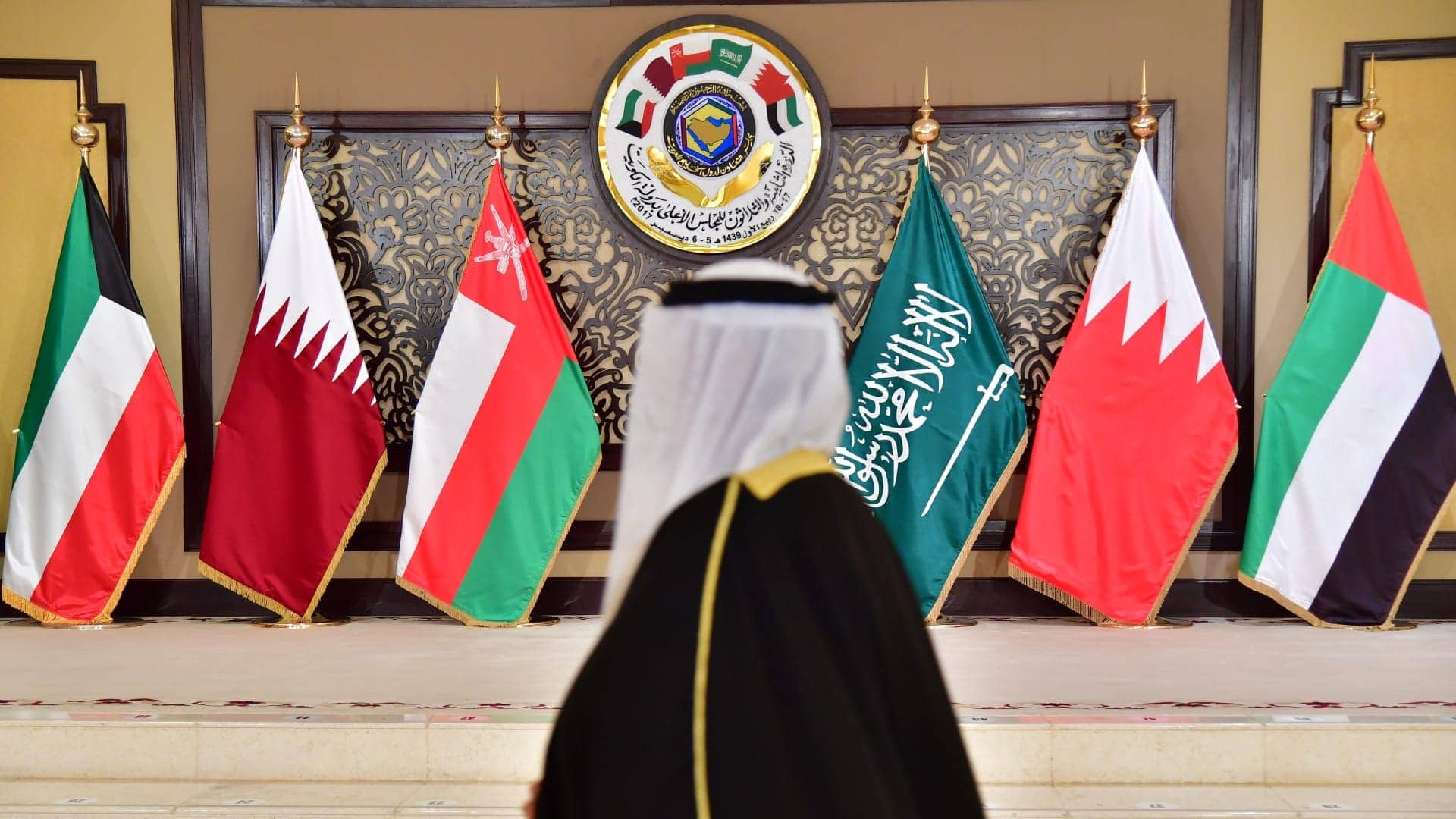
Recent Iranian strikes may provide Washington with an opportunity to revive proposals for a regional security architecture based on deeper military cooperation. However, Gulf states remain cautious about the reliability of U.S. commitments.
Reports indicate that Saudi Arabia, the UAE, Kuwait, and Qatar are reviewing key agreements with the United States across defense, energy, and infrastructure sectors, reflecting a broader effort to diversify strategic partnerships rather than rely on a single guarantor.
One of the most notable consequences of the Iranian offensive is the temporary cessation of the emerging friction between Saudi Arabia and the United Arab Emirates, which had intensified following military developments in South Yemen in late 2025. Recently, Riyadh has prioritized the formation of new strategic alliances involving Turkey and Pakistan on one hand, and Egypt and Somalia on the other.
This shift is central to Saudi Arabia’s broader objective of restructuring the regional order, consolidating its influence, and counterbalancing Emirati impact. In response, the UAE and India have signed several agreements and Memoranda of Understanding (MoUs) to enhance bilateral cooperation across multiple sectors. Simultaneously, Qatar has finalized defense agreements with Singapore valued at 1.5 billion Qatari Riyals. Collectively, these moves underscore a sharpening competition among Gulf states to project power through diverse international strategic partnerships.
Parallel to these developments, Egypt has intensified its diplomatic engagement with Gulf monarchies to formulate a clear vision for regional and security arrangements in the post-war era. At the forefront of these discussions is the proposal for a "Joint Arab Force," aimed at safeguarding Arab national security and protecting regional assets from future threats.
Nevertheless, relying solely on military superiority to reshape the region within the context of the U.S.-Israeli war against Iran remains a limited gamble without a clear political vision for a stable Gulf security environment. Furthermore, efforts to expand the "Abraham Accords", often viewed as a primary guarantor of regional stability, have faced diminishing returns in the absence of a serious resolution to the Palestinian cause. Consequently, a new regional architecture is gradually emerging, one that reflects shifting Arab and Gulf power dynamics, evolving political leanings, and economic interests moving toward divergent paths.
Fifth: Role of Regional and International Powers
In the context of the ongoing regional war, despite calls from the European Union and the United Kingdom to uphold international law and their simultaneous criticism of the Iranian regime, these positions have yet to coalesce into a clear, unified strategy. European nations remain divided on the most effective approach to managing the war’s repercussions.
Conversely, the Chinese and Russian positions have been characterized by calls for immediate de-escalation. Notably, both nations abstained from voting on a draft resolution submitted by the Kingdom of Bahrain on behalf of the GCC to halt all Iranian attacks. This reflects a nuanced perspective: while acknowledging the Gulf’s right to condemn and reject such hostilities, they also recognize Iran’s perceived right to respond to American and Israeli strikes.
Within this framework, Eastern powers are striving to safeguard their oil and geopolitical interests in the Gulf while avoiding direct involvement in the conflict. Beijing’s primary concern, for instance, lies in protecting vital maritime arteries, such as the Strait of Hormuz and the Red Sea, which are essential for energy flows to Asia. Moscow, meanwhile, is acutely aware that any direct intervention alongside Iran would mean a head-on confrontation with the United States and Israel, significantly increasing the risk of a full-scale regional war.
For its part, the Turkish government strongly opposes the U.S.-Israeli military campaign against Iran, advocating instead for diplomatic solutions. This stance does not, however, imply a political alignment with Tehran; on the contrary, Ankara may prefer to see an Iran that is weakened and more domestically focused.
This position mirrors that of Egypt, which has categorically condemned and absolutely rejected Iranian targeting of Gulf states, Jordan, and Iraq. Despite this, Cairo has faced widespread media and academic criticism from the Gulf regarding the potential for it to adopt firmer, more supportive stances toward its Gulf allies during this crisis.
Post-War Gulf Options
Based on the above analysis, Gulf states are facing two primary scenarios:
First: Strengthening Strategic and Defense Alliances
Gulf countries may deepen military cooperation with the United States and other partners, diversify alliances, increase defense investments, and develop joint deterrence systems to ensure sustainable regional security.
Second: Continued Regional Retrenchment
Alternatively, Gulf states may continue avoiding direct involvement, focusing instead on managing internal and external risks independently, while preparing for potential instability in Iran and safeguarding economic and energy interests.
In Conclusion, Gulf states have strong reasons to believe that the war initiated by the United States and Israel directly affects their strategic interests, without meaningful consultation. As a result, they are likely to maintain a cautious distance from the conflict, even as they recognize that the post-war phase will require them to confront regional repercussions largely on their own, amid continued uncertainty surrounding Iran’s future.
Previous article