SOUTH24 CENTER FOR NEWS & STUDIES
SOUTH24 CENTER FOR NEWS & STUDIES


Design: South24 Center
Last updated on: 16-02-2026 at 10 AM Aden Time

“The greatest fears regarding the effects of Saudi media mobilization lie in the path of Southern dialogue, as the dialogue environment cannot stabilize in light of a media discourse characterized by provocation or disparagement.”
South24 Center | Abdullah Al-Shadli
At a time when all eyes are turned toward Riyadh as the venue for managing the anticipated Southern Dialogue and attempting to formulate political understandings for the future of the South, a parallel factor has become increasingly visible. This is reflected in the escalation of Saudi media discourse that has exceeded the limits of traditional political criticism to levels involving direct insults to Southern symbols and the invocation of previous security incidents, linking them to regional parties that were, until very recently, working with Saudi Arabia within Yemen as part of the Arab Coalition, such as the UAE.
This wave was not limited to individual platforms or personal accounts but extended to influential and official media outlets, including newspapers and satellite channels. This has granted it greater political weight and moved it from the scope of media controversy into the circle of influence over the political and social environment surrounding the dialogue.
In a local context characterized by high sensitivity due to a series of recent developments in South Yemen, including Saudi airstrikes on Southern forces in Hadramout, which led to the death and injury of dozens and deepened the state of suspicion toward Riyadh’s role, these messages were not read as passing media material. Rather, they were seen as indicators of the nature of political alignments and the Kingdom's intentions. This has raised the level of tension and Southern popular anger.
Despite Saudi Arabia's military victory over the Southern Transitional Council (STC) in Hadramout and Al-Mahra, and achieving a political breakthrough at the heart of the Council, which led to its high-level delegation announcing its dismantling and dissolution on January 9 amid rejection from the Council's institutions and the people internally, Saudi media continued its mobilization while ignoring new realities and the need for a climate suitable for Southern dialogue. This overlap between the official political path sponsored by Riyadh and the parallel media path raises questions about the limits of media discourse's influence in sensitive moments and its ability to support or undermine an atmosphere of de-escalation.
Radical Media Mobilization
The wave of Saudi media escalation reached its peak on January 7, with the adoption of the “escape” narrative regarding Aidarous Al-Zubaidi, the president of the Southern Transitional Council, who was expected to arrive in Riyadh that evening on a flight with a delegation of council members. That delegation arrived in Riyadh on its own, without Al-Zubaidi, amid mysterious circumstances and multiple hypotheses about what had happened.
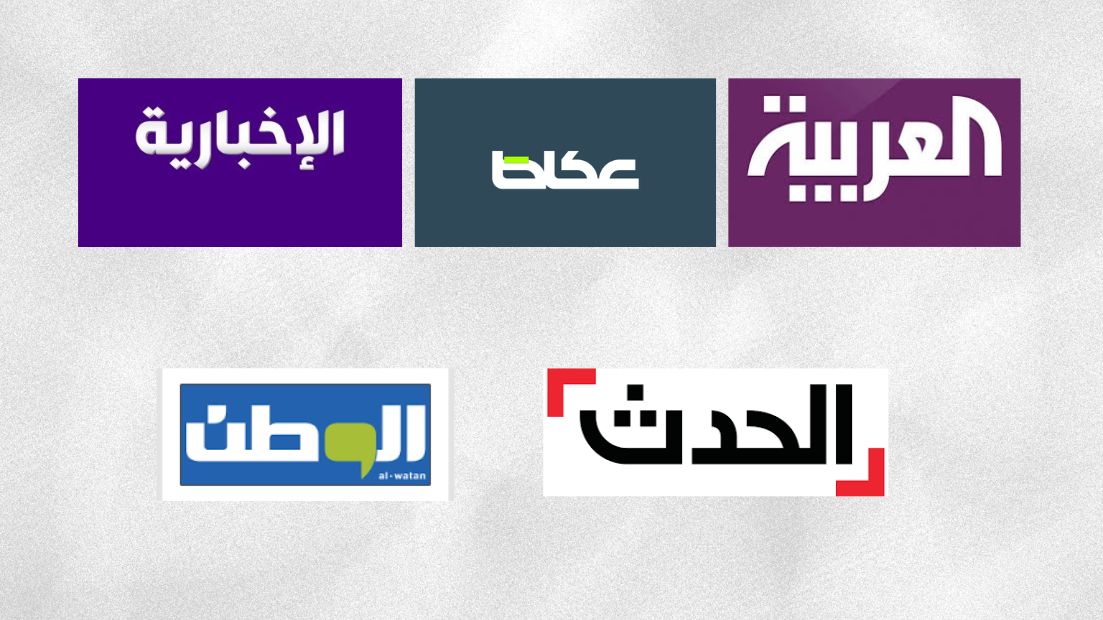
Despite the lack of conclusive evidence regarding Al-Zubaidi leaving the country or remaining within it, Saudi media—including Al-Arabiya, Al-Hadath, and Al-Ekhbariya channels, and Okaz and Al-Watan newspapers, among others—presented the escape narrative as a comprehensive interpretive framework for the political events in Aden. Aidarous Al-Zubaidi was presented as a party that "fled" the city at a sensitive time, with a detailed account of his journey through Somalia reaching the UAE.
Notably, the coverage did not stop at conveying information but framed the event within a dramatic structure showing the act as a humiliating withdrawal rather than a political or security move. This turned the news into a psychological mobilization tool; its goal was not to document the incident as much as it aimed to fix a mental image for the Southern public, who widely consider Al-Zubaidi a national symbol: a leader who flees instead of facing challenges.
The coverage then moved to a more intense level by introducing symbolic elements of humiliation within the story itself, circulating insulting accounts of the method of exit, such as depicting him as a person smuggled secretly among luggage or goods. These were not mere journalistic details, but tools of social defamation used to break the symbolic prestige of a political figure before his social base. Here, the media language turns into implicit sarcasm or direct insult, transcending legitimate political criticism into a discourse of social stigmatization, a pattern known in organized incitement campaigns where the symbol is targeted to psychologically shake the group associated with it.
On a parallel line, some coverage reconstructed Al-Zubaidi's political image as a dependent lacking independence, linking all his movements to alleged Emirati decisions and presenting him as a person who possesses no self-will. Most dangerous was the employment of visual technology to impart a sense of "certainty" to the narrative, by producing content that simulates the escape path using artificial intelligence tools or illustrations.
On January 11, the Saudi newspaper Al-Watan reopened the file of the assassination of the former Governor of Aden, Major General Jaafar Mohammed Saad (2015), presenting it in a direct accusatory format against the UAE. Through an interview/testimony attributed to a security official (Brigadier General Nasr Al-Shadli), it claimed the assassination was carried out via a "car bomb" and that the motive was the Governor's rejection of Emirati "dictates" related to ports, the airport, weapons, and ammunition, with a clear political link between the assassination and the struggle for influence in Aden.
The newspaper, which had previously attributed the same operation to the Houthis, the Revolutionary Guard, and former Yemeni President Ali Abdullah Saleh, did not present the accusation as a "hypothesis" or "information under investigation," but as a complete conclusion aimed at reshaping the public’s memory of an old event within a current political battle.
However, the fundamental problem here is that the assassination of Jaafar Mohammed Saad was officially claimed at the time by the "Islamic State/ISIS," which was documented by multiple international reports.
In parallel, Al-Watan escalated at the beginning of this February regarding the file of the assassination of Major General Thabit Muthanna Jawwas, commander of the Al-Anad axis and one of the most prominent military figures in South Yemen (2022). It presented a narrative that goes beyond "accusing the UAE" to talking about "secret coordination/understandings" between Abu Dhabi and the Houthis, claiming that the assassination of Jawwas came as a "sacrifice" for those understandings, while introducing the names of Southern actors into the plot and considering "media misinformation" as part of the operation.
This report by Al-Watan came despite the fact that the Specialized Primary Criminal Court in Aden had issued a death sentence on November 18, 2024, against four defendants in the assassination of Major General Thabit Jawwas, with details of names and penalties. The convicted cell was reportedly linked to Amjad Khalid, a Yemeni officer who led a cell from the city of Al-Turba in Taiz between 2019–2025 and was responsible for bombings and assassinations in Aden and Lahj.
Recently, Khalid, who is close to the Islah Party, announced his alliance with the Houthis in a video clip likely published from Sana'a. It is worth noting that the Transitional Council had demanded in April 2021 that the Saudi-led Coalition prosecute Amjad Khalid. Official spokesman Ali Al-Kathiri stated that the Council expressed its regret over the presence of Amjad Khalid in camps under the cover and protection of the Coalition.
From an analytical perspective, "recalling" these old files in this way and at this timing suggests that it serves specific political and media functions: first, reframing the Saudi-Emirati dispute within Yemen as a moral/security dispute rather than a dispute over influence and interests, by linking the UAE directly to sensitive blood files.
Second, delegitimizing the STC and Al-Zubaidi socially; when the UAE—as the most prominent ally of the STC—is linked to the assassinations of local symbols, the legitimacy of the Southern leadership is pulled from politics into the realm of values (treason/agency/liquidation). This is the most dangerous type of polarization because it produces a rift within society, not just among the elites.
Furthermore, this discourse does not only threaten political balance but carries a high potential to ignite Southern-Southern social conflicts by invoking victims who hold symbolic status in the memory of Southerners and turning them into "incriminating evidence" against an internal party via the Emirati gateway.
The unprofessional and extremist mobilization by Saudi media was not limited to these grave transgressions, but they are considered the most dangerous in terms of their security and social consequences in South Yemen. This necessarily leads to obstructing the path of the Southern dialogue or creating a state of doubt among Southerners, bringing the question back to the forefront: whom does the Saudi media serve today, and is it a reflection of the Kingdom's policy?
Impact on the Southern Street and Dialogue Efforts
The head of the Southern Journalists and Media Practitioners Union, Aidarous Bahashwan, believes that the media campaigns targeting Southern symbols were met with widespread popular disapproval and contributed to increased support for the Southern cause rather than weakening it. He told South24 that this discourse prompted even reserved Southern voices to publicly express their rejection, considering that such a style is inconsistent with the Kingdom's position as a sponsor of dialogue.
Bahashwan stressed the moral responsibility of Southern media professionals present in Riyadh by Saudi invitation, calling on them not to align with any offensive discourse and to work on correcting the image held by the Saudis. He pointed out that the rift in trust left by these media campaigns requires great efforts to address.
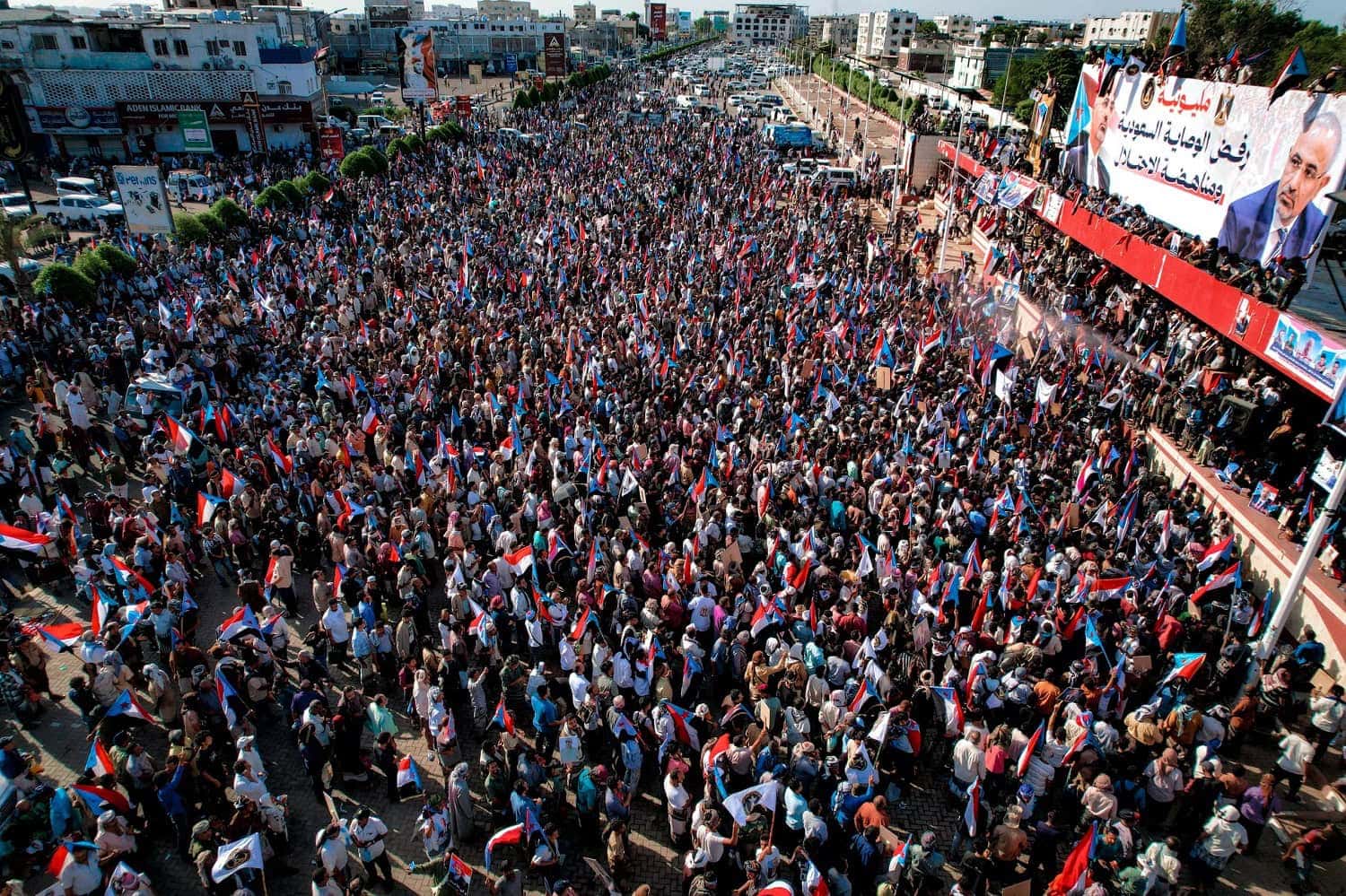
For his part, political and media researcher Awsan Bin Sadda placed this escalation in its political context, noting that media in sensitive stages does not work in isolation from the political environment, but becomes part of the tools of influence within it. Bin Sadda added to South24 that the disparagement of Southern symbols by some platforms or the undermining of the legitimacy of peaceful protests produces a non-neutral environment for dialogue and raises doubts about the intentions of the sponsoring parties.
Awsan bin Sadda warns of the psychological effects of this discourse, especially when it involves an affront to peaceful protests or questions their legitimacy, considering that this invokes a Southern memory associated with discourses of exclusion and betrayal. He said these messages are received in the South as indicators of a dialogue environment that does not seem reassuring enough, which may affect the street's receptivity to any future outcomes.
For his part, journalist and writer Fadl Mubarak believes that the impact of these media materials is linked to the nature of the entity issuing them, explaining that the problem exacerbates when they are issued by official or semi-official figures or platforms close to or perceived as aligned with Saudi decision-making circles. This makes them read as political messages rather than mere expressions of opinion.
Mubarak added to South24 that Saudi media has not shown a sufficient degree of balance in covering the Southern file over the past two months, as moodiness and emotional reactions dominated much of the coverage, contributing to a climate of discomfort for the Southern street at a time that requires the highest levels of reassurance.
The greatest fears regarding the effects of Saudi media mobilization lie in the path of Southern dialogue, as the dialogue environment cannot stabilize in light of a media discourse characterized by provocation or disparagement.
Aidarous Bahashwan confirms that what is required of the Saudi leadership is to stop this negative media approach and focus on a path that increases the chances of reaching fair and balanced results, considering that the language of threats or defamation does not serve stability nor reflect the spirit of dialogue desired by the peoples of the region.
Fadl Mubarak believes that official Saudi discourse, although it presents positive messages, needs practical steps to support this orientation, including regulating parallel media discourse and creating a more balanced environment. He said the success of the dialogue depends on the ability of the official media to work with sincere intentions that serve the political path rather than obstruct it.
It is worth noting that satellite channels and official websites affiliated with the Yemeni government and supervised by the Minister of Information residing in Riyadh, Muammar al-Eryani, have fully engaged in the Saudi media mobilization and acted as an extension of it. This led to the creation of a Saudi-Northern alignment that provoked the ire of Southerners.