SOUTH24 CENTER FOR NEWS & STUDIES
SOUTH24 CENTER FOR NEWS & STUDIES


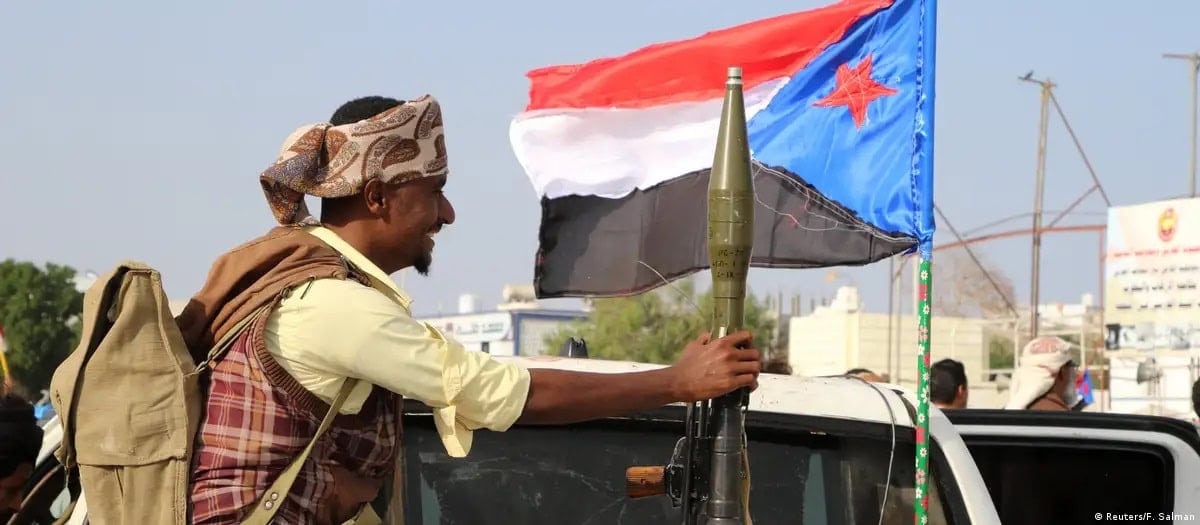
A soldier from the Southern Armed Forces (Picture from F. Salman/ Reuters)
Last updated on: 16-12-2025 at 9 PM Aden Time

“The broader impact of the Southern forces’ actions lies in the establishment of a new military reality that acts as a barrier to Houthi geographic and economic expansion, particularly in the context of future phases of the war or peace negotiations.”
*Ibrahim Ali (South24)
The securing of Wadi Hadramout and Al-Mahra by South Armed Forces is a fundamental shift in Yemen’s internal balance of power and carries serious strategic consequences for the Houthi movement, even though these areas were not under its direct control.
The losses incurred by the Houthis are not the result of territorial defeat in open combat, but rather the loss of a logistical and financial depth they have long exploited to sustain their internal fronts and prolong the conflict over the past decade. The recent move toward the two governorates imposes tangible restrictions on the Houthis’ ability to expand and finance their operations, while dismantling the fragile security cover that had indirectly served their interests.
Choking Supply and Financing Arteries
The most immediate and significant loss for the Houthis lies in the tightening grip on the logistical arteries that have sustained their military machine. For years, Al-Mahra, Yemen’s eastern gateway due to its strategic position along the Arabian Sea and its border with Oman, served as a primary supply corridor for the group. Exploiting lax security conditions, the Houthis established smuggling routes extending from the Shahan and Sarfeet border crossings, by land and sea, into areas under their control. These routes facilitated not only the transfer of weapons, ammunition, and narcotics, but also the movement of technical experts.
This threat was far from theoretical. Security reports over the past year documented multiple seizures. In October 2025, authorities intercepted attempts to smuggle more than 3,000 electronic components, including programmed circuit boards and sensors used in the manufacture of drones and improvised explosive devices. This underscores the Houthis’ heavy reliance on this corridor to maintain their technological edge. The takeover of these areas by the Southern forces effectively shuts down this vital artery.
As a result, the Houthis now face growing difficulty in replacing battlefield losses and sustaining their military stockpiles, placing increasing pressure on their ability to conduct large-scale operations. Moreover, the southern military advance undermines drug-trafficking and money-laundering networks linked to Houthi war financing. Multiple reports have pointed to these transnational networks’ connections with regional allies such as Iran and Hezbollah, using illicit trade to generate the foreign currency needed to fund the Houthi war effort, including the acquisition of military technology from the black market.
The new control on the ground signals the gradual dismantling of these clandestine financial infrastructures, placing additional economic strain on a movement already facing mounting funding challenges. The loss, therefore, is not merely a security setback, but a strategic financial blow that undermines the Houthis’ capacity to sustain the war.
Removing Fragile Influence and Closing Security Gaps
Although the Houthis did not exercise direct control over Hadramout and Al-Mahra, both of which were formally under forces aligned with the Yemeni government, most notably the First Military Region and its allies, this arrangement functioned, from the Houthi perspective, as a weak political and military cover that indirectly served their interests. The real loss lies in the collapse of this cover. Despite their declared hostility toward the Houthis, these forces suffered from evident operational weakness and persistent political and military infighting. This fragility created security vacuums that the Houthis and their allies were able to exploit indirectly, enhancing their influence and freedom of movement.
Crucially, this fragile environment allowed persistent security loopholes, enabling the presence of active Houthi cells or the safe passage of sympathizers and smugglers. Replacing these forces with the Southern forces, widely viewed as more disciplined and more coherent in doctrine and military orientation, has eliminated any remaining “soft zones” that the Houthis could exploit. The previously deployed forces, entangled in broader internal conflicts with the Southern Transitional Council, contributed to diverting security efforts away from the real Houthi threat. Their removal and the consolidation of control under a more assertive leadership have effectively closed the door on future Houthi attempts to penetrate Yemen’s eastern depth.
This outcome marks the end of any indirect influence or ability to capitalize on the lax security that once prevailed in the two governorates, potentially forcing the Houthis to confine their focus to areas under their direct control.
Blocking the Path of Houthi Expansion
The broader impact of the Southern forces’ actions lies in the establishment of a new military reality that acts as a barrier to Houthi geographic and economic expansion, particularly in the context of future phases of the war or peace negotiations. Houthis’ most significant loss is the construction of a defensive wall preventing any eastward expansion toward oil and gas infrastructure. Hadramout, as Yemen’s most resource-rich governorate, has long been a strategic economic goal for all parties.
Facing an acute financial crisis, the Houthis sought access to these resources either through direct control or coercive leverage. They have already imposed a de facto blockade on oil exports from Shabwa and Hadramout, inflicting losses exceeding $7 billion on the Yemeni government following missile attacks on the Al-Nashima and Al-Dhabba ports in October and November 2022. Unified southern control over these areas extinguishes any remaining hope of achieving this objective and denies the Houthis access to oil and gas export terminals, keeping these resources firmly out of their reach.
This development also redirects the conflict toward new fronts that may not serve Houthi expansionist goals. Instead of engaging in a fragmented and low-intensity confrontation with previous forces, the Houthis now face a unified, capable, and regionally backed opponent in the Southern Transitional Council. This shift may push the conflict into new arenas and force the Houthis into attritional battles with the Southern Armed Forces, dispersing their strength away from their primary goal: securing control over the north.
The Houthi Response: Escalating Field and Media Anxiety
Houthi losses have not been limited to logistical constraints in the east; they have also manifested in erratic field behavior reflecting confusion and concern over the opening of new fronts, particularly following recent statements about liberating central governorates. This conduct suggests genuine fear of the confrontation expanding into areas that would complicate Houthi military calculations. The anxiety became evident in the group’s actions along the Tharah–Mukeiras road in Abyan. Within days of meetings and statements emphasizing the need to move toward the liberation of Al-Bayda, the Houthis rushed to demolish and sabotage large sections of this strategic route using explosives and landmines, attempting to cut it entirely and obstruct any potential advance by government and resistance forces toward Mukeiras.
This confusion extends beyond the battlefield into Houthi media discourse, particularly in coverage of developments in Hadramout and Al-Mahra. Despite their hostility toward both the Southern Transitional Council and the internationally recognized government, Houthi media outlets focused their attacks exclusively on the Southern forces and the STC.
In this context, the group revived what could be described as the “Israeli card” as a tool of incitement and disinformation. Months earlier, Houthi media promoted claims of an Israeli delegation visiting Aden and meeting STC leaders following administrative decisions by STC President Aidrous Al-Zubaidi. The same tactic resurfaced after the events in Wadi Hadramout and Al-Mahra, with Houthi outlets amplifying allegations published by a British newspaper claiming that the STC had sent representatives to hold talks with Israeli officials. This heavy reliance on such narratives reflects a desperate attempt to tarnish the image of their opponent domestically and regionally.
The level of anxiety became particularly striking when Houthi media displayed unprecedented enthusiasm for statements by Saudi figures, by Presidential Leadership Council Chairman Rashad Al-Alimi, and even by reports in Hebrew-language newspapers, as long as they aligned with attacks on the STC. This behavior underscores the extent to which the Houthis now view the unification of the southern front under Southern Armed Forces as a more immediate and serious threat than any of their other adversaries.
Conclusion
In sum, the emerging landscape in South Yemen reveals that the Houthis are facing a genuine dilemma following the loss of one of their most critical covert routes for smuggling weapons and funds through Al-Mahra. This closure, combined with the fear that drove them to destroy key roads linking Abyan and Al-Bayda to prevent any potential military advance, indicates a marked decline in their ability to sustain the war. Current developments are placing growing pressure on the group, forcing a reassessment of its strategy and potentially making it more inclined to offer concessions in any future peace negotiations.