SOUTH24 CENTER FOR NEWS & STUDIES
SOUTH24 CENTER FOR NEWS & STUDIES


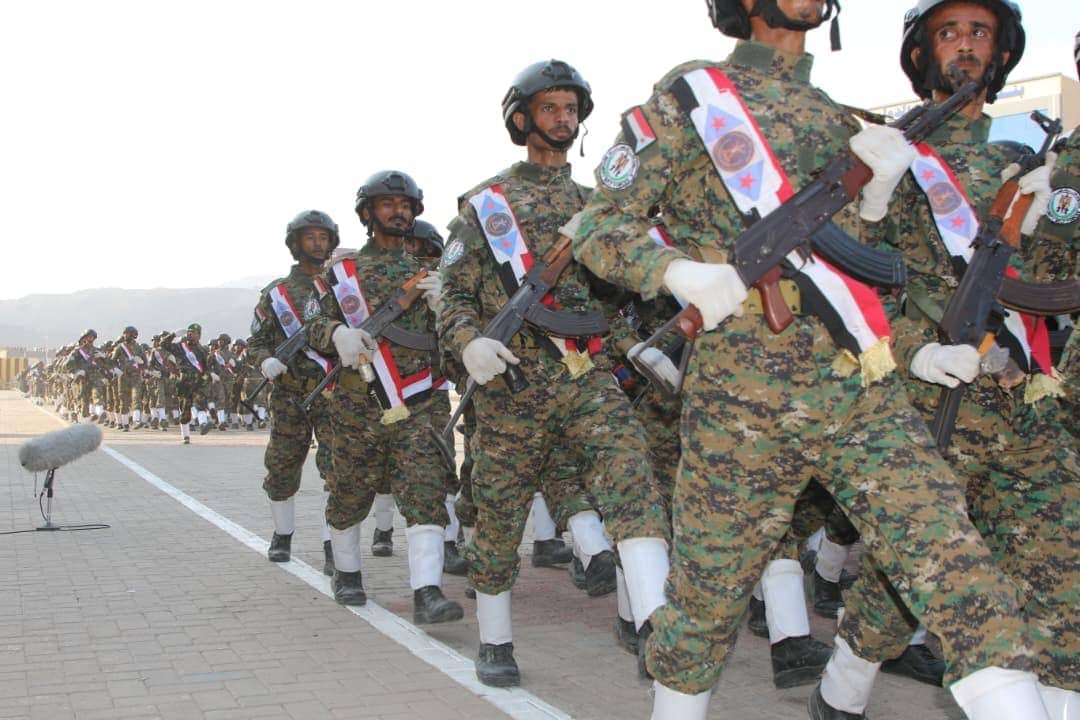
A picture from the military parade of the Southern Forces held in Aden on November 30, 2025 (South24 Center)
Last updated on: 09-12-2025 at 7 PM Aden Time

|
|
Farida Ahmed (South24 Center)
Hadramout Governorate has experienced unprecedented security and military tension in recent days, driven by clashes between the Southern Armed Forces and units of the First Military Region “northern forces aligned with the Yemeni Islah Party that have been stationed for years across Hadramout’s Wadi and Desert areas”. Southern forces have since taken control of Seiyun city, several surrounding districts, and key positions in the Wadi, including the headquarters of the First Military Region, Seiyun Airport, and the Presidential Palace.
This escalation was preceded by the Southern Forces’ mobilization toward Wadi Hadramout, alongside the deployment of fighters from the “Hadramout Protection Brigade” led by tribal chief Amr bin Habrish near PetroMasila facilities, prompting accusations from the Second Military Region that bin Habrish’s forces had attacked corporate security positions.
It appeared that bin Habrish was counting on potential backing from the First Military Region in Hadramout’s Desert and Wadi, in addition to the military force he had recently formed. However, the trajectory of the confrontation shifted rapidly; Developments on the ground accelerated toward the launch of Operation “Promising Future”, led by five brigades from the Southern Armed Forces and the Hadrami Elite Forces, with the stated goal of removing the First Military Region’s presence from the Wadi and Desert.
This move came in response to popular demands that have been longstanding for years across Hadramout calling for the withdrawal of these forces and empowering the people of the province to manage their own security, military, and economic affairs.
Despite decades of southern concerns over the security landscape in Hadramout’s Wadi and Desert, these concerns had received little political or security attention, particularly as the First Military Region kept organizational ties to the Muslim Brotherhood.
From a southern perspective, this created an unsafe environment that allowed extremist groups and destabilizing activities to flourish, resulting in assassinations, recurring insecurity, and smuggling routes benefiting the Houthis. Consequently, the Wadi and Desert became a chronic security burden, stretching Southern forces thin and undermining stability across government-aligned areas and coalition-partner territories.
Motives Behind Ending the First Military Region’s Presence
Beyond the factors noted above, several other dynamics contributed to the decision to end the First Military Region’s deployment in Hadramout. These forces remained entirely absent from major battlefronts where the internationally recognized government fought the Houthis, despite possessing decades of accumulated military experience, weaponry, and manpower.
Meanwhile, pro-government forces were forced to build new armies from scratch across liberated areas after 2015, including southern units, while the First Military Region maintained an ambiguous stance that rendered it operationally irrelevant.
For example, the First Military Region received no orders to participate in the 2015 liberation of Mukalla from Al-Qaeda in the Arabian Peninsula (AQAP), despite its proximity to the battlefield. Similarly, when the three Bayhan districts in Shabwa fell to the Houthis, and again during the 2022 battle for the liberation of Bayhan, the region’s forces remained inactive, even though they were geographically close, while Southern “Giants Brigades” deployed all the way from Yemen’s western coast to participate.
The same pattern held in the battles for Marib, where the First Military Region stayed on the sidelines despite its advantageous positioning.
This reality raises serious questions about the role of these forces and their inactivity throughout 11 years of conflict, even though they represent one-sixth of the Yemeni army and constitute one of the country’s six major military regions. They retained superior armaments, including advanced tanks, yet made no meaningful contribution to defensive or offensive operations.
The region did not hold a single military parade in all those years, fueling the perception that although nominally under the Ministry of Defense, it operated beyond the control of the ministry’s command center. Accusations have also persisted that the region played a role in facilitating Houthi weapons smuggling through checkpoints under its control.
Adding to this, former president Ali Abdullah Saleh made a revealing statement during a 2016 interview with Russia Today, claiming that First Military Region troops received salaries from two contradictory sources: the Houthis and Saudi Arabia.
While Saudi payments might be understood as an effort to stabilize border-adjacent regions, Saleh’s remarks raised further questions about the forces’ independence and reliability, particularly regarding their neutrality in confrontations with the Houthis.
The situation has fueled debate over whether the region maintains dual loyalties toward both the Houthis and the Muslim Brotherhood, especially given that most of its personnel originate from northern areas and spend their leave time in Houthi-controlled territory. This heightens concerns over their susceptibility to recruitment or influence.
Accordingly, there are credible fears that they could disrupt the front lines at critical moments, whether through surprise attacks on Southern forces in Hadramout and Shabwa, or by handing over camps and weapons to AQAP to complicate the battlefield. Such a scenario would leave both Saudi Arabia and Southern forces insufficiently prepared, unless such a bold reconciliatory is taken.
It was therefore unsurprising that the Saudi-led coalition, particularly Saudi Arabia, maintained a position of neutrality during the southern advance to reclaim the Wadi and Desert from the First Military Region, regarding it as a necessary step. No international condemnations were issued, not from the United States, the United Kingdom, or others, especially amid reports of potential U.S. intent to designate the Muslim Brotherhood in Yemen as a terrorist organization, following similar designations of Brotherhood affiliates in Lebanon, Egypt, and Jordan.
This signals implicit international acceptance of a restructured operational landscape in Yemen, aligning with recent statements by Presidential Leadership Council members Tariq Saleh and Sultan al-Aradah about an approaching decisive confrontation with the Houthis.
It has also become clear that disrupting smuggling routes is now an international priority. A meeting chaired by British Ambassador Abda Sharif of the Steering Committee for the Maritime Security Partnership with Yemen held two days before the restoration of security in the Hadhramaut Wadi and Desert, underscored this point. In a joint statement, participating countries stressed “the importance of strengthening the operational capacity of the Yemeni Coast Guard to intercept and prevent the flow of weapons, narcotics, and other illicit goods.”
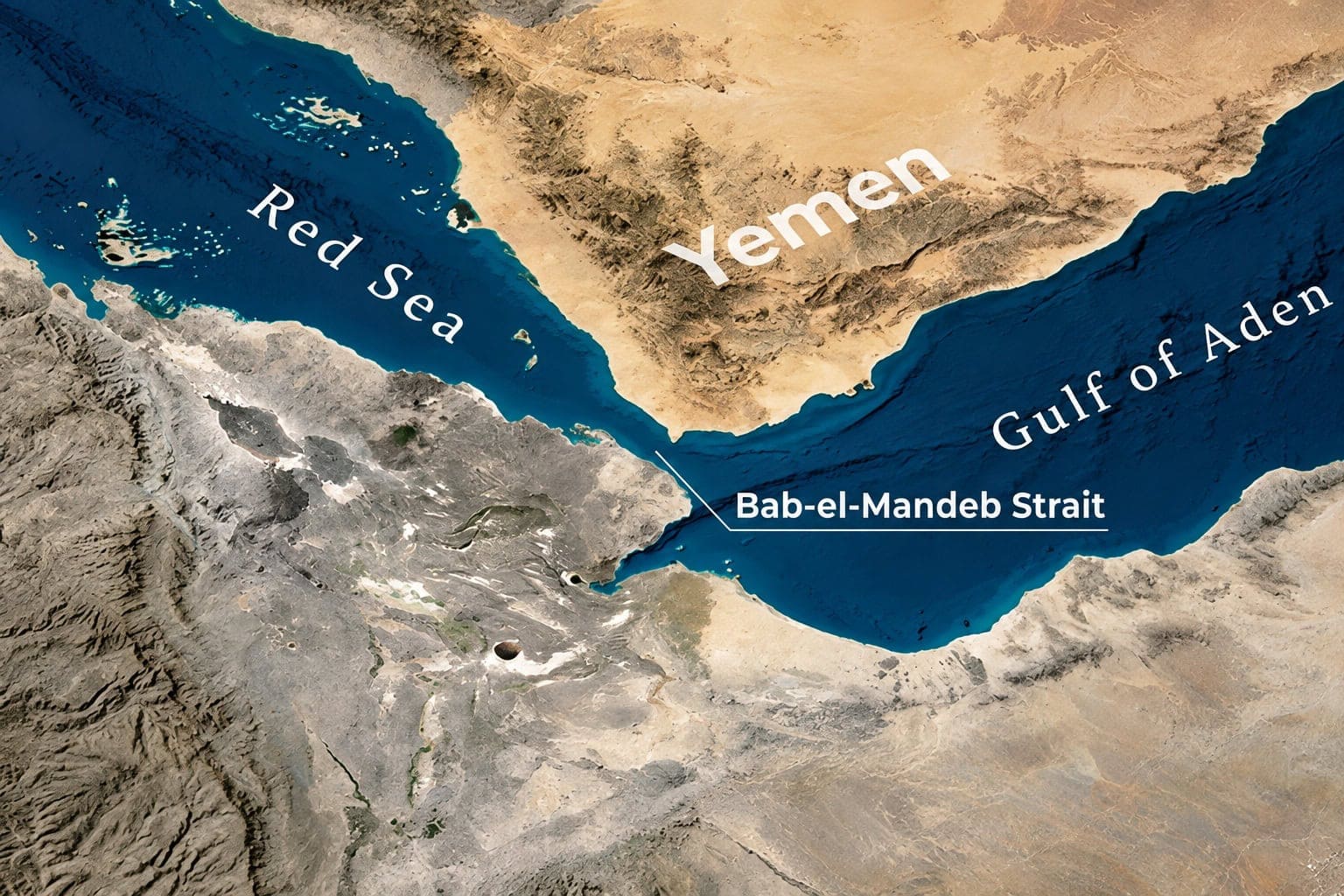
The timing of the meeting reflects clear international support for efforts to cut off the land-based smuggling routes used by the Houthis and linked to Yemen’s coasts in Hadhramaut and Al-Mahra, long considered major strategic vulnerabilities. This comes especially as a recent report by the UN Panel of Experts on Yemen highlighted an unprecedented surge in cooperation between the Houthis and Somalia’s Al-Shabaab movement during 2025. According to the report, this cooperation has included weapons smuggling, military training, and the use of Somalia as a transit point for arms shipments headed toward the coasts of Hadhramaut and Shabwa.
Southern Strategic Movements
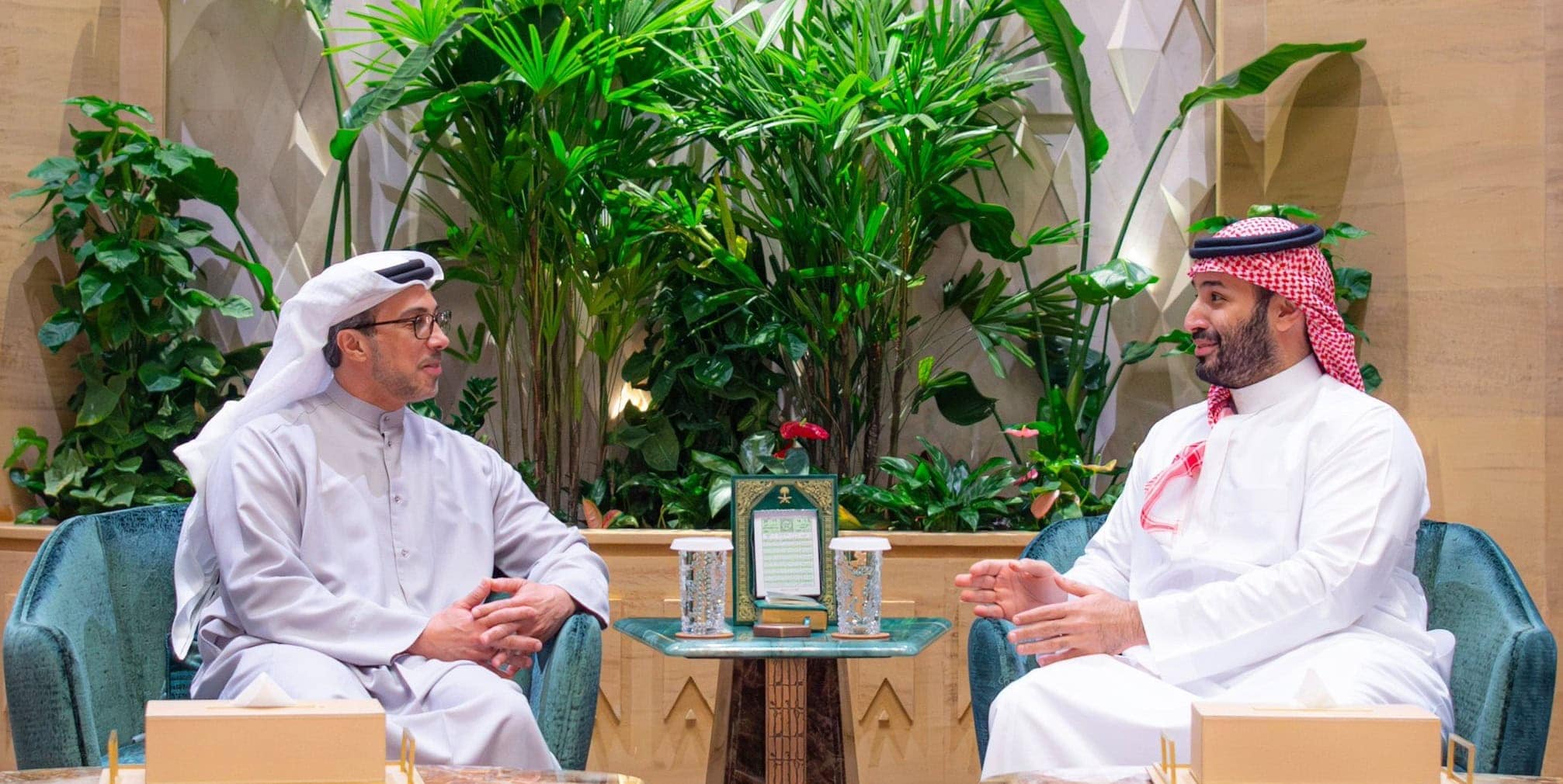
Despite regaining the Wadi and Desert of Hadramout and moving similarly toward Mahra to consolidate southern military control, Southern forces continue to face pressure from Saudi Arabia’s Special Committee, led by Major General Mohammed al-Qahtani to hand over captured positions to the Saudi-backed “Nation Shield Forces,” established in 2022 under the nominal leadership of Presidential Council Chairman Rashad al-Alimi.
Al-Qahtani’s public emergence for the first time signals that the situation in Hadramout has moved beyond the diplomatic niceties previously managed by Saudi Ambassador Mohammed Al-Jaber during critical moments.
The intent to replace the First Military Region with Nation Shield Forces is not new. Major General Ahmed bin Buraik stated two years ago that an agreement existed to hand over the region to Nation Shield units under Hadrami leadership after training.
This transition now appears set for gradual implementation, particularly as Nation Shield Forces are predominantly southern and relatively compatible with other southern military entities, a strategic factor Saudi Arabia has leveraged effectively to reinforce its influence.
Nevertheless, the Southern Transitional Council (STC) continues to assert that it will safeguard the gains of Operation “Promising Future” in Hadramout and Mahra, signaling its commitment to holding strategic ground despite potential changes. Statements by the Saudi delegation and President Rashad al-Alimi urging forces to return to barracks stirred controversy among some STC leaders in Hadramout, who argue that active operational theaters cannot be treated as mere local disputes.
At present, the STC effectively controls nearly the entirety of South Yemen, an expansive territory that could reshape political influence within the Presidential Leadership Council or support a more autonomous southern framework.
To this end, the STC appears to be mobilizing popular bases across the south to launch open-ended sit-ins calling for a “Second Independence Declaration of the Arab South,” possibly as a means to push for political changes within the Council. From a regional perspective, such a move may appear reasonable, especially amid a shared strategic objective among the Arab Coalition and local forces to defeat the Houthis, suggesting that southern political steps might be deferred until after that goal is achieved.
Ultimately, neutralizing the long-standing flashpoint in Hadramout’s Wadi and Desert marks a significant strategic gain for both southern and regional actors. It opens the door to reducing security volatility in the province in the coming period.
This progress becomes even more consequential if paired with stronger action against AQAP, which began attacking Southern forces after the region’s recapture, seemingly as direct retaliation for the First Military Region’s removal and the shift in ground dynamics. These developments could help establish the operational and field conditions necessary for the next, more delicate phase, one that moves toward Houthi-controlled areas.