مركز سوث24 للأخبار والدراسات
مركز سوث24 للأخبار والدراسات


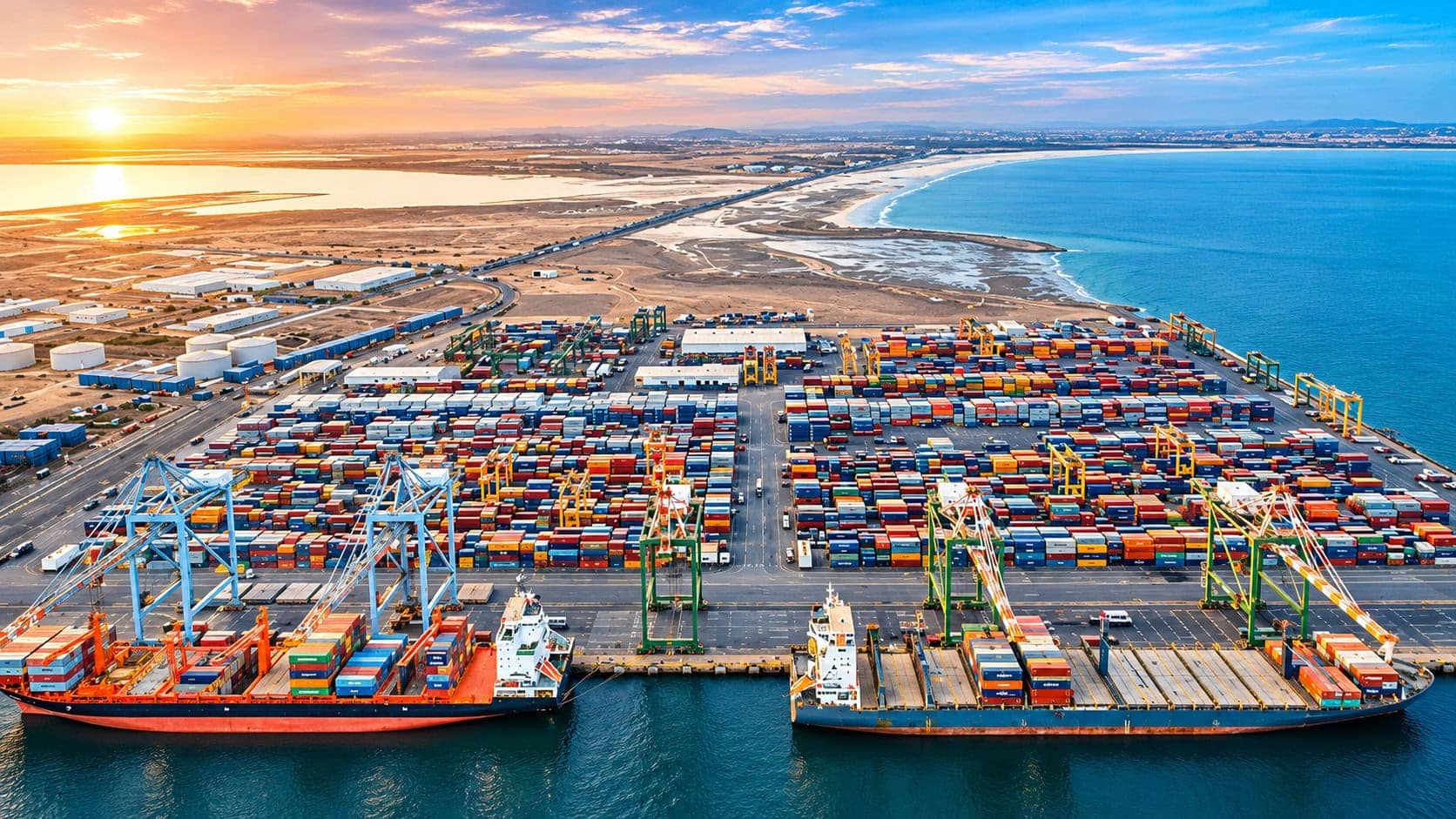
Aden Port in South Yemen (Photo from the Internet)
آخر تحديث في: 19-11-2026 الساعة 1 مساءً بتوقيت عدن
Jacob Al-Sufyani (South24 Center)
The renewal of the UN Security Council's Yemen sanctions has opened the door to further negotiations over components and chemicals that could be used in weapons manufacturing, amid disagreement over how to prevent them from reaching the Houthis without disrupting civilian trade in a country that relies on imports to meet its basic needs.
Resolution 2837, adopted unanimously on November 12, 2026, deferred the determination of measures concerning these materials to a subsequent resolution, which the Council expressed its intention to adopt by January 11, 2027. The deadline does not mean that an automatic ban will take effect on that date, as the list of materials and the measures associated with them remain under negotiation.[1]
Following the vote, Britain's Permanent Representative to the UN, Sarah Macintosh, said her country looked forward to working with Council members to agree on a list of materials to be subject to measures under the sanctions regime. She pointed to the Houthis' reliance on dual-use components and precursor chemicals to support their domestic military manufacturing.[2]
Two Preliminary Lists
The discussions are based on a specialized report by the UN Panel of Experts on Yemen, issued in September 2026 under reference number S/2026/712. This thematic report is distinct from the panel's annual reports, which address various aspects of sanctions implementation.[3]
Annex V presents two proposed lists. The first includes 24 categories relevant to Yemen's civilian needs, while the second includes 20 categories that could be used in military manufacturing but have limited relevance to those needs. that could be used in military manufacturing. Dual-use refers to goods that can serve both civilian and military purposes, while precursor chemicals are substances used in the production of other compounds. Neither list constitutes a final ban.
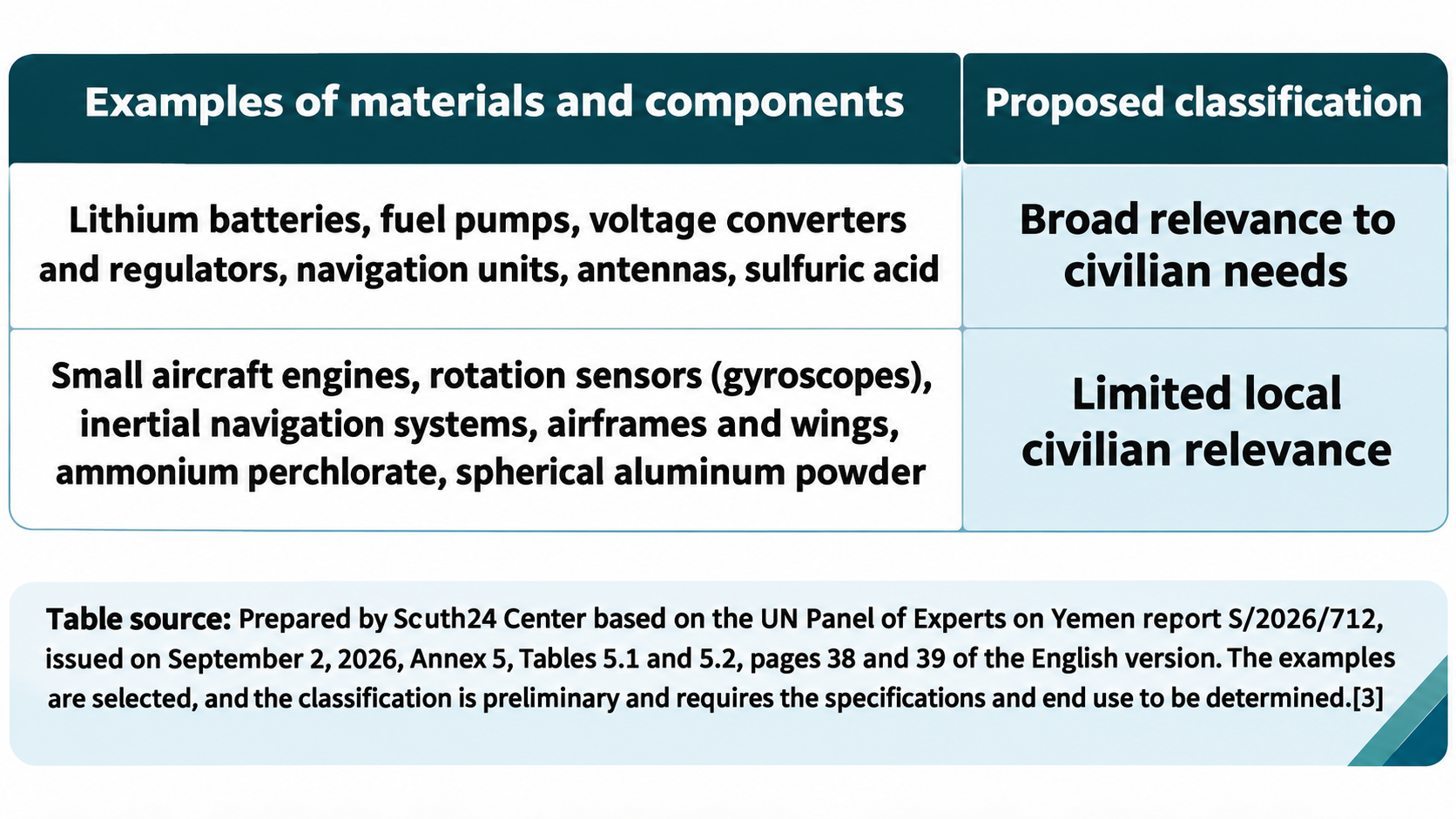
The panel recommends sharing both lists with the Yemeni government for review, before discussing them within the Sanctions Committee with a view to reaching final lists. It also acknowledges gaps in information regarding the Houthis' manufacturing capabilities and notes that some classifications may need to be reviewed as further evidence emerges.
On October 29, 2026, forces aligned with the Yemeni government announced that they were investigating field reports alleging that the Houthis had used shells suspected of containing toxic substances on the fronts in Taiz, causing cases of suffocation and fainting among civilians and members of the Popular Resistance. The forces' spokesperson, Colonel Majed Al-Nuzaili, called for an urgent investigation to determine the nature of the substances used, their sources, and the parties involved in supplying them. The published reports did not include any test results confirming the nature of these substances.
Components Hidden in Commercial Shipments
The panel's 2025 annual report provides examples of undeclared components arriving in commercial shipments, including equipment that could be used in drones or maritime operations.[4]
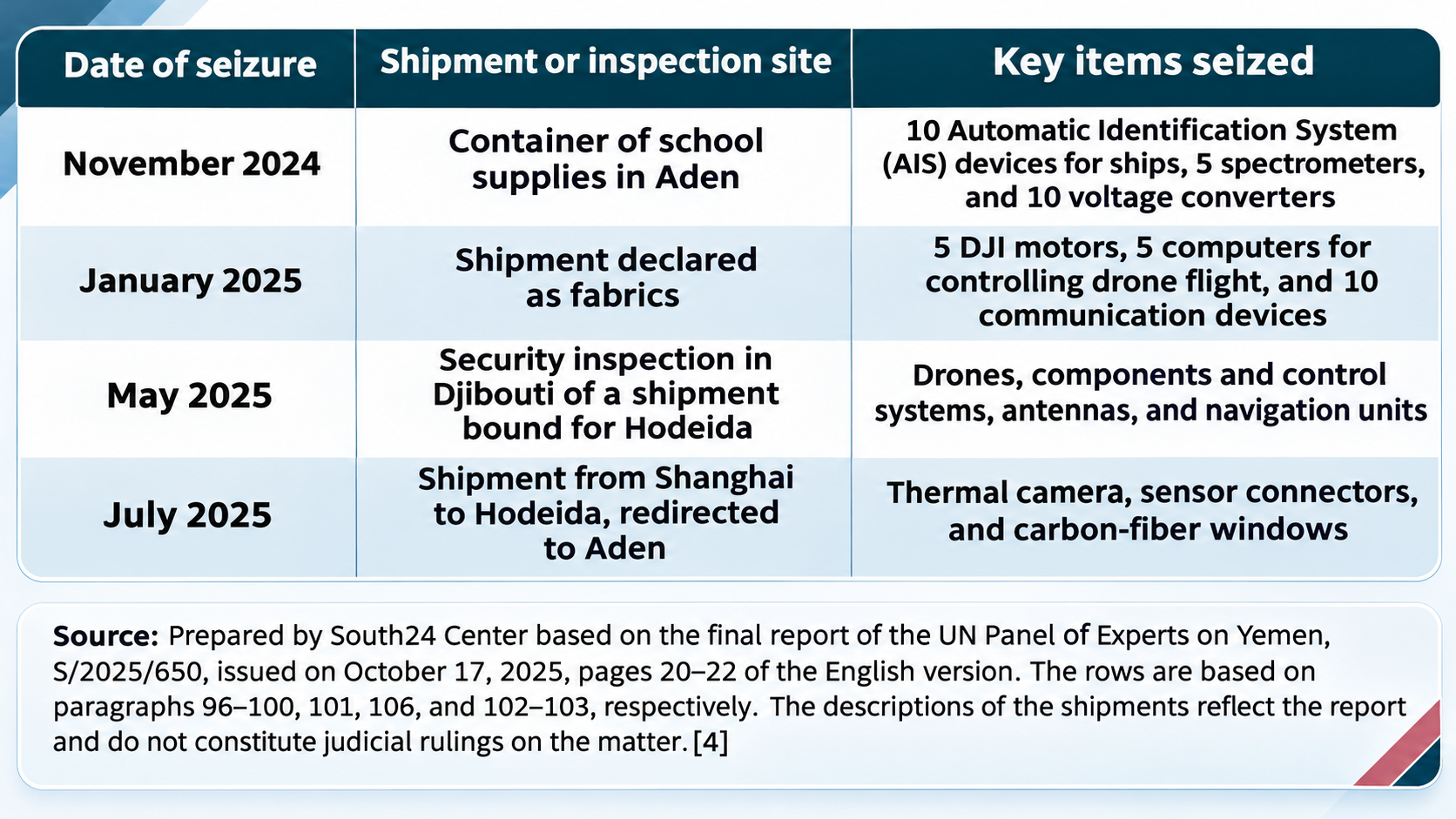
US expert Fernando Carvajal, a former member of the UN Security Council Panel of Experts on Yemen, told South24 Center that over the past decade, The panel had monitored supply networks operating through Europe and Southeast Asia, run by individuals linked to Iran and the Houthis, and dealing in dual-use technologies operating through Europe and Southeast Asia and run by individuals linked to Iran and the Houthis.
He added that Iranian dual nationals residing in European countries had been involved in shipping batteries, electronic chips, and components to Iran for use in missiles and drones that eventually reach the Houthis. He also pointed to discussions the panel had held with European governments regarding batteries and drone engines.
Carvajal argued that, despite the prominence of Chinese and Russian objections in the latest negotiations, "European governments have stood in the way of stricter oversight for nearly a decade."
He noted that some components may be of Chinese origin, but procurement operations conducted by Iranian and Houthi networks extend across Southeast Asian markets and do not necessarily take place within mainland China.
A list published by the Panel of Experts in 2021 documents components bearing the names of manufacturers from several markets, including Yamaha, Bosch, Garmin, and Analog Devices. However, the presence of a manufacturer's product in a weapon does not, by itself, establish that the manufacturer knew its final destination or supplied it directly to the group.[5]
Trade and Maintenance Under Scrutiny
The sensitivity of the proposed restrictions is particularly evident in electrical, power, and navigation components, which may be used in weapons as well as in the maintenance and repair of civilian equipment, vehicles, boats, and systems. The panel stresses that any assessment of Yemen's needs must take spare parts and repairs into account, rather than focusing solely on the presence of large factories that consume these components.[3]
The two proposed lists include customs codes that may cover products with varying specifications. The inclusion of navigation units or industrial acids, for example, does not mean that all their uses are identical. The panel notes that broad restrictions, including prior licensing requirements, could affect legitimate commercial and humanitarian activities.
In July, the International Monetary Fund projected that Yemen's economy would contract by 1.5% in 2026, while the Food and Agriculture Organization estimated the country's grain import requirements at approximately 5.2 million tons for the year.[6][7]
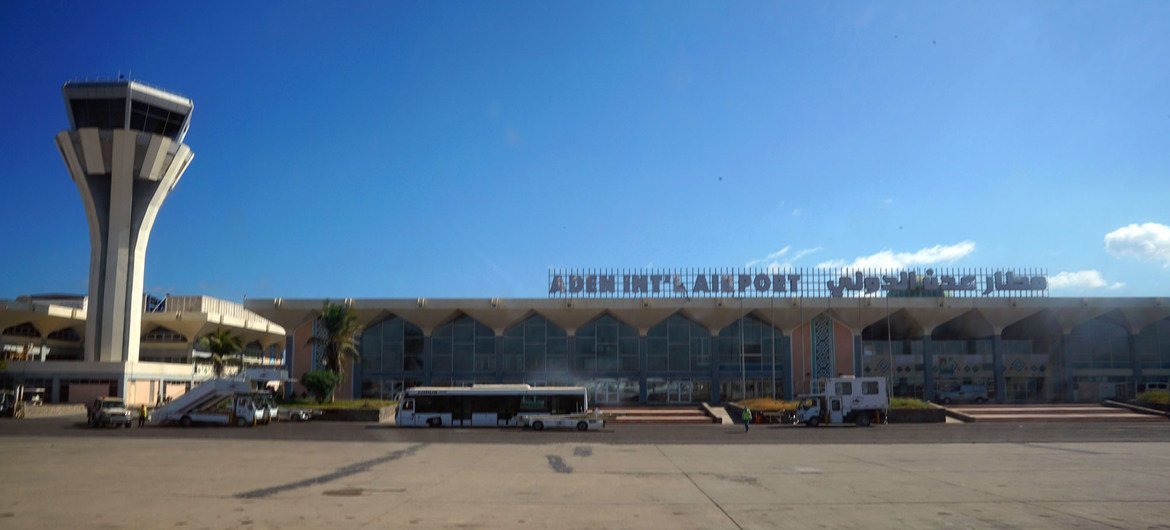
Carvajal warned that the impact of targeting the Houthi war economy could extend to civil society organizations, the private sector, and government revenues through Aden Port, stressing that the southern governorates would also be affected by these repercussions.
He linked his warning to what he described as the Houthis' approach to encircling Taiz, arguing that a worsening humanitarian crisis would make the adoption of stricter measures more difficult. He said the group seeks to benefit from the flow of goods and aid destined for the city.
Carvajal held the Presidential Leadership Council and Saudi Arabia responsible for the worsening crisis across Yemen, arguing that the failure of the government and the coalition to halt Houthi expansion increases the risk that economic measures could have unintended consequences for civilian sectors.
There is currently no specific estimate of the price increases that could result from the proposed measures, pending a final decision on the products to be covered and the implementation mechanism. The panel calls for distinguishing between materials used in civilian trade and those posing higher risks, and for tracing transactions, beneficiaries, and intermediaries following seizures.[3]
Disagreement Over the Scope of the Measures
According to Security Council Report, China, backed by Russia, opposed imposing immediate measures based on the preliminary list and called for further consultations. The negotiations also saw disagreements over how to describe the Houthis, references to their alleged ties to Somalia's Al-Shabaab movement, and the expansion of the Panel of Experts' maritime expertise.[1]
In its explanation of vote, Russia stressed that restrictions must not obstruct trade or humanitarian activities. Meanwhile, the panel's report calls for verifying end users, sharing information, and strengthening the ability of Yemeni authorities to inspect components and materials.[8]
Amid these proposals, the details of the list, oversight mechanisms, and the distinction between civilian imports and military diversion remain among the issues to be resolved in the next phase.