مركز سوث24 للأخبار والدراسات
مركز سوث24 للأخبار والدراسات


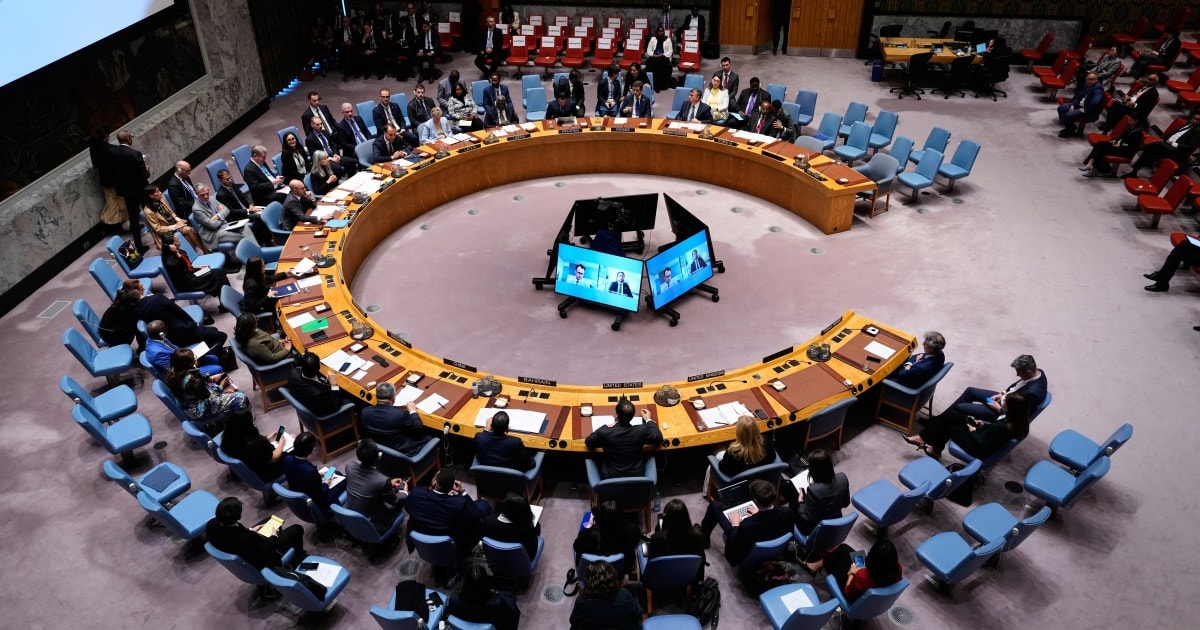
Members of the United Nations Security Council during a meeting at UN headquarters in New York. (File Photo: Yuki Iwamura/AP)
آخر تحديث في: 13-11-2026 الساعة 6 مساءً بتوقيت عدن
Aden (South24 Center)
The United Nations Security Council unanimously adopted Resolution 2837 on Yemen on Thursday (November 12, 2026), renewing sanctions measures against listed individuals and entities and expanding the mandate of the Panel of Experts tasked with monitoring their implementation, amid escalating military operations in Yemen, Houthi attacks on Saudi Arabia, and growing threats to international shipping.
However, the unanimous vote by all 15 Council members followed negotiations marked by disagreements among major powers over the measures needed to address the Houthis. These disputes led to the revision or removal of several provisions from the British-drafted resolution, most notably the description of the Houthis as a "terrorist group," the immediate imposition of restrictions on dual-use components, and references to the group's alleged links with Somalia's Al-Shabaab militant group.
A report published by Security Council Report, a platform specializing in monitoring the work of the UN Security Council, revealed that repeated objections from Russia and China prompted the United Kingdom to submit five revised versions of the draft resolution before a compromise was reached that enabled its adoption.
The main outcomes of the negotiations described by the platform broadly correspond with positions expressed by delegations during the Council's 10270th meeting. The discussions highlighted differences between countries seeking tougher sanctions and measures to prevent the Houthis from acquiring weapons, and others warning that expanded restrictions could adversely affect the political process and economic and humanitarian activities in Yemen.
What Does the Resolution Include?
Under Resolution 2837, the Security Council extended until November 14, 2027, the asset freeze and travel ban imposed on individuals and entities designated under the sanctions regime established by Resolution 2140 (2014).
The Council also extended the mandate of the Panel of Experts until December 15, 2027, requesting that the UN Secretary-General increase its membership to six experts and provide additional expertise in monitoring, assessing, and reporting on maritime security issues.
The Council strongly condemned the Houthis' military escalation in Yemen, their maritime and cross-border attacks against Saudi Arabia, and their threats to commercial shipping. It demanded an immediate and unconditional cessation of the group's attacks, including those targeting civilians, civilian infrastructure, commercial airports, and international maritime transport.
The resolution also called on UN member states to intensify efforts to combat the smuggling of weapons and their components through land and maritime routes and improve information-sharing to ensure the implementation of the targeted arms embargo imposed under Resolution 2216 (2015).
However, the Council stopped short of imposing immediate new restrictions on a list of dual-use components. Instead, it expressed its intention to decide, by January 11, 2027, on appropriate measures to prevent the supply, sale, transfer, or diversion of specified materials to sanctioned individuals and entities, based on findings by the Panel of Experts concerning those components and precursor chemicals.
The Council also reaffirmed that there is no military solution to the conflict in Yemen and that dialogue and reconciliation among the parties, including the government, the Houthis, key political and regional actors, women, young people, and civil society, remain the viable path toward a political settlement.
Five Revisions to the British Draft
According to Security Council Report, the United Kingdom, which serves as the penholder on Yemen-related Security Council resolutions, circulated the initial draft on October 29 and held direct consultations on November 2.
Two revised drafts followed on November 3 and 5, before the UK submitted a third revised version on November 9 and placed it under the diplomatic "silence procedure," which allows members to signal agreement with a text unless an objection is raised within a specified period.
However, Russia and China broke silence on November 10, maintaining objections they had previously raised concerning several provisions.
After the UK circulated a fourth revised draft, Bahrain and China again broke silence during a procedure that concluded on the morning of November 11.
This prompted Britain to introduce a fifth revised text, which passed the silence procedure later that evening, paving the way for the resolution's adoption at the following Council meeting.
Russia Opposes Describing the Houthis as a "Terrorist Group"
The description of the Houthis as a "terrorist group" emerged as one of the most contentious issues during the negotiations.
According to Security Council Report, Britain included the description in the initial draft and several subsequent versions. Russia, however, objected to its reintroduction, arguing that such language could obstruct political dialogue and efforts to achieve a negotiated settlement to Yemen's conflict.
The description was not entirely new to Security Council resolutions. It had appeared in Resolution 2624, adopted in February 2022, before being removed during negotiations over Resolution 2801 in November 2025.
The report explained that the UK deleted the language from the fourth revised draft in response to Russian objections. Bahrain, backed by the United States, subsequently sought to restore it during the final stage of negotiations but was unsuccessful.
The disagreement resurfaced in statements delivered after the vote
Yemen's representative expressed regret that Council members had failed to agree on describing the Houthis as a terrorist group, arguing that their attacks on civilians, civilian facilities, and international shipping warranted a clearer international response.
The US representative also criticized the failure to restore terminology previously used by the Council in 2022, while Bahrain maintained that describing the Houthis as a terrorist group was necessary to reflect the nature of the threats they posed.
By contrast, Russia's Chargé d'Affaires at the United Nations, Anna Evstigneeva, emphasized that sanctions should support a political settlement rather than become a means of punishing parties to the conflict or increasing pressure on them.
She warned that intensifying military and economic pressure on one of Yemen's principal parties could undermine prospects for stability, while acknowledging the need to condemn attacks on civilian infrastructure in Saudi Arabia and activities that obstruct freedom of navigation.
China Opposes Immediate Restrictions on Dual-Use Components
Dual-use components and precursor chemicals formed another major point of contention.
According to the negotiations report, the British proposals drew on findings and recommendations from the Panel of Experts, which indicated that the Houthis continued to acquire commercially available components through smuggling and the diversion of supply chains, helping the group develop domestic production capabilities and reduce its dependence on external military supplies.
In its initial draft, Britain proposed requiring states to prevent materials identified on a list prepared by the Panel of Experts from being diverted for military use by the Houthis.
China, supported by Russia, opposed the immediate introduction of measures based on the list, arguing that it had not been finalized and required further study and consultations.
Security Council Report noted that the Panel of Experts itself had described the list as preliminary because of insufficient evidence and uncertainty surrounding some of the materials it contained.
The negotiations ultimately produced language expressing the Council's intention to decide on appropriate measures by January 11, 2027, rather than immediately imposing restrictions on the entire list.
Additional Chinese objections also led to changes to a provision concerning the panel's future recommendations, including the deletion of specific references to precursor chemicals and their use in military manufacturing, while retaining provisions addressing dual-use components.
During the Council meeting, China's representative stressed that any new measures must not affect humanitarian assistance, civilians' essential needs, or legitimate economic and commercial activities.
Russia similarly warned against treating all dual-use materials as weapons or military equipment, emphasizing that restrictions should not obstruct legitimate trade or humanitarian operations in Yemen.
Disagreements Over the Panel of Experts and Maritime Monitoring
The negotiations extended beyond the description of the Houthis and weapons-related components to a British proposal to expand the Panel of Experts and introduce additional maritime security expertise.
Security Council Report said Russia and China opposed the proposal, but it remained in the final resolution after receiving support from several Council members.
The report noted that China's reservations came against the backdrop of previous Panel of Experts reports identifying China as a country of origin for some dual-use components and weapons parts that reached Houthi-controlled areas. Such findings do not, however, establish responsibility on the part of the Chinese government for transferring those materials.
Negotiations also addressed proposals to strengthen information-sharing concerning vessels suspected of transporting weapons or prohibited materials to Yemen.
According to the platform, Russian objections led to the removal of additional language concerning efforts to enhance the capacity of flag states to prevent suspected vessels from reaching Yemen, along with certain related capacity-building measures.
Nevertheless, the final resolution retained provisions calling for stronger information-sharing and practical cooperation against smuggling, while expanding the Panel of Experts' expertise to include maritime security.
France and Greece welcomed the addition, considering improved monitoring of shipping movements and smuggling routes in the Red Sea, Gulf of Aden, and Bab Al-Mandeb an important element in strengthening sanctions implementation.
Provision on Alleged Houthi Links to Somalia's Al-Shabaab Removed
The negotiations report also described disagreements over another British proposal addressing the Houthis' possible relationships with groups subject to international sanctions.
The proposed language emphasized the importance of preventing the Houthis from establishing relationships with such organizations, indirectly referring to alleged links with Somalia's Al-Shabaab, an Al-Qaeda-affiliated militant group previously discussed in reports by the Panel of Experts.
According to Security Council Report, Russia and China, alongside the Council's three African members — Somalia, Liberia, and the Democratic Republic of the Congo — objected to the provision, considering the wording overly broad and arguing that the nature of the relationship between the two groups had not been conclusively established.
The disagreement ultimately resulted in the provision being removed before the resolution's adoption.
During the meeting, the US representative expressed regret that the resolution did not address what Washington described as growing ties between the Houthis and terrorist organizations in the region, including Al-Shabaab.
Strengthening Sanctions Criteria and Monitoring Sources of Financing
Despite the removal of several proposals, the final resolution retained additional provisions intended to strengthen the criteria for designating individuals and entities under the sanctions regime and expand monitoring activities.
Among the most significant was the clarification that designation criteria could apply to cases involving the arbitrary detention of United Nations personnel and diplomatic and humanitarian workers, amid the Houthis' continued detention of dozens of people working in these sectors.
Security Council Report said the provision had been proposed by Bahrain with US support.
Bahrain also welcomed the strengthening of criteria relating to attacks involving drones and ballistic missiles, as well as threats against commercial vessels.
The resolution further called on the Panel of Experts to continue monitoring sources of revenue associated with the Houthis and to provide recommendations aimed at preventing such resources from being diverted to military and security activities, while avoiding adverse effects on legitimate economic, commercial, civilian, and humanitarian activities.
Security Council Report explained that Britain initially proposed this approach before Bahrain sought to strengthen its wording, drawing on the Panel of Experts' findings concerning the Houthis' access to revenue generated through their control over major economic sectors.