مركز سوث24 للأخبار والدراسات
مركز سوث24 للأخبار والدراسات


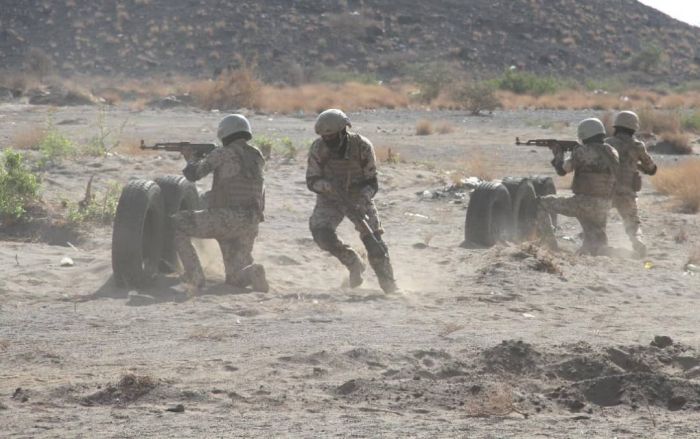
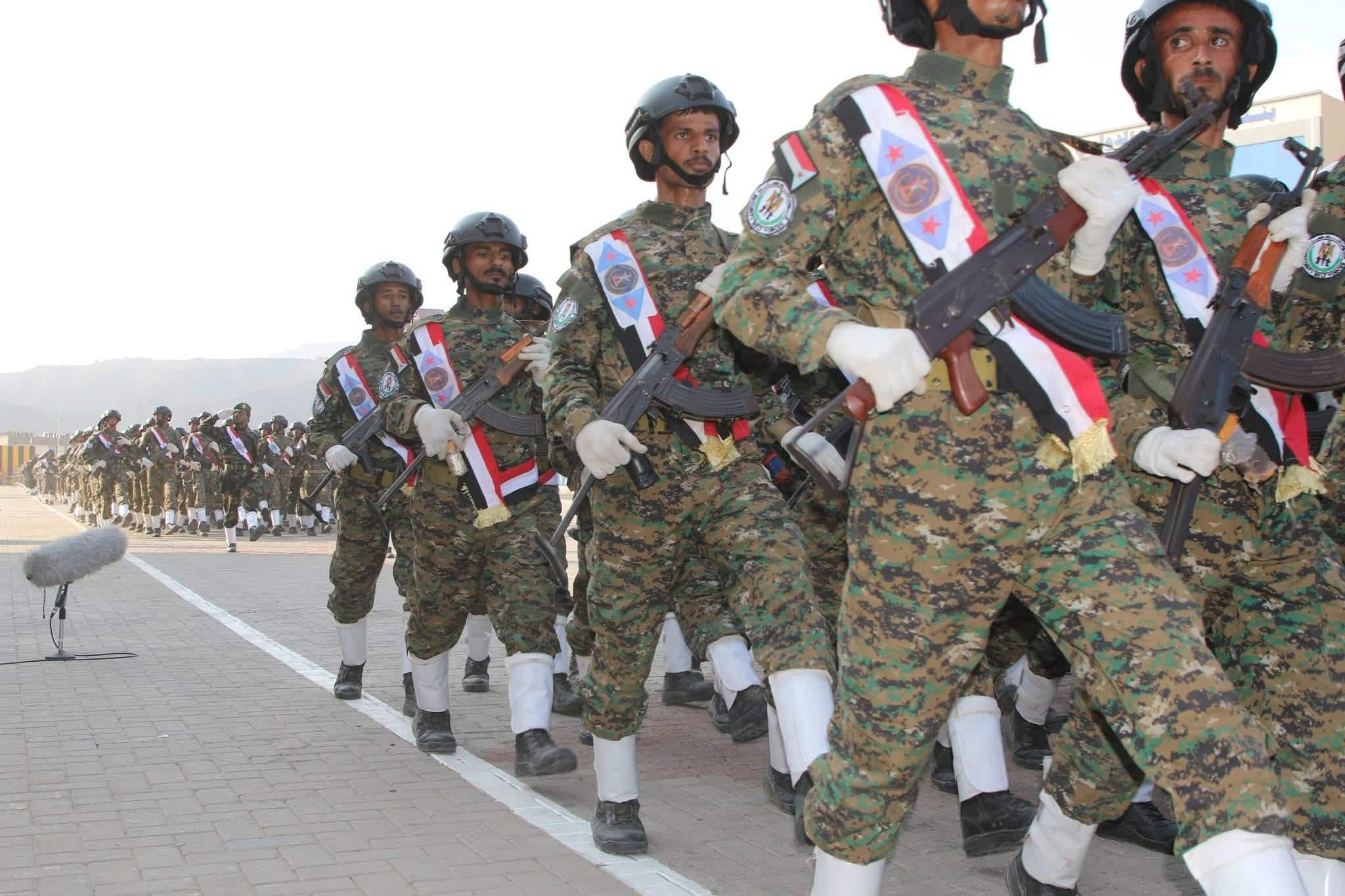
Fighters from the “National Resistance” take part in military exercises during a graduation ceremony for a new combat unit in the city of Al- Mokha, Taiz Governorate, Yemen, February 12, 2024. (Military Media/December 2 Agency)
20-09-2026 الساعة 12 مساءً بتوقيت عدن
Farida Ahmed (South24 Center)
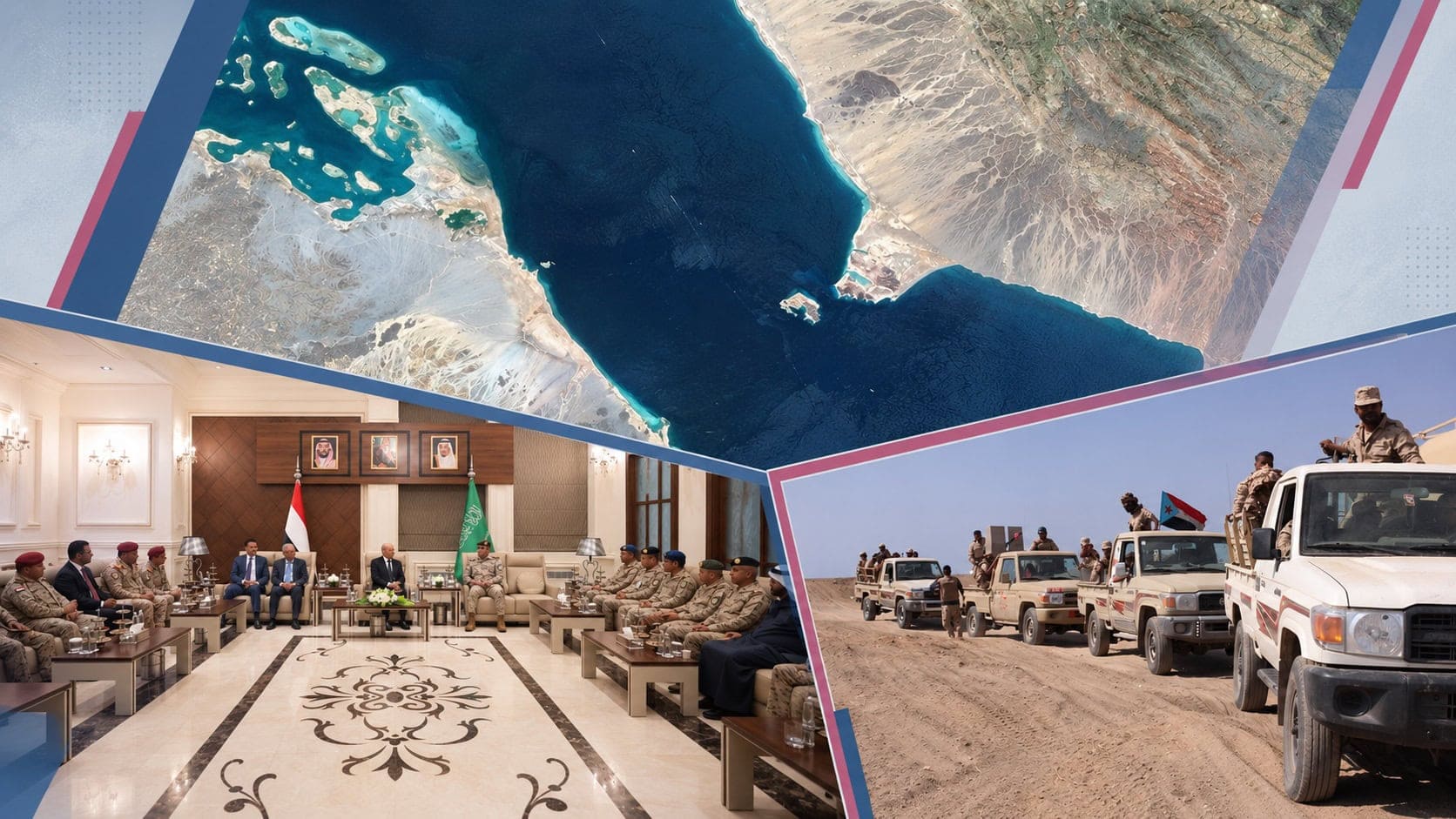
The fall of the city of Al-Mokha and large parts of Yemen’s western coast, extending to the Bab al-Mandeb area, to the Iran-backed Houthis marked a highly dangerous battlefield development for Saudi Arabia and Yemen’s internationally recognized government. Within 36 hours, the front witnessed a rapid collapse of defensive lines that included Al-Mokha and Dhubab, before the developments extended to the southern island of Mayun (Perim), which divides Bab al-Mandeb Strait into two shipping lanes.
The danger of what happened lies not only in the loss of these positions, but also in the speed with which the defense system collapsed in one of Yemen’s most strategically sensitive areas. Bab al-Mandeb is not merely a local military front, but a vital corridor for international trade and shipping. Any advanced Houthi presence in its vicinity gives the militia, and Iran alongside it, additional weight in the Red Sea equation and the broader regional conflict. It could also provide Tehran with a new source of leverage in its strained relationship with Washington, at a time preceding sensitive domestic political developments in the United States.
But the most pressing question concerns not only what the government camp lost, but how this collapse occurred so rapidly. According to military sources, the Houthi advance was not the result of overwhelming battlefield superiority as much as it was linked to a severe failure in the command-and-control system and a breach of military communications within the government forces, particularly the “National Resistance” led by Tariq Saleh. This coincided with poor battlefield management, the absence of a strategy, and a lack of Saudi air support at a critical moment. These failures contributed to uncoordinated withdrawals from strategic positions, allowing the Houthis to enter Al-Mokha just hours after it had been evacuated and without resistance.
This paper examines how this collapse occurred and the military and organizational failures exposed by the battles on the western coast, as well as the implications of Houthi control over Bab al-Mandeb for Saudi Arabia, Yemen’s government, and Iran. It also examines the position of the Southern forces in the new landscape and the limits of their involvement in a military equation in which the security requirements of South Yemen’s governorates intersect with the calculations of the broader war on the western coast.
What Happened?
The groundwork for the Houthi offensive began on August 9 with a wave of concentrated missile and drone strikes targeting military and strategic sites in Taiz and Hodeidah, alongside limited attacks on military facilities in Hadramout and Marib. The strikes targeted command headquarters, ports, bases, and weapons depots, in parallel with the mobilization of large forces on several key fronts. The operation, according to the spokesperson for the “National Resistance,” had been planned, coordinated, and directly overseen by Iran’s Islamic Revolutionary Guard Corps over a period of several months.
However, the most significant military shift began on September 3, with simultaneous infiltration operations carried out on fronts within the Taiz military axis, including Al-Kadha, Al-Barah, and Maqbanah, accompanied by intense bombardment using missiles, artillery, and drones. This opened a route for a ground advance toward the western coast, before developments later accelerated toward Al-Mokha and Dhubab.
The irony is that the offensive came after weeks of widespread optimism within the government camp, following operations by forces loyal to the Yemeni government targeting Houthi positions and military vehicles. These operations were accompanied by extensive use of drones and daily media coverage that portrayed government forces as holding the initiative on the battlefield, while Houthi capabilities appeared to be deteriorating and under heavy pressure.
This impression was reinforced by the size of the forces deployed along the fronts. The strength of the “National Resistance” alone was estimated at more than 40,000 fighters. Based on this, the internationally recognized government and Saudi leadership assessed that the coastal front was capable of confronting and wearing down a Houthi offensive, drawing on the size of its forces and defensive positions. This would also allow pressure to be eased on other fronts, such as Marib and Al Jawf, where government forces had already begun making military advances.
But these calculations quickly collapsed. The “National Resistance” forces failed to hold out during the first days of the offensive, while the “Tihama Forces” continued fighting before the front received reinforcements from the “Southern Giants” and “Nation’s Shield.” According to field sources, this was accompanied by a critical breach of communications and the command-and-control system within Tariq Saleh’s forces, which disrupted deployed units and weakened their ability to receive orders and coordinate with one another.
This disruption led to a series of successive and uncoordinated withdrawals, paving the way for the Houthis to enter Hays and then move toward Al-Khokha and Al-Mokha within a short period, before the military pressure extended to Dhubab and the vicinity of Bab al-Mandeb. Thus, the decisive factor behind the speed of the Houthi advance was not simply the size of the attacking force, but the collapse of the defense system from within at the moment of testing.
The problem, however, goes beyond military miscalculation to a more sensitive question concerning the nature of the breach that affected the system. If the failure was technical and confined to communications networks, it could be addressed through technical measures and the rebuilding of the command structure. But if it was linked to human and intelligence penetrations within the units themselves, addressing its consequences would require deeper restructuring and a broad investigation into the chain of command and the personnel deployed in the field.
In addition, the presence of multiple military units, the lack of political and national cohesion among their members, and a history of infiltration and defections within forces loyal to Tariq Saleh represent an operational vulnerability. Therefore, interpreting what happened on the western coast as merely a Houthi military penetration does not explain the full picture. The collapse also exposed weaknesses in the command structure, multiple centers of decision-making, and an insufficient level of trust and coordination among the forces.
Bab al-Mandeb: A Houthi Gain and an Iranian Leverage Card
The Houthis’ gains following the collapse of the western coast were not limited to territorial control. The group seized military vehicles, armored vehicles, and modern military equipment that had been stored by the “National Resistance” forces, giving it additional capabilities to address one of its tactical weaknesses: its extensive reliance on unarmored vehicles, which had been subjected to intensive drone strikes during the preceding period.
The speed with which this equipment was seized, together with the nature of the withdrawals that preceded the Houthi entry, raises further questions about the extent of the breach that affected the coastal defense system. Based on the available information alone, it is not possible to determine whether this resulted from a sudden collapse in command and control or was an extension of deep human and intelligence penetrations within the brigades of the National Resistance forces themselves. However, the quantity and type of equipment left behind by the withdrawing forces add an important dimension to the investigation into the causes of what happened.
At the same time, the Houthi advance had an impact extending beyond its immediate military gains. The speed with which the positions fell gave the group significant media momentum and reinforced its image as a force capable of shifting the balance on the front within a short period. This had psychological and operational repercussions across other battlefronts, as successive reports of rapid collapses on the Al-Mokha and western coast fronts slowed government military movements on key fronts such as Marib, Al Jawf, and Al Bayda. The previous strategy had been based on wearing down the Houthis on the coast and tying up a significant portion of their capabilities there.
But the most important strategic value of the Houthi gain is tied to the location of Bab al-Mandeb itself. Advancing toward this vital corridor expands the reach of an Iran-backed group along one of the world’s most important international shipping routes, at a time when Tehran maintains direct influence over the other side of the maritime chokepoint equation through the Strait of Hormuz.
From this perspective, the timing of the escalation can be viewed as intersecting with Iran’s regional interests, particularly amid the continuing confrontation between Tehran and Washington and the approach of the US midterm elections in November. The presence of an Iranian ally in a position capable of influencing maritime traffic through Bab al-Mandeb gives Tehran, indirectly, an additional source of leverage in any negotiating process involving sanctions or the nuclear issue.
For Saudi Arabia, meanwhile, this development creates a more complex equation. The Houthi advance along the coast coincided with the suspension of operations on the East-West Pipeline (Petroline), which runs from the Abqaiq oil fields in the Eastern Province to the Red Sea port of Yanbu, following a drone attack launched from Iraqi territory. This came in parallel with a Houthi escalation targeting Saudi cities, including Khamis Mushait, Abha, Taif, Jazan, and Najran, with missiles and drones, causing heavy losses and civilian casualties.
These developments mean that pressure on Riyadh is no longer confined to a military front inside Yemen. It now extends to energy facilities, airspace, and maritime routes on which the Kingdom relies economically and strategically. This makes Bab al-Mandeb increasingly important to Saudi Arabia, not merely as an extension of the western coast front, but as part of the broader equation of energy security and Red Sea security.
Despite Tehran’s official denial of any direct involvement in the latest military escalation or the Houthi advance toward Bab al-Mandeb, the convergence of pressure across multiple fronts, from maritime routes to energy facilities and cross-border attacks, effectively serves to strengthen Iran’s regional leverage.
Southern Forces and the Test of a Delicate Balance
The current shifts on the western coast and around Bab al-Mandeb cannot be understood separately from the position of the Southern forces in the military equation. Since the battles to liberate Aden in 2015, various Southern formations have participated on fronts stretching across Shabwa, Al Dhalea, Abyan, Lahj, and Mukalla, before some of these forces moved to strategic positions on the western coast and around Bab al-Mandeb, where they gradually became one of the most prominent field forces confronting the Houthis and terrorist groups.
This involvement, throughout the years of war, was based on a military and political partnership with the Saudi-led Arab Coalition, at certain stages reaching the point where Southern leaders were prepared to participate in operations extending beyond the borders of the southern governorates. However, this relationship entered a more complicated phase following the events in Hadramout in January 2026 and the subsequent Saudi airstrikes and political pressure targeting Southern forces affiliated with the Southern Transitional Council and their most prominent regional ally, the UAE.
These developments widened the trust gap between Riyadh and broad segments of Southern forces and renewed questions about the nature of the partnership that had governed the relationship throughout the years of war and the limits of the mutual commitments between the two sides. The issue has become even more sensitive as the anti-Houthi front continues to rely on Southern formations with a broad field presence and combat capabilities that have demonstrated their effectiveness on more than one front.
At the same time, positions have recently grown within the Southern political landscape arguing that responsibility for retaking the northern areas under Houthi control should fall primarily on military and tribal forces originating from those areas. The Southern Transitional Council and other tribal and political components have expressed this position as part of a broader view linking Southern military participation beyond the borders of the South to clear political and security considerations.
However, this position has not prevented Saudi-backed Southern formations with a Salafi background, particularly the “Southern Giants” and “Nation’s Shield,” from engaging in battles outside the southern governorates based on military and ideological motivations. Following the collapse of positions on the western coast and the Houthi advance toward the vicinity of Bab al-Mandeb and Mayun Island, these forces moved along more than one axis to contain the Houthi advance and prevent its southward expansion, while other fighting continued along the borders of Yafa, Al Dhalea, and Shabwah. These forces are engaged in fierce clashes along the Lahj Governorate border with Bab al-Mandeb and Taiz.
Nevertheless, this military involvement does not necessarily appear to mean that Southern forces have abandoned their political calculations. Influential segments within them continue to believe that any participation beyond the borders of the South should be based on a careful assessment of the gains and risks and should not turn into an open-ended commitment that once again exhausts Southern forces on fronts whose outcomes do not necessarily serve the security or political future of the South.
This presents these forces with a dual equation. On the one hand, the Houthi advance toward Bab al-Mandeb and the vicinity of Lahj poses a direct threat to the Southern security sphere, making military intervention on some fronts a defensive matter that cannot be ignored. On the other hand, expanding this intervention beyond the requirements of protecting the South reopens the longstanding question of the relationship between participation in the broader Yemeni war and the Southern political project.
This equation becomes more difficult amid the presence of multiple forces on the ground with differing political and military affiliations. The success of any Southern move on the western coast and around Bab al-Mandeb will depend not only on combat capabilities, but also on genuine coordination with other formations and on ensuring that the command and trust crisis that contributed to the collapse of the front during the latest Houthi offensive is not repeated.
Accordingly, the test facing the Southern forces in the next phase is not limited to their ability to halt the Houthi advance. It also includes their ability to balance immediate military imperatives with their long-term political calculations. In this equation, the security of Bab al-Mandeb and the protection of South Yemen’s governorates become part of the same challenge, without necessarily meaning a renewed absorption into broad military arrangements that lack a clear political vision.
Conclusion
Ultimately, the setback on the western coast reveals not so much a temporary battlefield loss as a structural failure within the northern government camp, manifested in the multiplicity of military formations and decision-making centers without a central operations room or a command structure capable of managing the fronts as a single theater of operations.
The developments have already prompted steps to reorganize some formations, particularly the “National Resistance.” However, the success of any restructuring will remain limited unless it addresses the root of the problem: weak coordination and trust, intelligence gaps, and the absence of a centralized operational command. Redistributing units or changing their organizational affiliations will not be sufficient if the underlying causes that allowed the front to collapse remain in place.
The dilemma of trust and coordination also extends to the participation of the Southern forces, albeit within different calculations. The Houthi advance toward Bab al-Mandeb and the vicinity of the southern governorates makes these forces a direct party to the battle for Southern security. At the same time, it requires them to balance military necessity against their political vision for the future of the South and the limits of their involvement in the broader war.
For Saudi Arabia, meanwhile, what happened calls for a broader reassessment of its approach to the war in Yemen. The Houthi expansion toward Bab al-Mandeb, alongside their ability to threaten Saudi territory and energy facilities, means that managing the conflict through limited levels of containment can no longer necessarily guarantee the protection of Saudi interests or prevent shifts in the balance of power on the ground. A shift toward a comprehensive, decisive, and final battle now appears closer to a necessity than a choice. However, achieving this remains contingent on Riyadh’s ability to secure effective regional and international support and coordination to wage a war of such scale and intensity.


قبل شهرين

قبل 3 أشهر