مركز سوث24 للأخبار والدراسات
مركز سوث24 للأخبار والدراسات


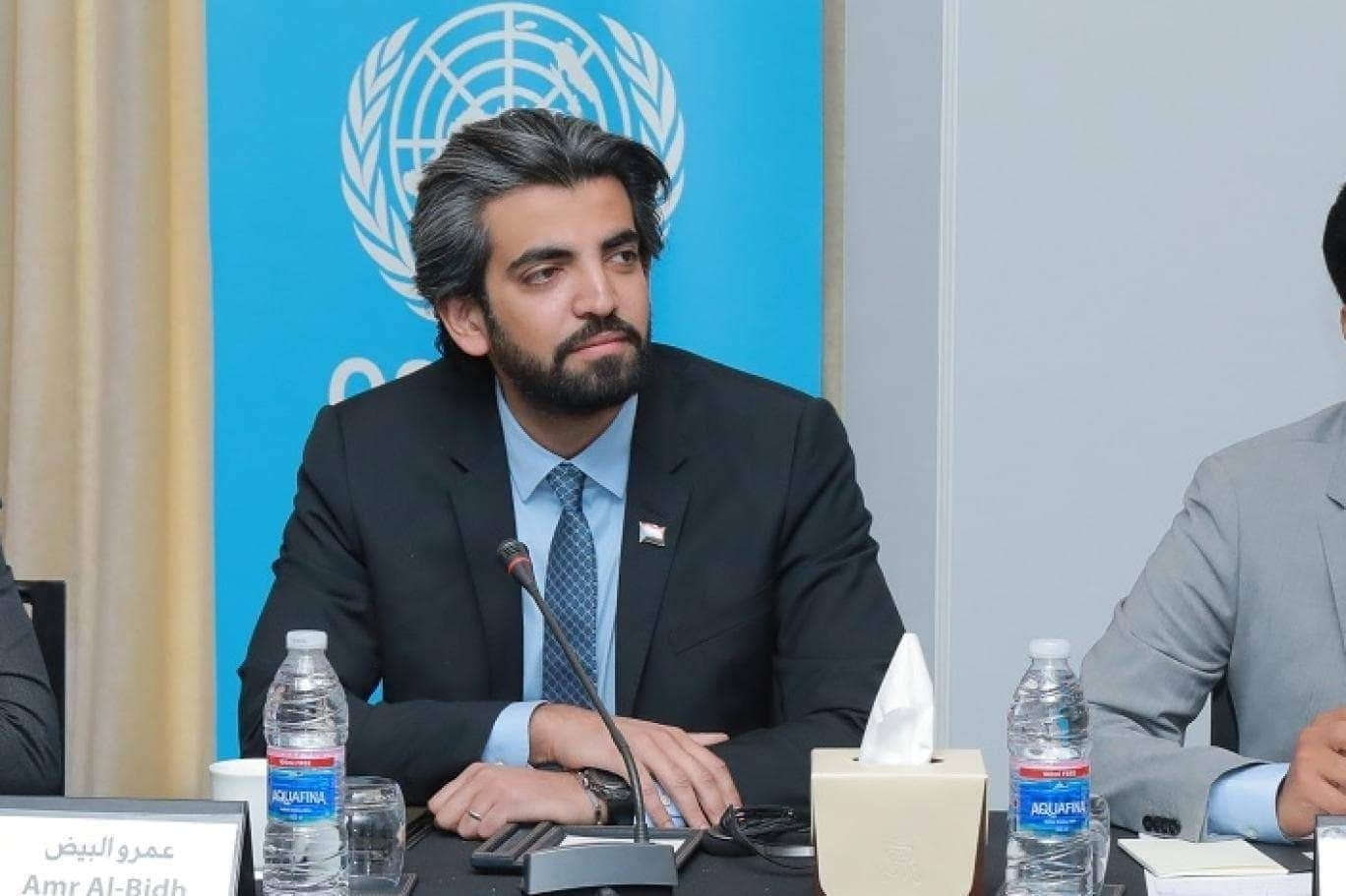
Amr Al-Bidh, a member of the Southern Transitional Council Presidium and Special Representative of the STC President for Foreign Affairs (File photo)
03-08-2026 الساعة 3 مساءً بتوقيت عدن
Aden (South24 Center)
Amr Al-Bidh, a member of the Southern Transitional Council (STC) Presidium and Special Representative of the STC President for Foreign Affairs, has warned that the continued use of force against southern protesters could ultimately lead to military escalation within the anti-Houthi camp.
In remarks to the American newspaper Washington Examiner, published in a report on Sunday, August 2, Al-Bidh stressed that the STC does not currently seek military escalation, although he said such a scenario remains possible.
“Would it move towards military escalation? For now, our position is no. We don’t want that,” he said, adding: “But is it probable? Definitely, it might.”
Al-Bidh said the STC is implementing what he described as a “nonviolent escalation program,” which has so far taken the form of daily street protests. However, he expressed concern over what he described as the use of aggressive force against protesters.
“If this continues for a long time, then probably the military will move on, and that’s what would create an insurgency,” he added.
Al-Bidh alleged that some military commanders of southern origin have grown frustrated with orders he said the Saudis were issuing to kill or detain southerners and restrict their freedom of expression.
He also accused Saudi Arabia of continuing to pursue STC leaders on the ground and attempting to ban the council and close its offices.
“The trust between us and the Saudis is not there,” he said, adding that the STC currently has no meaningful relationship with Riyadh.
Al-Bidh said public sentiment across South Yemen is becoming increasingly hostile toward Saudi Arabia, arguing that Riyadh cannot limit reconciliation efforts to the southern political leadership but must also address public grievances.
“The Saudis can’t just reconcile with the leadership of the South; they need to reconcile with the people, because now the whole situation in the South is becoming hostile to the Saudis,” he said.
He added that anti-Saudi sentiment is becoming increasingly visible in southern songs, poetry and popular culture, describing the development as unfortunate.
The southern official also criticized Saudi Arabia and the Presidential Leadership Council for relying on Muslim Brotherhood-aligned and Salafist groups to fill the security and military vacuum created by the restructuring of STC-affiliated forces.
He said these groups pose a security concern to South Yemen, adding that many of the leaders appointed under the new arrangements are Salafists or aligned with the Muslim Brotherhood.
Al-Bidh argued that undermining the STC, which he described as the principal political and military actor opposed to the Houthis, while empowering the Houthis, Muslim Brotherhood-aligned figures and Salafist groups, contradicts US policy in the Middle East.
He said the positions of US President Donald Trump, particularly toward the Houthis and the Muslim Brotherhood, are aligned with those of the STC.
While acknowledging Washington’s focus on the Strait of Hormuz, Al-Bidh said the Bab Al-Mandab Strait is no less important. He called for the UAE to re-engage in efforts to confront the Houthis and for other regional actors, including Egypt, to play a broader role.
He also called for the adoption of a comprehensive strategy combining military, economic and maritime measures to disrupt Houthi weapons-smuggling routes and cut off the group’s sources of support.


قبل 1 شهر
قبل 16 يوم