مركز سوث24 للأخبار والدراسات
مركز سوث24 للأخبار والدراسات


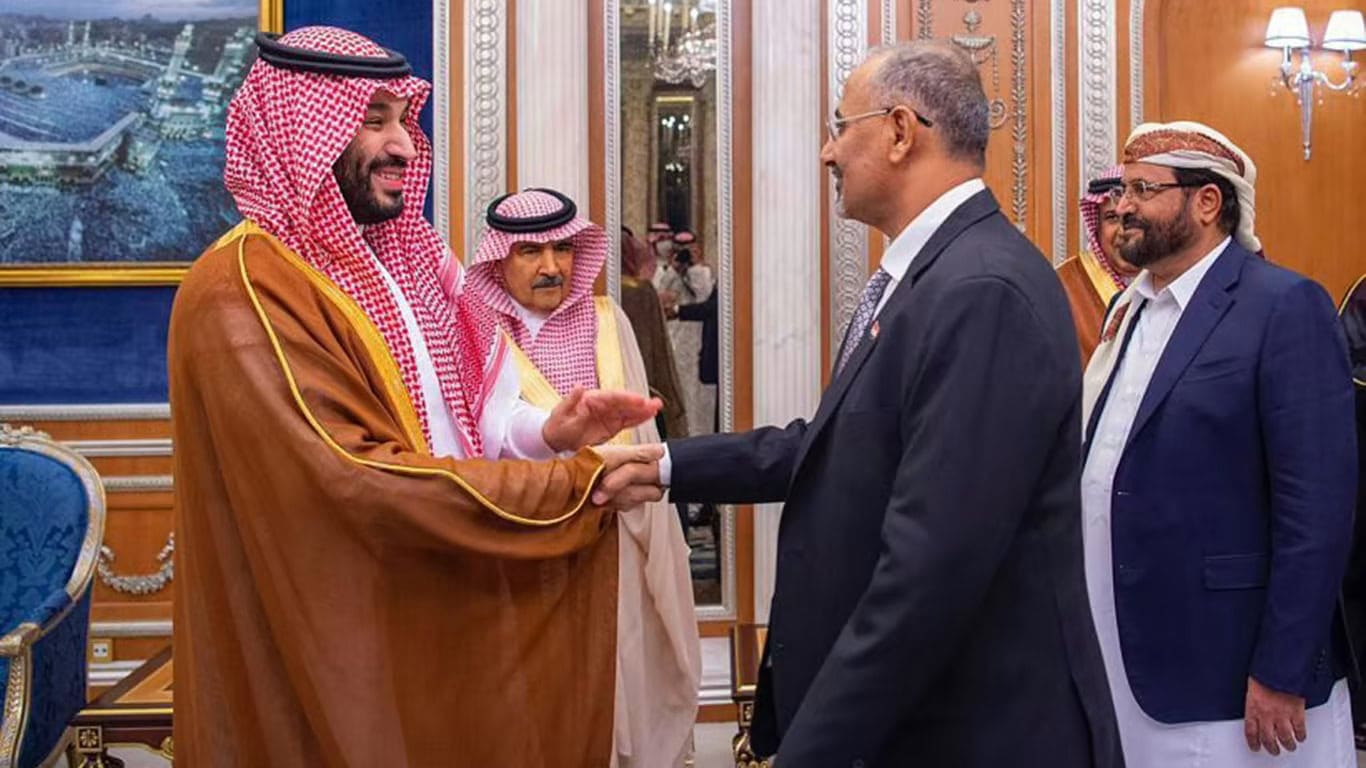
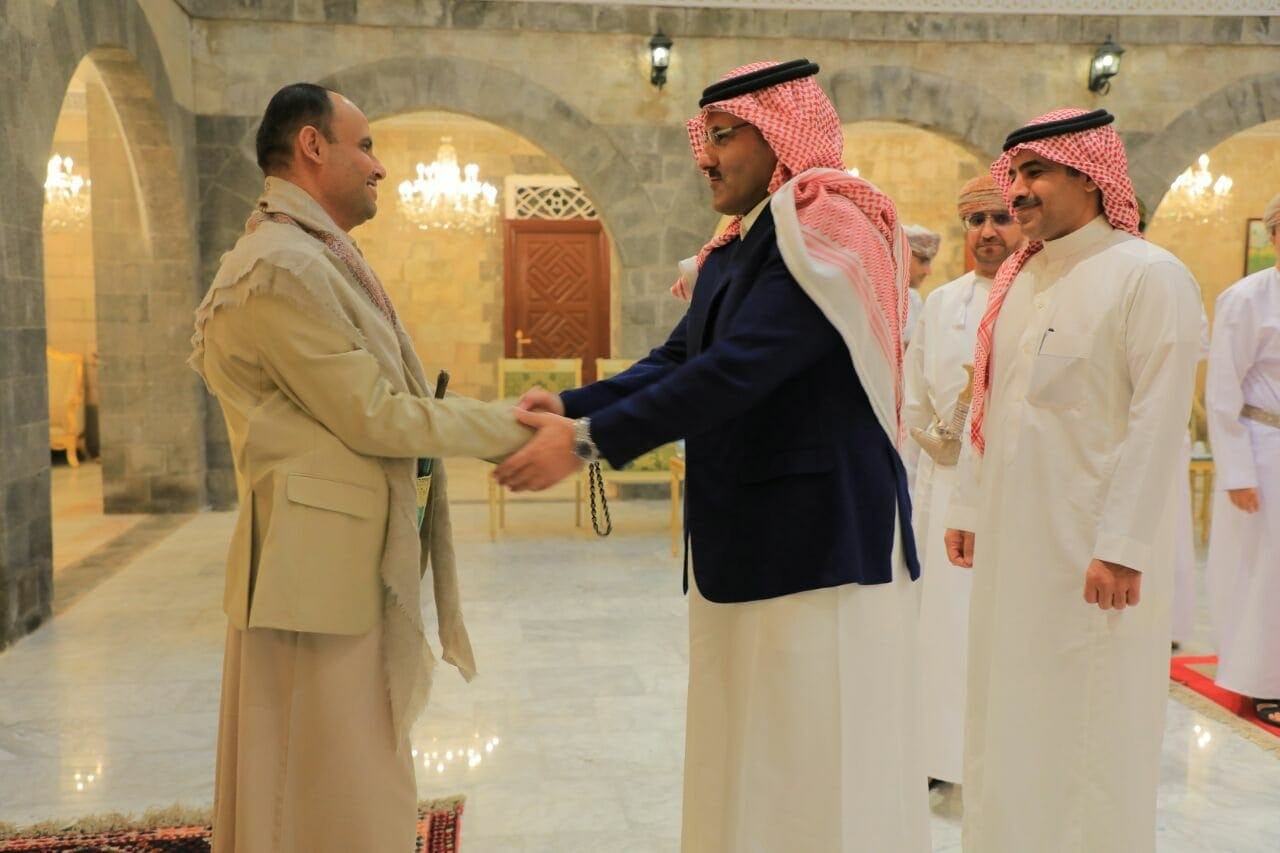
STC President Major General Aidrous Al-Zubaidi shakes hands with Saudi Crown Prince Mohammed bin Salman after the formation of the Yemeni Presidential Leadership Council, April 7, 2022 (SPA)
20-07-2026 الساعة 2 مساءً بتوقيت عدن
Abdullah Al-Shadli (South24 Center)
The relationship between the Southern Transitional Council (STC) and the Kingdom of Saudi Arabia (KSA) has entered one of its most delicate phases since the launch of the anti-Houthi Coalition in 2015. The tension, which has dramatically escalated since late 2025, is no longer a political disagreement with clear boundaries. Instead, it has transformed into an open crisis of trust, driven by overlapping and often incompatible calculations of security, territorial influence, the future of the South cause, and the limits of Riyadh’s dominance in Yemen.
The military and political maneuvers in Hadramout and Al-Mahra in December 2025 and January 2026, and their subsequent aftermath, marked the most prominent turning point in this deterioration. The following months saw widespread escalating protests against Riyadh in Southern Yemen. On July 3, the STC called for a peaceful protest against what it described as "Saudi tutelage and its occupation tools." This was followed by massive "Million-Man" rallies in Aden and Hadramout on July 7, effectively pushing the conflict between Riyadh and the STC into an unmistakable phase of open escalation. Riyadh itself triggered this escalatory phase when in January it forced the STC delegation to announce the dissolution of the STC and later used locally backed authorities to systematically undermine the Council’s role and institutions.
Amid this escalation and the need to contain it, two fundamental questions emerge: What brought the STC-Saudi relationship to this critical breaking point? And what must both sides do to prevent this dispute from hardening into a prolonged war of attrition, one that would serve no one but the Houthis, the Muslim Brotherhood, extremist groups, and the networks of organized crime and smuggling?
Reasons Behind the Declared Disputes
The dispute between the STC and Saudi Arabia did not erupt in a vacuum. Rather, it stems from the rapid military and political developments in Hadramout and Al-Mahra governorates since December 2025 – events whose cumulative effects fed the current wave of popular and political escalation.
The Hadramout events formed the most significant turning point in the trajectory of the relationship between the two sides. For years, the Wadi and Desert Hadramout regions had remained under the control of the First Military District forces, which are linked to the Islah Party (the Yemeni Congregation for Reform). Against this backdrop, the movements of Southern forces backed by the STC under Operation "Promising Future" served -- according to the Southern perspective -- as an attempt to reclaim military and security decision-making in areas that had remained outside Southern control for decades.
These military movements extended from Wadi and Desert Hadramout to Al-Mahra governorate, within a context that the STC viewed as a security necessity to secure Hadrami territory, disrupt Houthi-linked cross-border smuggling networks, and combat terrorist groups. This push gained significant popular momentum, buoyed by rising local demands to expel Northern forces from Wadi and Desert Hadramout--- demands voiced forcefully during the "Seiyun Million-Man" rally, held just two days prior to Operation Promising Future. This rally declared support for the Hadrami Elite Forces and the Southern Armed Forces, and called for the governorate’s people to be empowered to manage their own affairs.
However, Saudi Arabia viewed these movements from a different lens entirely. Hadramout – with its access to the Arabian Sea, its extensive border with Saudi Arabia, and its vital oil reserves – lies at the heart of Riyadh's strategic calculations. It therefore viewed the advance of the Southern forces into Wadi and Desert Hadramout, and Al-Mahra, as a direct threat to its security and influence in Eastern South Yemen. The military shift did not align with Riyadh's overarching management of the Yemeni file—an approach long shadowed by suspicion and doubt, especially regarding Riyadh's bilateral ‘Roadmap’ negotiations with the Houthis.
At this point, the breakdown accelerated sharply. Riyadh ordered that the STC and Southern forces immediately withdraw from their new positions and hand them over to the Saudi-backed "Nation’s Shield" forces, a move accompanied by a hostile political and media narrative. The crisis peaked with the direct Saudi airstrikes on the Port of Mukalla on December 30, followed by bombardments of Southern military positions across Hadramout and Al-Mahra on January 2. This unprecedented military intervention deeply shocked the Southern people, transforming a decade-long ally into an active military adversary.
Highlighting this sense of betrayal, Southern Transitional Council spokesperson Anwar Al-Tamimi noted to South24 Center that the conflict stems from Riyadh’s attempt to "impose a political settlement that ignores the Southern aspirations of self-determination." He emphasized that since the launch of the Saudi-led Operation "Decisive Storm" in 2015, Southerners have fought alongside the Arab Coalition, sacrificing thousands of lives, based on the conviction that any final peace settlement would guarantee a distinct framework for the South cause.
Al-Tamimi noted that these were not just empty political promises; they were anchored in past political and military frameworks, most notably the Riyadh Agreement (2019) and the Riyadh Consultations (2022). These pacts granted the South substantial roles in managing the military and security files, along with limited involvement in civilian administration. This charted a path toward gradual self-governance for Southerners that supported both the war effort against the Houthis and the broader interests of the Coalition.
However, this cooperative trajectory broke down following the recent developments in Hadramout and Al-Mahra, which Al-Tamimi labels as "military aggression" against Southern forces, followed by a series of political measures imposed under Saudi influence. The Council identifies several unilateral Saudi actions as the root of the crisis, including the forced dissolution of the STC, the detention of the Southern delegation in Riyadh, the carrot-and-stick tactics targeting Southern leaders, active attempts to dismantle Southern military units, and the orchestration of new, rival political factions designed to weaken Southern social cohesion.
The dispute extends beyond the political arena and is deeply rooted in military and security calculations. Military expert Brigadier General Faisal Al-Najjar told South24 Center that the Southern Transitional Council has shown a remarkable ability to endure and maneuver, despite months of intense pressure, including direct airstrikes, targeted crackdowns, institutional dismantling, and the forced closure of its headquarters. According to Al-Najjar, the Council does not view the confrontation as a mere struggle for influence or a conflict over interests, but as an existential battle to protect the hard-won gains of the Southern people and secure the future of their cause.
While acknowledging that the STC cannot match Saudi Arabia in terms of military might, Al-Najjar emphasized that the Council derives its true strength from its widespread popular backing.
What is Required from Both Sides?
Despite the severe breakdown in trust, containing the escalation between the Southern Transitional Council and the Kingdom of Saudi Arabia is still achievable. However, it requires a fundamental shift in engagement, moving away from unilateral pressure, crackdowns, and retaliation, toward a clear framework based on the mutual recognition of each other’s interests and fears. Resolving the crisis requires opening a direct political channel to address the root strategic disputes rather than managing them through hostile media campaigns, political targeting, and security crackdowns.
Saudi Arabia remains an indispensable actor in steering the Yemeni settlement due to its overwhelming political, military, and economic leverage. At the same time, the STC’s undeniable political, military, and popular dominance in the South means that no durable settlement regarding the future of the South can be forged without its direct participation.
In this context, peace researcher Rasha Jarhum notes that achieving meaningful de-escalation requires a clear distinction between the STC as an enduring political institution and the immediate, reactive rhetoric of individual leaders. She highlights the need for greater political pragmatism to rebuild the relationship with Saudi Arabia on more realistic foundations, noting that Riyadh and the STC still share many vital mutual interests, such as containing Houthi expansion, preventing a Southern security collapse, maintaining maritime security, and reviving the economy.
According to Jarhum, rebuilding trust must start with cessation of media hostility, a shift away from extremist political discourse, and engaging constructively with the Saudi-sponsored South-South dialogue. She believes this dialogue provides a legitimate, internationally recognized channel to address the Southern issue peacefully, provided the Southerners unite around a single vision rather than letting the process fracture them further.
On its part, the STC has set firm political and security conditions for de-escalation. STC spokesperson Anwar Al-Tamimi said the impasse stems from the lack of direct communication lines with the Saudi side, and Riyadh's insistence on treating the forced "STC dissolution play" of January as a fait accompli. He warned that no sustainable de-escalation can be reached by bypassing the Council or imposing external political and security arrangements.
According to Al-Tamimi, the bare minimum required from Saudi Arabia includes respecting the collective will of the Southern people, halting all efforts to dismantle Southern forces, ending the empowerment of the Islah Party within key southern administrative posts, stopping the targeting of Southern leaders, and formally acknowledging that the Saudi bombing of Southern forces and the steps that followed were a catastrophic strategic error that severely undermined the region’s overall stability.
Regarding the popular demonstrations rejecting “tutelage," Al-Tamimi stressed that these do not signal a permanent rift with Saudi Arabia. Rather, they are an expression of a cumulative political and popular reality across the South that rejects narratives seeking to downplay the crisis or depict it as a minor dispute between political leaders. From this perspective, the slogan "rejecting tutelage" does not mean rejecting the alliance with Riyadh, but rejecting the transformation of a mutual partnership into a lopsided one defined by unilateral Saudi dictates that strip Southerners of their decision-making power.
Risks of the Absence of De-escalation
The absence of a viable de-escalation framework between the Southern Transitional Council and the Kingdom of Saudi Arabia poses risks that extend far beyond their immediate political disagreement. If left unchecked, without a clear political channel or mutual guarantees, the conflict could trap the South in a protracted war of attrition, which would severely harm both the Southern forces and Saudi Arabia, while directly benefiting the Houthis, the Muslim Brotherhood, extremist groups, and transnational smuggling and organized crime networks.
Rasha Jarhum cautions that the current escalation, regardless of the popular slogans driving it, works against the South’s long-term interests by undermining internal Southern cohesion and basic stability. Instead, the deepening political, military, and security gridlock only exacerbates the collapse of basic public services and the economy, forcing ordinary citizens to bear the direct costs of this polarization.
Jarhum warns that the continued friction will create security vacuums for extremist groups to exploit, stall broader UN-led peace efforts, complicate regional mediation, and undermine the South's standing in future comprehensive peace negotiations. She emphasizes that the UN and regional roles should be viewed realistically, as successful peace tracks often depend on influential regional or international mediators who possess both the leverage and the capacity to underwrite security guarantees.
From this standpoint, Jarhum views the South-South dialogue as a historic opportunity that should not be squandered, provided it is backed by solid political guarantees. However, to succeed without causing deeper rifts, the dialogue requires a balanced approach: it must recognize the STC as a key representative, avoid reducing the Southern landscape to a single party, and ensure the process is not leveraged to project foreign influence at the expense of local will.
Militarily, Brigadier General Faisal Al-Najjar asserts that the STC is not seeking a direct clash with Saudi Arabia. Instead, it has moved the struggle to the popular, political, and media arenas. He clarifies, however, that the STC’s restraint does not mean weakness, and its military options are simply paused, ready to be deployed at the right time and place if forced by circumstances.
Caught between the necessity of de-escalation and the perils of prolonged escalation, the South faces a critical moment: either the crisis serves as a catalyst to rebuild the relationship between Aden and Riyadh on clearer, more balanced foundations, or it will devolve into a new arena of attrition in the absence of a viable political remedy, an outcome that will impose heavy mutual costs on both sides and benefit their common adversaries inside and outside Yemen.
Abdullah Al-Shadli Journalist and editor at South24 Center for News and Studies.
Note: This is a translation of the original text written in Arabic and published on July 11, 2026.


قبل 3 أشهر
قبل 1 شهر