مركز سوث24 للأخبار والدراسات
مركز سوث24 للأخبار والدراسات


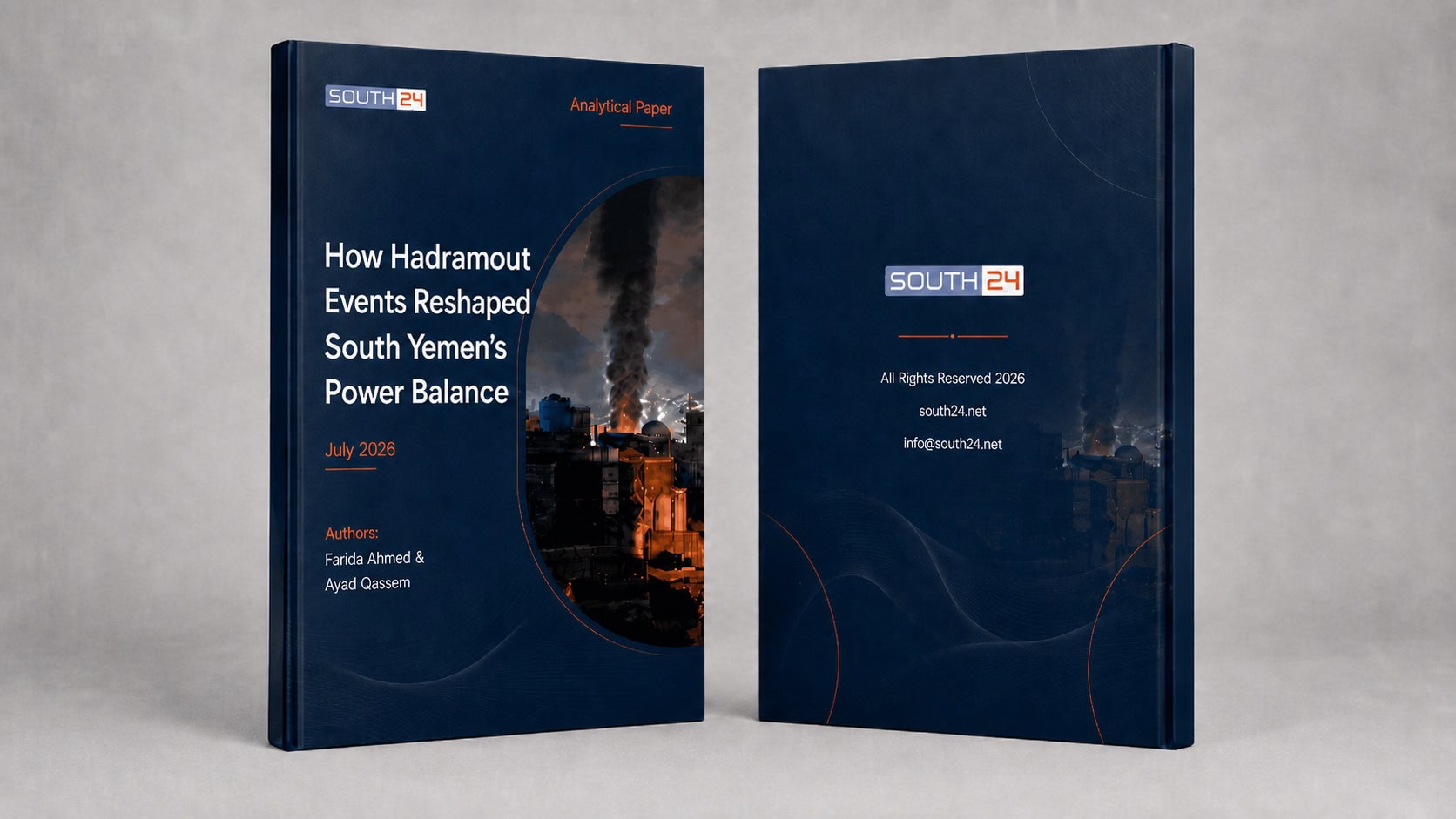
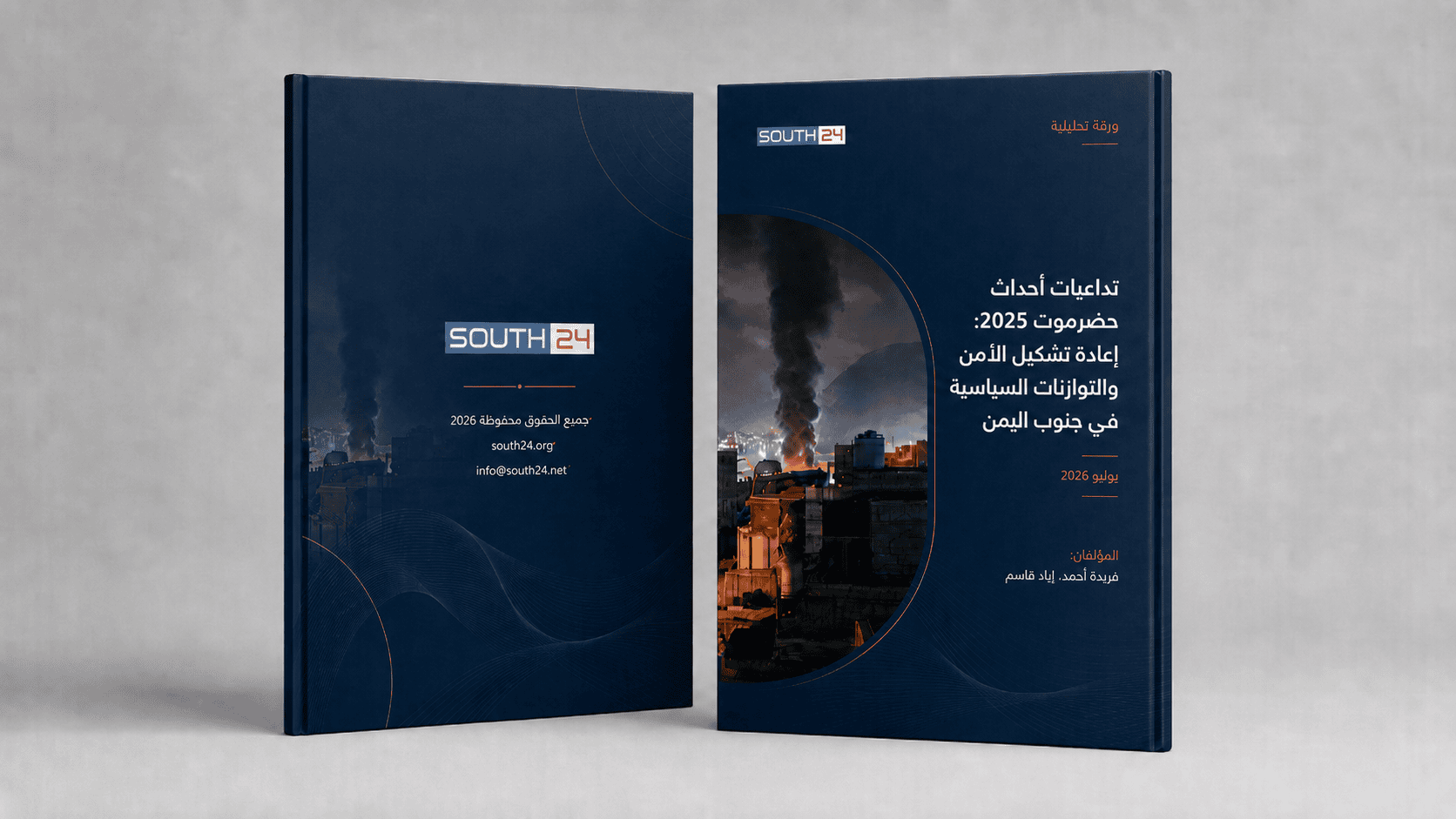
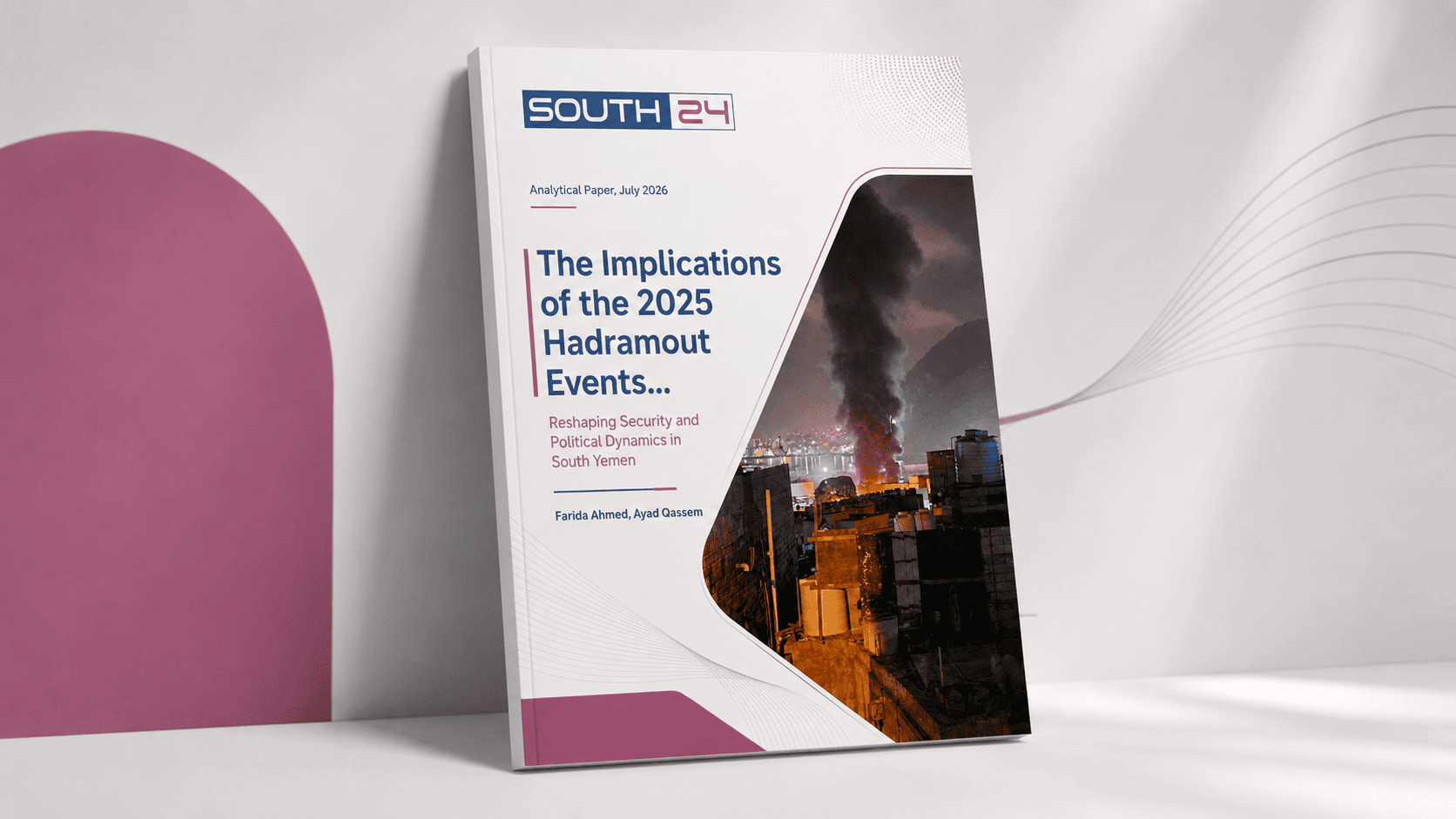
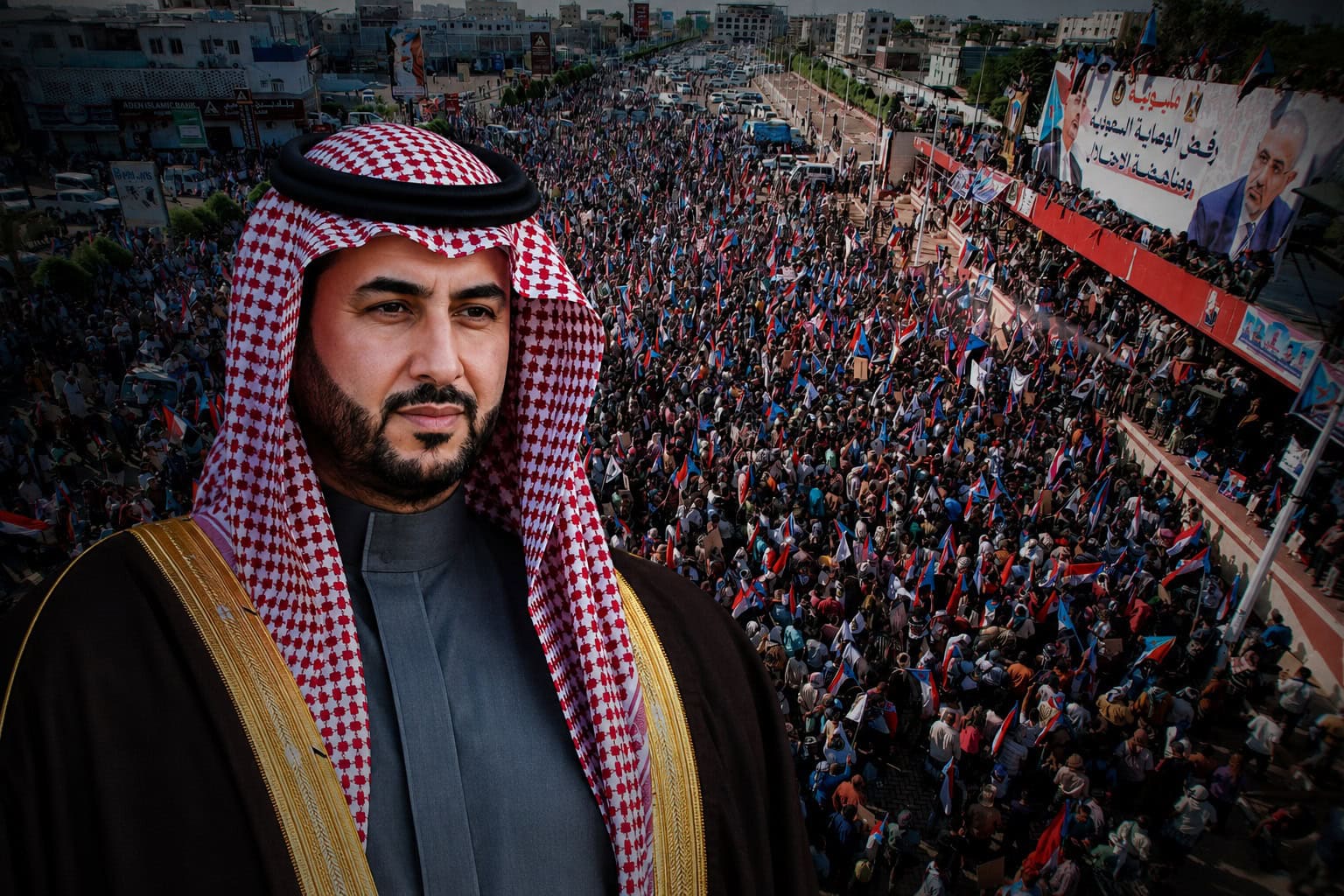
Cover image of the analytical paper – South24 Center, AI-assisted 3D design
آخر تحديث في: 05-07-2026 الساعة 7 مساءً بتوقيت عدن
Zurich (South24 Center)
A recent analytical study by South24 Center for News and Studies argues that the 2025–2026 developments in Hadramout marked a critical turning point in South Yemen’s conflict trajectory, evolving beyond a localized military situation to fundamentally restructure the security and political architecture in the South, while triggering a new phase of deep internal uncertainty and regional rivalry.
The paper, authored by researchers Farida Ahmed and Ayad Qassem, offers one of the most comprehensive readings of the developments that followed the transformations in Hadramout during late 2025 and early 2026. Distinguishing itself from many previous conventional assessments, the paper moves beyond chronicling military clashes or events to examine the deeper structural consequences of the crisis: how did the Hadramout events of late 2025 reshape the security and political power dynamics in South Yemen?
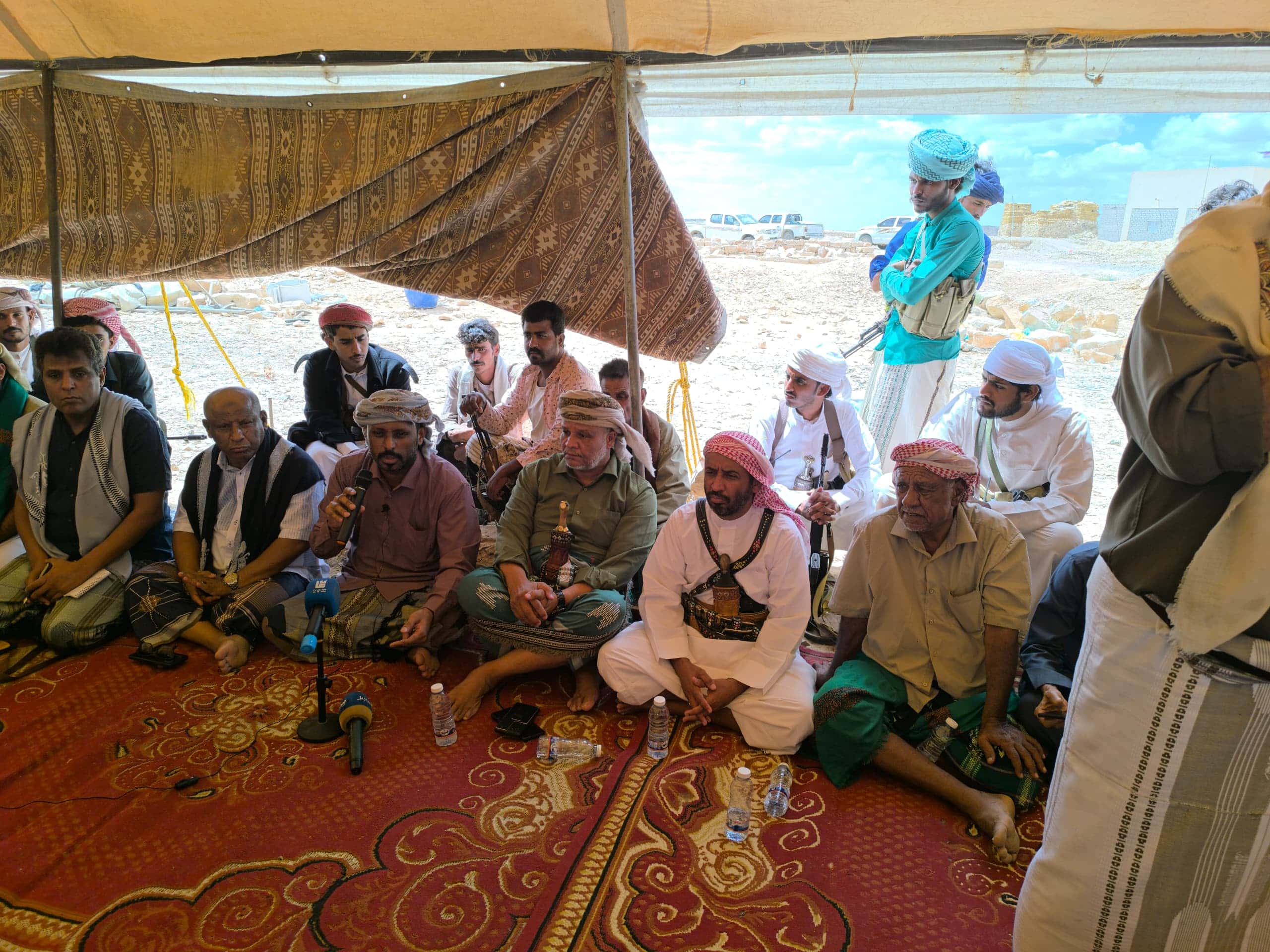
Examining the roots of the crisis, the paper links the escalation in Hadramout to the mobilization of the Saudi-backed Hadramout Tribal Alliance, led by Amr bin Habrish, which sought to secure control over strategic oil producing sectors, challenging the authority of other influential actors across the governorate, including the Muslim Brotherhood-aligned First Military Region forces in the Wadi and Desert regions, and the Hadrami Elite Forces along the coast. The paper concludes that disputes over oil, energy, and local control were early indicators of a broader Saudi-driven strategy to restructure the governorate’s security and political architecture.
From a Local Event to a Strategic Test
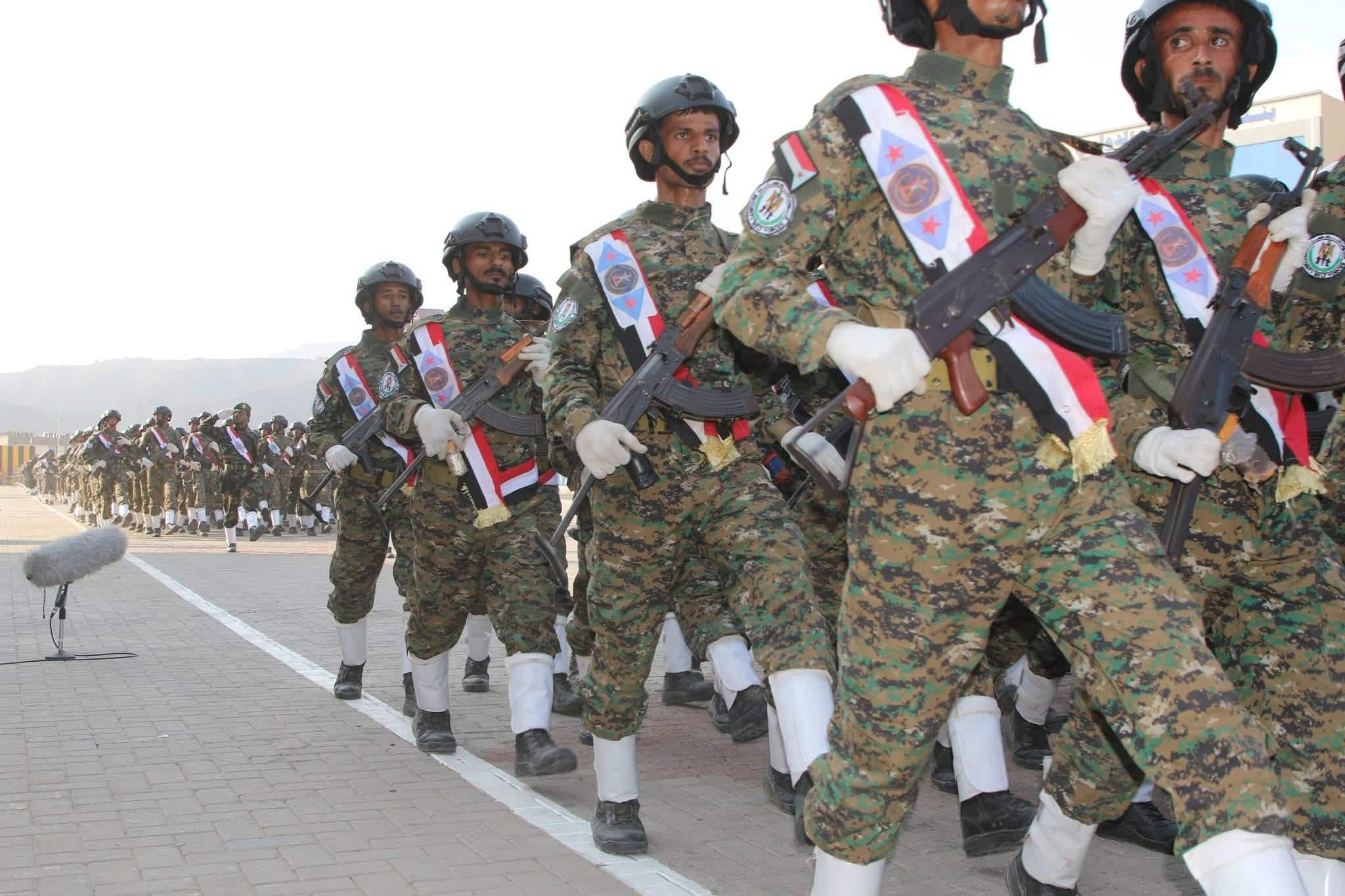
The paper analyses the rapid chain of events that unfolded after the Southern Armed Forces, backed by the Southern Transitional Council (STC), secured the Hadramout Wadi (Valley) and Desert, before expanding into Al-Mahra Governorate under Operation “Promising Future.”
The paper argues that these developments “were not just a temporary military maneuver,” but signaled a fundamental realignment of territorial control away from the First Military Region, which is closely associated with the Muslim Brotherhood in Yemen. For a broad segment of the southern population, this transition represented a historic turning point, marking the gradual reclamation of the geographic borders that defined the independent South Yemen state prior to 1990.
However, the paper notes that this shift suffered a major setback when Saudi Arabia launched intensive airstrikes targeting Southern forces in Hadramout and Al-Mahra after they rejected Riyadh’s ultimatum to withdraw. According to the paper, the strikes resulted in significant casualties, including deaths, injuries, detentions, and civilian losses, before overwhelming military pressure forced a Southern retreat.
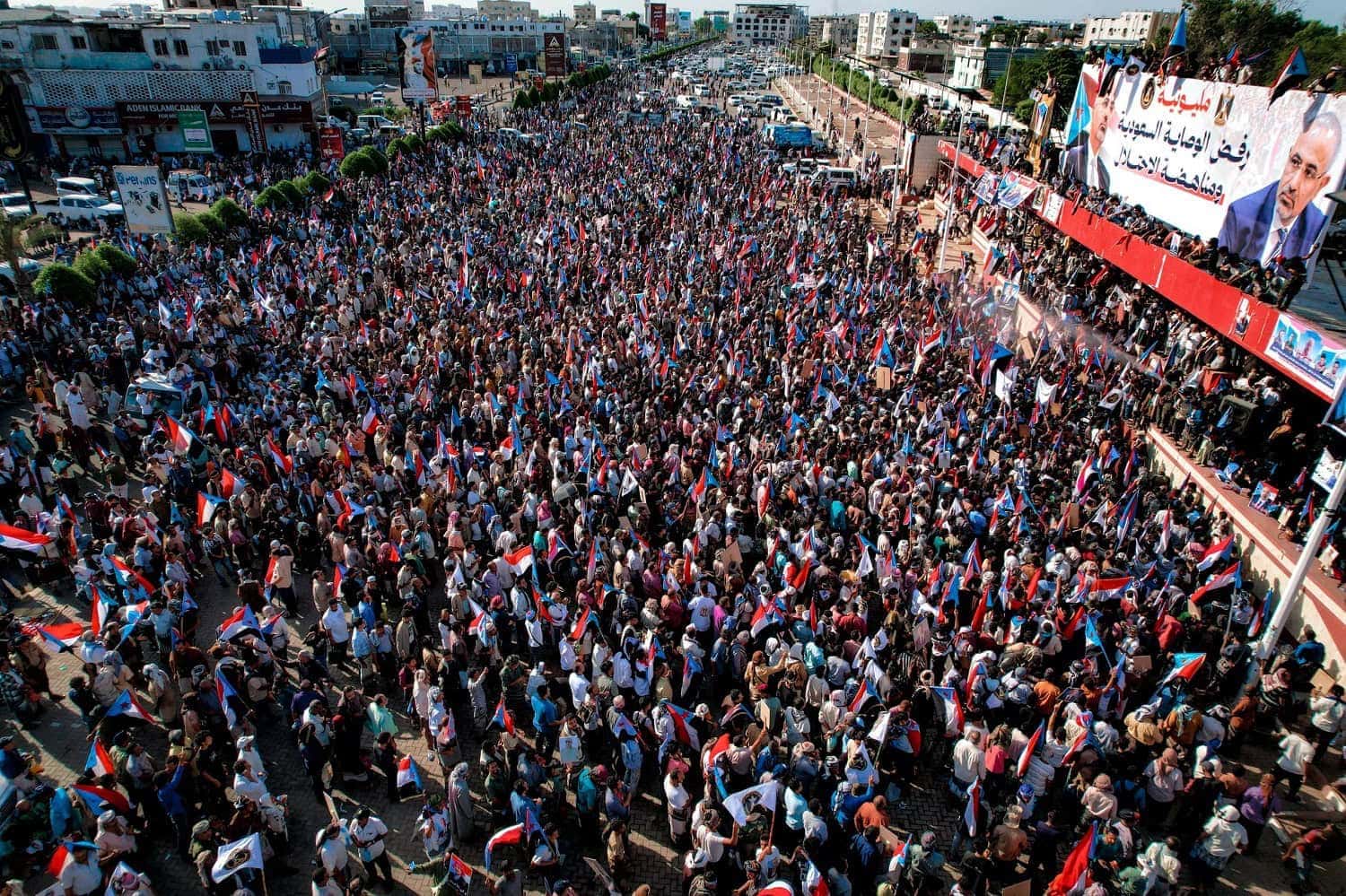
The paper argues that the underlying crisis only deepened, as local demands grew for the expulsion of northern forces from the Hadramout Wadi and the Desert. This resistance peaked during the massive “Seiyun Million March,” where protesters rallied behind the Hadrami Elite Forces and the Southern Armed Forces while demanding that local authorities reclaim control over security and military decision-making.
The paper notes that ‘Operation Promising Future’ was launched with a dual purpose: purging Hadrami cities and territories of terrorist organizations and cutting off weapons smuggling routes feeding Houthi networks. In its initial phase, Southern forces made rapid gains, securing key economic facilities, after clashing with armed groups affiliated with Bin Habrish and forcing the withdrawal of First Military Region forces from areas they had held for over three decades.
The paper highlights Saudi Arabia’s role in escalating the crisis. A Saudi military delegation arrived in Mukalla on December 3, demanding that the STC withdraw and hand over its newly-acquired positions to the Saudi-backed Nation Shield Forces. This demand was accompanied by a hostile media campaign directed at the STC and Southern forces.
Saudi Arabia’s first direct response came with the shelling of Mukalla Port on December 30, which the paper describes as a shocking escalation, not only due to its unexpected nature, but because it targeted a vital economic and humanitarian lifeline for Hadramout, Al-Mahra, and Shabwa, one that had been spared even during the 2016 battles against the Al-Qaeda in the Arabian Peninsula (AQAP).
Weakening the STC Does Not Produce Stability
In its security assessment, the paper concludes that what followed the Southern withdrawal was not merely a redeployment but a “systematic dismantling of the Southern Transitional Council’s military influence.” In its place a new security apparatus has emerged, shifting away from a collaborative coalition toward a “centralized” authority under Saudi oversight. The analysis contends that Southern security is now governed by a “Saudi contract,” that sidelines the concerns of local populations in Hadramout, Al-Mahra, and Aden, particularly following redeployment of Saudi-backed northern Salafist forces into Hadramout and Al-Mahra.
The paper warns that the resulting security vacuum has created fertile ground for the resurgence of extremist groups and cross-border terror cells. The fallout is already visible in the incidents of looting of military camps and weapons depots in Mukalla and near Al-Rayyan Airport, as well as AQAP propaganda inciting attacks against Southern forces.
Politically, the paper argues that the Hadramout events dealt a major blow to the STC, weakening its leverage within the formal governance framework, and created a pretext for reconfiguring political representation in South Yemen. It notes that when Saudi pressure forced an announcement in Riyadh to dissolve the council, it provoked widespread popular rejection and opposition from STC leaders and members stationed outside Saudi Arabia. This political showdown was mirrored on the ground by massive protests, and the repeated, forced shut down of the STC headquarters and auxiliary offices in Aden by Riyadh-backed forces.
The paper stresses that sidelining the South’s official political partner from the governing structure directly violates the Riyadh Agreement and the outcomes of the Gulf Cooperation Council (GCC) consultations. It argues that the presence of select Southern figures in the government or Presidential Leadership Council does not constitute genuine political representation, but rather reflects tokenistic participation lacking institutional clout.
Saudi Calculations and a Soft Fracture
In assessing Saudi Arabia’s role, the paper places Hadramout at the center of Riyadh’s strategic calculations, due to its proximity to the Saudi border, vast oil wealth, and direct access to the Arabian Sea. The paper notes that Saudi Arabia’s shift toward assertive intervention reflects an attempt to rewrite the balance of power in eastern Southern Yemen, and block the emergence of any political or military reality inimical to Saudi interests.
The paper connects these maneuvers in Hadramout to Saudi Arabia’s long-term ambition to secure an alternative maritime gateway to the open ocean, reducing dependency on vulnerable corridors like the Strait of Hormuz and Bab Al-Mandab. It refers to blueprints for a massive 950-km strategic canal project extending from the Arabian Gulf to the Arabian Sea, with 320 km cutting through Southern Yemen.
According to the study, Saudi Arabia is attempting to restructure the South landscape. Instead of pursuing a fair, balanced political settlement, Riyadh is replacing existing arrangements with a new security order, propping up local and northern military forces that are closely aligned with Riyadh’s strategic priorities, disregarding local sensitivities and aspirations for self-governance.
Regarding Gulf power dynamics, the paper highlights that the Hadramout events have exposed a fundamental strategic divergence between Saudi Arabia and the UAE in Yemen. While Riyadh remained focused on the Houthis and securing its own southern border, Abu Dhabi prioritized fighting Islamist and extremist groups and backing Southern local actors. The paper concludes that this calculated re-engineering of territorial influence in Hadramout and Al-Mahra has effectively sidelined and displaced the UAE’s direct role in shaping the Southern landscape.
Public Rejection and Possible Scenarios
From a societal perspective, the paper argues that the widespread protests across Aden, Hadramout, and other Southern governorates demonstrate extensive popular rejection of the post-intervention measures in Hadramout. The demonstrations in Aden, Mukalla, and Seiyun, particularly the June 20, 2026 rally under the slogan “Rejecting Saudi Guardianship and Opposing Occupation”, signaled a major breakdown in Southern public sentiment after years of field-level partnership with Riyadh.
The paper concludes by outlining three possible scenarios: The first envisions containing the crisis through a Saudi-brokered conditional settlement. This plan would rely on broad South-South dialogue that would withhold recognition of the STC as the exclusive representative of the South, while avoiding its absolute marginalization to avoid deepening tensions. Its success would depend on political and security guarantees, easing of security restrictions, an end to hostile media campaigns, and immediate solutions to the urgent economic and service grievances.
The second scenario foresees fragmented Southern representation and protracted, fragile stability. In this trajectory, Saudi Arabia fails to produce a convincing political settlement, while the STC is unable to reclaim its previous dominance. This leaves South Yemen as an externally-managed security arena, lacking a clear political center that can represent its people, negotiate deals, or maintain public order.
The third scenario envisions resurgence of Southern unity, and implementation of a much more balanced settlement, through Southern actors successfully channeling public anger into an organized political movement, to build a broader, more institutionalized Southern bloc capable of negotiation. The paper considers this the most difficult path to implement, but potentially the most capable of delivering sustainable stability, if domestic and external conditions align.
Key Recommendations
Among its recommendations, the paper calls on the Southern Transitional Council to strengthen internal cohesion, restructure its organizational framework, and implement leadership rotation. It also suggests the establishment of a permanent political–strategic crisis management body, and the development of a coherent negotiating doctrine for future Southern dialogue or comprehensive Yemeni settlement. Most importantly, the STC must uphold the principle of “independent Southern decision-making” while maintaining a balanced diplomatic discourse toward regional and international actors.
For Saudi Arabia, the paper recommends that Riyadh must provide iron-clad guarantees for any Southern dialogue it sponsors and formally recognize the STC as a prominent political and social player. It also calls on Riyadh to reassess its deployment of northern forces to sensitive governorates like Hadramout and Al-Mahra and establish legal and humanitarian channels to address the files of casualties, the wounded, detainees, and prisoners.
It further calls on the UAE to coordinate more closely with Saudi Arabia on South Yemen and adopt a broader strategy that extends beyond the STC by engaging with other influential local actors in Hadramout, Al-Mahra, Shabwa, and Aden. The paper also urges local authorities to fix the collapsing public services and avoid aggressive security tactics. Lastly, it calls on the international community to recognize the risks posed by the emerging security vacuum in South Yemen, particularly in the east, warning that terrorist groups may exploit it to regroup, posing a direct threat to maritime corridors and international security.


قبل 3 أشهر
قبل شهرين
قبل 3 أشهر