مركز سوث24 للأخبار والدراسات
مركز سوث24 للأخبار والدراسات


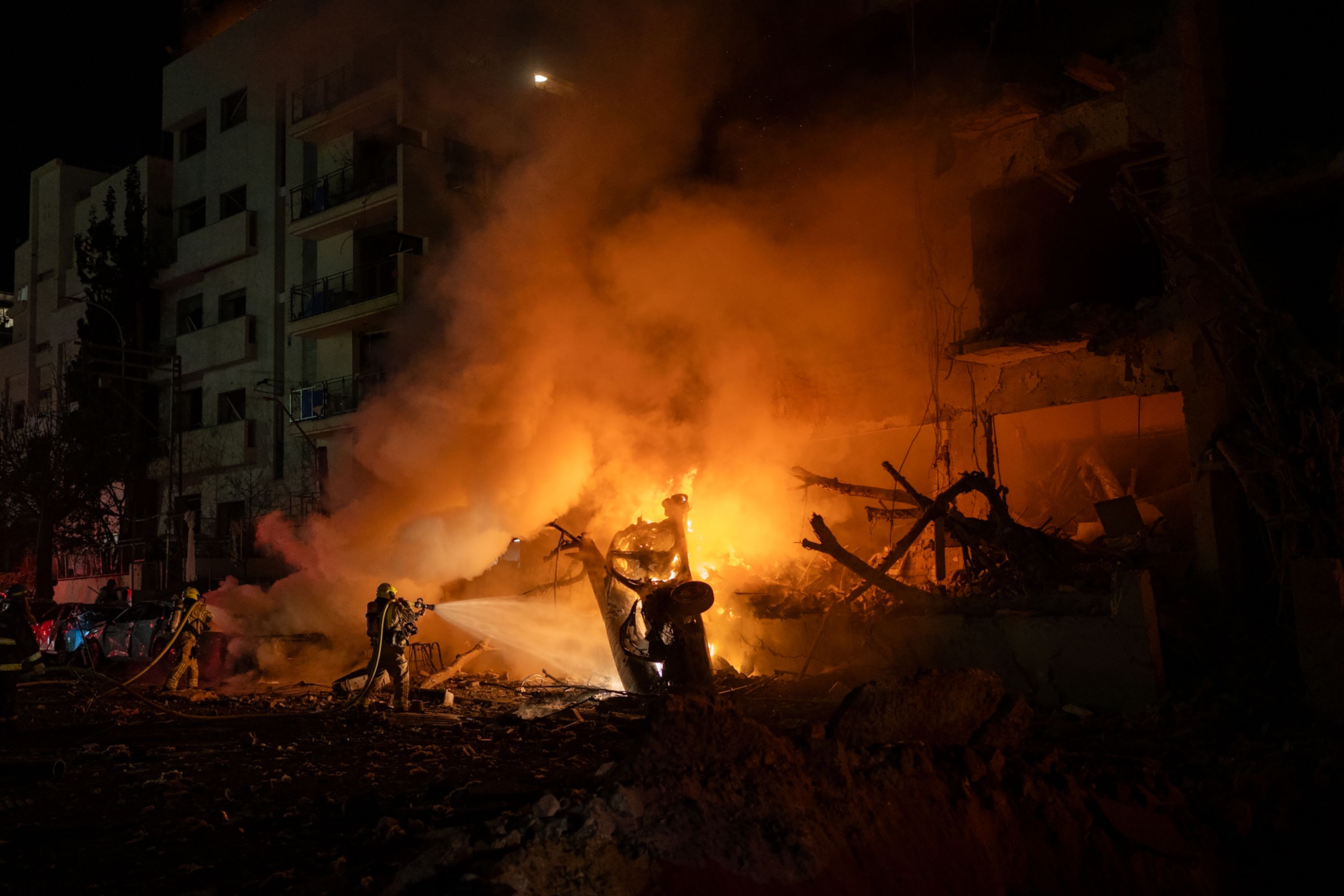
A fire burns after a retaliatory strike in Tel Aviv, Israel, on Saturday, February 28. Erik Marmor/Getty Images
01-03-2026 الساعة 2 صباحاً بتوقيت عدن
Aden (South24 Center)
The Houthi leader, Abdul-Malik al-Houthi, announced on Saturday (February 28) “full readiness and mobilization across various activities” to support Iran, amid a massive regional military escalation following a joint U.S.-Israeli strike inside Iranian territory.
Al-Houthi condemned what he described as “U.S.-Israeli aggression” against Iran, calling on his supporters to hold mass rallies in Sana’a and other areas under the group’s control in solidarity with Tehran. Additionally, the Houthi government in Sana’a issued a statement expressing “full solidarity” with Iran.
This followed the announcement by the United States and Israel on Saturday of a joint military operation targeting military and command sites inside Iran. U.S. President Donald Trump stated that the operation aims to protect American interests and contain threats from Iran’s nuclear and missile programs.
For its part, the Israeli military announced that the strikes hit dozens of targets in Tehran and other cities, confirming the deaths of several senior Iranian military leaders, including the commander of the Revolutionary Guard, the minister of defense, and Ali Shamkhani, an advisor to the Iranian Supreme Leader.
Israeli sources also reported the killing of Iranian Supreme Leader Ali Khamenei during the opening strike, though Tehran has yet to issue an official statement confirming or denying this.
In response, the Iranian Revolutionary Guard Corps (IRGC) carried out missile attacks targeting Israel and U.S. bases in Bahrain, Qatar, the UAE, Saudi Arabia, and Jordan.
In Yemen, the internationally recognized government condemned the Iranian attacks targeting Saudi Arabia, considering any infringement on its sovereignty a “direct and serious threat to Yemeni national security,” and affirmed its support for the Kingdom’s right to protect its territory and citizens.
Similarly, the Southern Transitional Council (STC) announced its condemnation of the Iranian attacks that targeted Saudi Arabia, the UAE, Bahrain, Kuwait, Qatar, and Jordan, deeming them a “dangerous undermining of regional security and stability,” and asserting that the security of the South is an integral part of Arab national security.
Anwar al-Tamimi, the official spokesperson for the STC, stated: “The blatant Iranian aggression against the Arab Gulf states confirms the impossibility of any Gulf state succeeding in making unilateral deals with Iran or any of its subversive arms in the region.” He emphasized that the STC “realizes that this moment will impose its own logic and return those who strayed from the path to the side of right.”
Regionally, the Sultanate of Oman expressed regret over the military developments, calling on the UN Security Council to hold an urgent meeting to impose a ceasefire and prevent the region from sliding into a comprehensive confrontation. The French president also called for urgent international action, while Russian President Vladimir Putin discussed the developments with the Russian Security Council, amid reports of disruptions to navigation and oil tankers transiting the Strait of Hormuz.
Observers fear that the Houthis’ declaration of readiness to support Iran could thrust Yemen into the heart of the regional confrontation. This could impact maritime security in the Red Sea and the Gulf of Aden, potentially leading to the resumption of the Houthi military campaign against ships, which had ceased last October following the Gaza ceasefire.