SOUTH24 CENTER FOR NEWS & STUDIES
SOUTH24 CENTER FOR NEWS & STUDIES



UAE President Mohammed bin Zayed receives Saudi Defense Minister Khalid bin Salman in Abu Dhabi, October 18, 2026. (Khalid bin Salman’s X account)
05-11-2026 at 12 PM Aden Time

Zaina Al-Gallabi (South24 Center)
Since 2015, the Saudi-Emirati alliance has been one of the key factors shaping the Yemeni scene, with both countries supporting the internationally recognized government and opposing the expansion of the Houthi group. However, subsequent developments gradually exposed fundamental differences in their priorities and approaches, highlighting a widening gap between Riyadh and Abu Dhabi on various regional issues. Yemen became the clearest arena in which this underlying rift came to light.
Although tensions between the two countries have escalated since last year, their relationship cannot be reduced to a zero-sum conflict. It is more accurate to view the disagreements within the Gulf framework, including those between “Riyadh and Abu Dhabi”, as taking place within a strategic partnership shaped primarily by geographical realities. The two countries have differed in their assessment of interests and threats in Yemen, but the incentives for coordination remain, even if such coordination is currently suspended.
A Partnership Shaped by Overlapping Objectives and Mutual Concerns
Saudi Arabia and the UAE entered the war in Yemen with the publicly stated objective of restoring state institutions and preventing the Houthis from turning their coup into a political reality accepted by the international community. However, their respective geographical positions in relation to Yemen helped shape different priorities. Saudi Arabia views northern Yemen as a direct security hinterland because of its long land border with the country. The UAE, meanwhile, took the lead on security and military affairs in South Yemen, with priorities that appeared to center on maritime security, combating Al-Qaeda in the Arabian Peninsula (AQAP), whose center of activity became concentrated in South Yemen, and protecting ports and maritime routes stretching from the Gulf of Aden to Bab Al-Mandeb and the Red Sea.
Based on this division of responsibilities, both countries moved to support and build the capabilities of local forces. The UAE supported local forces with relatively cohesive leadership structures and identities, such as the Security Belt, Elite Forces, Giants Brigades, and National Resistance. Saudi Arabia, by contrast, relied for a longer period on the government army, tribal groups, and various networks aligned with the internationally recognized government. Since 2022, however, it has moved toward building a more cohesive model through the Nation’s Shield Forces.
Following the regional transformations of 2011, Riyadh and Abu Dhabi shared a fundamental position centered on rejecting the Muslim Brotherhood. This was evident in their support for Egypt in 2013 and their unified stance during the 2017 crisis with Qatar. However, the same issue later became a source of disagreement. Their differing positions on Yemen’s Islah Party widened the gap between Riyadh and Abu Dhabi. The UAE maintained a firm stance against the Muslim Brotherhood, viewing it as a political and security threat to regional stability. It considers empowering forces with political and organizational ties to the group within military and political institutions as a way of reproducing past problems, even if their role is temporarily limited to confronting the Houthis. Saudi Arabia, while not officially adopting an ideological alliance with the Muslim Brotherhood, continued to engage pragmatically with figures and forces associated with it, viewing them as part of the internationally recognized government and the tribal and political fabric opposing the Houthi camp, particularly in Marib and Taiz.
However, while the Muslim Brotherhood issue has been one visible dimension of Saudi-Emirati disagreements in Sudan and Yemen, it does not explain the full extent of their differences. Economic and regional competition has also played a role, becoming particularly evident when Abu Dhabi withdrew from OPEC and the OPEC+ alliance effective May 2026, following years of dissatisfaction with production restrictions led by Riyadh. The two countries also differ in the tools they use to exercise influence, as well as in their broader visions for the regional order.
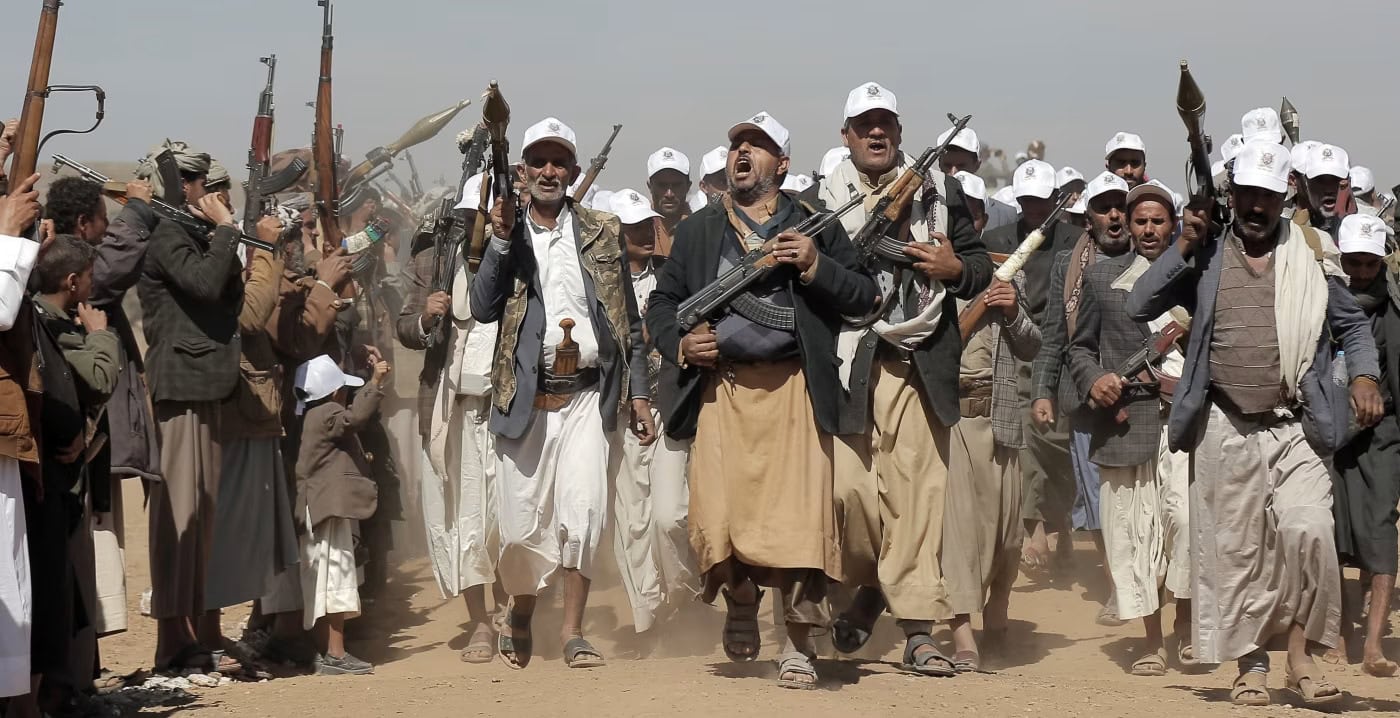
This divergence moved from silent competition to direct friction in Yemen. The Southern Transitional Council’s moves in Hadramout and Al Mahra in late 2025 became the most difficult test of bilateral relations in the country. From Saudi Arabia’s perspective, any military change near its borders directly affects its security. Although the UAE officially denied directing or pushing any party to make moves along its borders, and the Southern Transitional Council maintained that its moves toward Hadramout and Al Mahra were driven by reasons unrelated to its role as a local actor opposing the Houthi camp led by Saudi Arabia, Riyadh chose to escalate by launching airstrikes against Emirati cargo vessels and Southern forces affiliated with the Southern Transitional Council in Hadramout and Al Mahra.
Events continued to unfold until the internationally recognized Yemeni government prompted the UAE to withdraw from the counterterrorism file in Yemen. In doing so, the government, inadvertently, handed Al-Qaeda a significant opportunity to resume its activities in Hadramout, Abyan, Shabwa, and Marib, while allowing the Houthis to benefit substantially from a renewed threat to maritime navigation.
In both Yemen and Sudan, Riyadh’s concerns carry considerable weight, given Yemen’s direct land and maritime borders with Saudi Arabia and Sudan’s location on the opposite shore of its Red Sea coastline. This may constrain Abu Dhabi’s political and military options and its network of local influence, as has been the case in Yemen. Saudi Arabia tends to engage with central governments, give top priority to border security, and resort to deterrence, with Hadramout serving as an example, because stability in its immediate neighborhood is a prerequisite for the success of Vision 2030. The UAE’s more distant geographical position, meanwhile, affords it greater independence and flexibility in building partnerships. It views reliance on weak governments or those penetrated by Islamists as more costly than building relationships with disciplined local forces committed to combating terrorism or protecting maritime interests. Considering the motivations, priorities, and geographical realities shaping both countries, their respective approaches to regional issues become easier to understand.
The Difficulty of Restoring Operational Trust Between the Two Countries
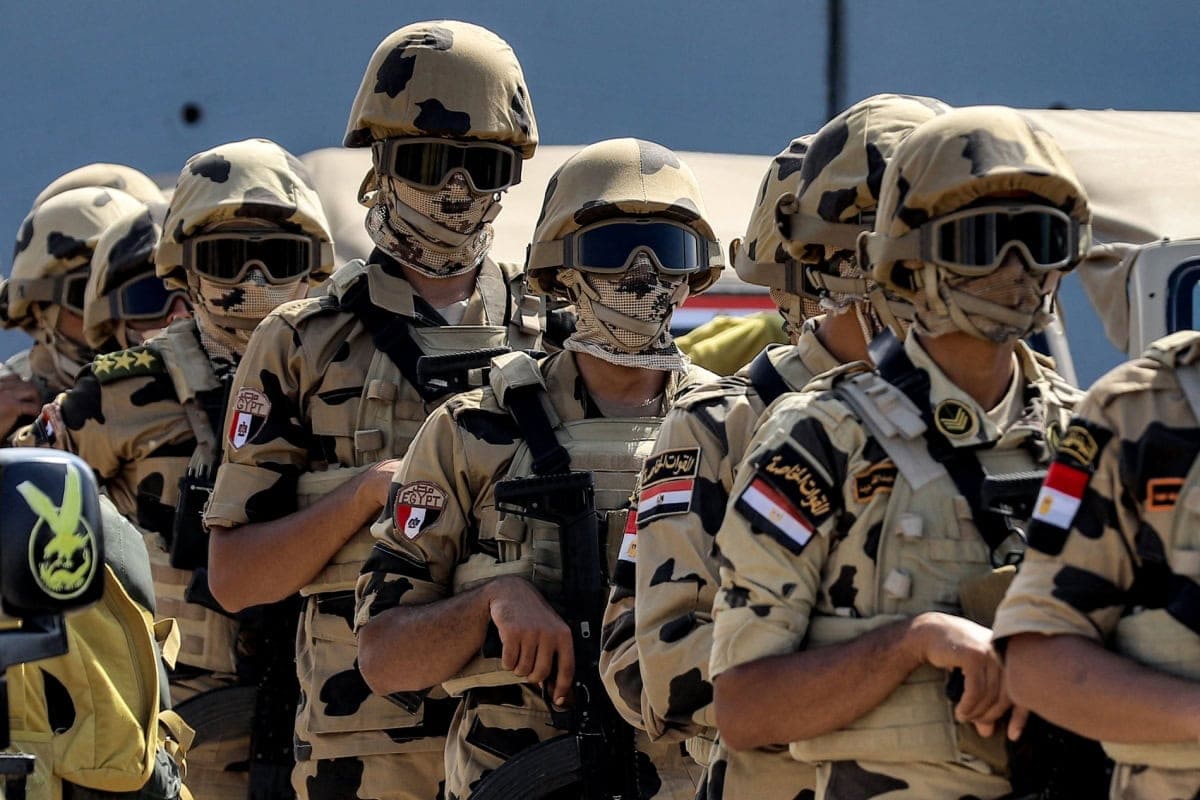
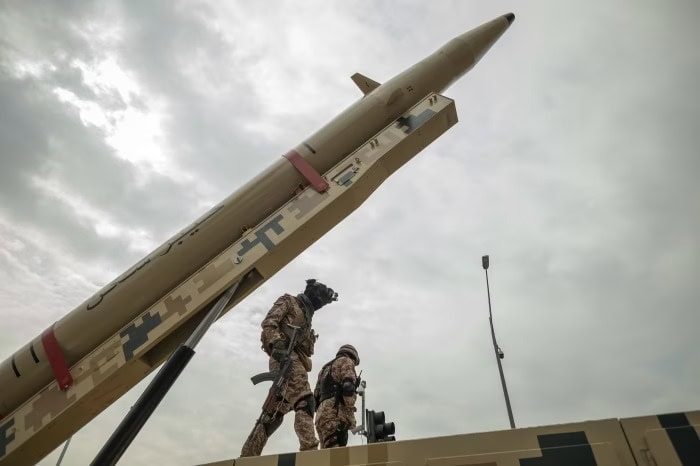
Mohammed bin Zayed’s meeting with Saudi Defense Minister Khalid bin Salman in Abu Dhabi on October 18 gained additional significance because it took place on almost the same day that Egypt’s National Defense Council announced its support for Saudi Arabia. It was also preceded by Riyadh’s reported request, dating back to mid-September, for defense support from France, Britain, Pakistan, and Egypt to counter Houthi missiles and drones. This was before the meeting between Mohammed bin Salman and Mansour bin Zayed in Riyadh on September 29.
There are insufficient indications to suggest that the UAE could rejoin the military coalition in Yemen, that a joint air defense agreement is in the making, or that there is any clear sign of a settlement addressing the dispute specifically over the Southern Transitional Council and South Yemen. This remains the case even after the appearance of Aidarous Al-Zubaidi, head of the Southern Transitional Council, and Riyadh’s previously stated intentions to target him.
After Saudi Arabia took control of most military formations in South Yemen following January 2026 and became their official funder, it no longer needed assistance in building the defensive capabilities of local Yemeni forces. Instead, it became more dependent on air defense systems, supporting fighter aircraft, and naval capabilities in the Red Sea that could operate under Saudi command or coordination. Egypt appeared to be the best suited for this role, as it has the largest Arab army, even if it does not intervene on the ground, as well as naval forces operating in the Red Sea. More importantly, Egypt is not tied to any competing local Yemeni formations. Rather, it views tensions in the Bab Al-Mandeb Strait through the lens of the Suez Canal and Egyptian maritime security. It considers its involvement not merely a service to Riyadh, but also a defense of Egypt’s own national interests. Yemen, with its maritime and land access points, is no longer an arena of Egyptian-Saudi competition as it was in the 1960s. It has instead become a shared concern, from Cairo to Riyadh.
The Yemen file is not the only obstacle to restoring trust between Riyadh and Abu Dhabi. Without an understanding on Sudan, Saudi-Emirati reconciliation will remain limited. Although the UAE has officially denied providing any military support to the Rapid Support Forces (RSF), Riyadh views the security of Sudan’s coastline as part of Red Sea security. Riyadh has previously issued unnamed criticisms of foreign intervention, which observers interpreted as implicitly targeting the supporters of the RSF, including Abu Dhabi, according to explicit condemnations by the Sudanese government, which enjoys diplomatic support from both Egypt and Saudi Arabia.
Recent developments in Saudi-Emirati relations can be described as diplomatic reconciliation. However, the two countries are unlikely to find themselves on the same battlefield in Yemen with the level of mutual operational trust they had when they entered the country in 2015. The Gulf dispute has gone beyond the division of leadership roles in Yemen, differences over Sudan, and the nature of relations with actors in the Horn of Africa. It now extends to alignment with either side of the Iranian-American war, Emirati concerns over Riyadh’s diplomatic and negotiating engagement with Tehran and the resulting loss of trust, as well as Saudi concerns over the security costs to the region of the security partnership between Abu Dhabi and Tel Aviv.
The Saudi defense minister’s visit to Tehran may go beyond the declared efforts to de-escalate tensions and could lead to greater military restraint by the Houthis. What Riyadh appears to have accepted after years of military confrontation with the Houthis is that any serious influence over the group’s conduct requires an Iranian and Omani role.
The least likely scenario is that Saudi-Iranian understandings would result in the Houthis remaining near Bab Al-Mandab, with the Kingdom accepting that its trade and oil exports remain under constant threat, while giving Tehran an additional means of exerting pressure on the world through the Houthis in the strait. It is equally unlikely that the world would be allowed to deal with the Houthis as a de facto authority, bringing to an end the objectives that underpinned the war narrative.
The most plausible assessment regarding Bab Al-Mandeb is that no regional or international parties will become involved in making maritime security hostage to temporary understandings that could collapse at any moment. Omani-Iranian mediation may instead play a role in preserving the Houthis’ administrative and political gains in parts of the western coast, alongside their political and economic gains and their continued influence in Sanaa and Hodeida. The Kingdom may accept this arrangement on the condition that its affiliated government forces remain stationed in locations closest to the maritime passage.
With the return of the Southern forces closely aligned with the UAE to their previous position before 2026 now impossible, and amid widening disagreements between Abu Dhabi and Riyadh on several regional issues, the UAE is likely to settle for a cautious observer role in Yemen. It will protect its interests through the network of ports, investments, and maritime partnerships it has built across the Red Sea and the Horn of Africa, while maintaining its political ties with the Southern forces close to it.
The UAE is unlikely to be willing to resume military or financial involvement in support of Saudi options without prior agreement on the status of South Yemen, the security of Bab Al-Mandab, and the limits of Houthi influence. With the Yemen file having shifted to Muscat, the UAE is now outside the main circle managing the issue, even though its strategic interests remain at stake. Its most likely position, therefore, will be to support any possible settlement that protects maritime navigation and prevents the Houthis from establishing military control over the strait, while avoiding responsibility for the consequences of any agreement led by the Kingdom.