SOUTH24 CENTER FOR NEWS & STUDIES
SOUTH24 CENTER FOR NEWS & STUDIES


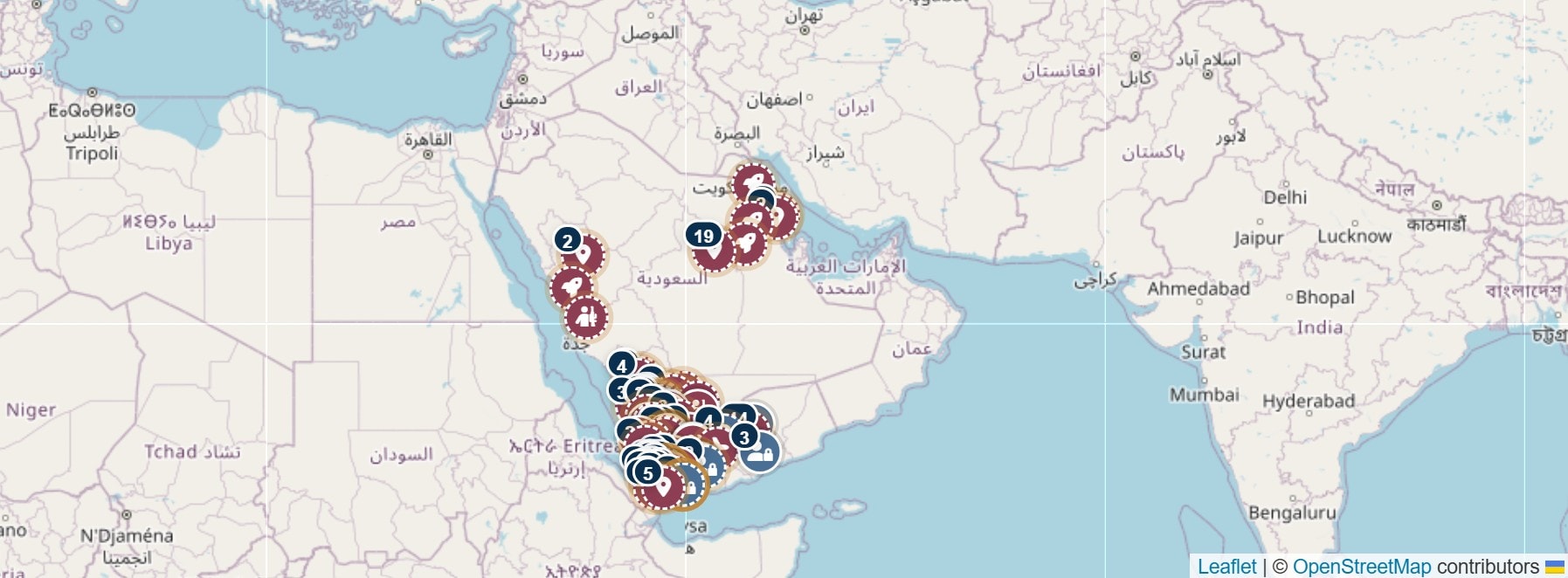
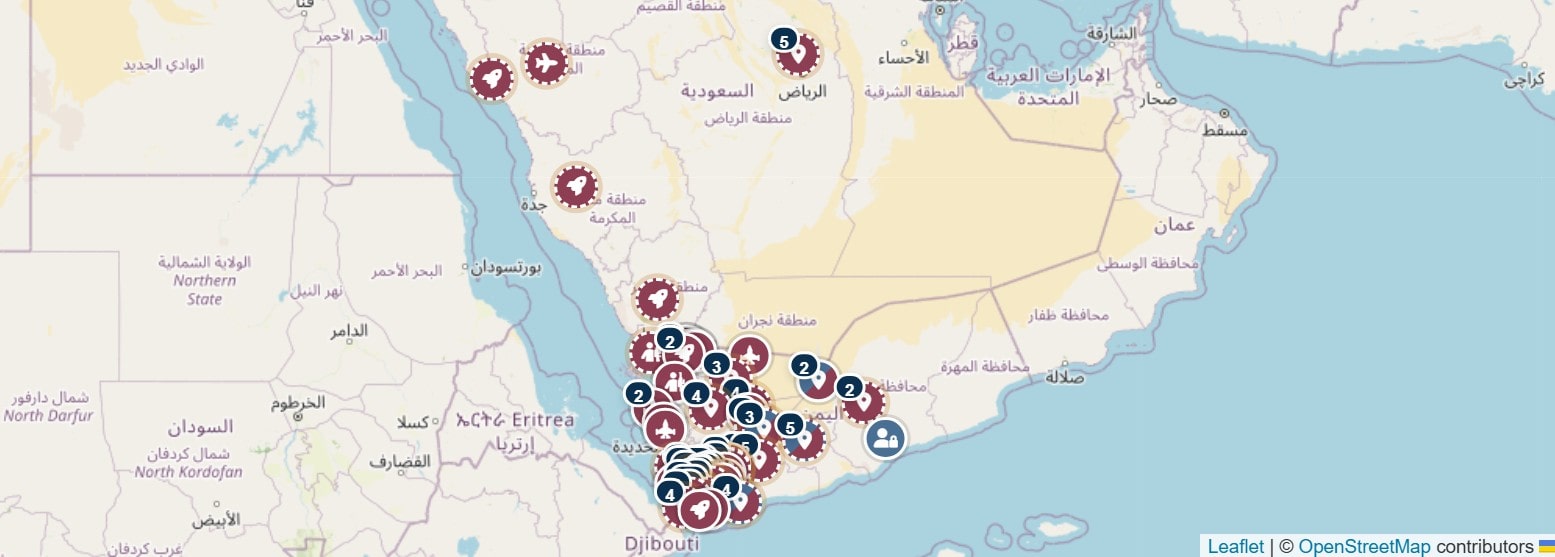
Interactive Map – By South24 Center © OpenStreetMap
Last updated on: 17-10-2026 at 12 PM Aden Time

Aden (South24 Center)
Military confrontations in Yemen escalated significantly between October 3 and 15, 2026, as ground operations expanded across Taiz Governorate and the Iran-aligned Houthi militia advanced into several of its southern and western districts. Southern forces subsequently launched a counteroffensive in the Bab al-Mandeb area and along the western coast, amid intensive Saudi airstrikes. The escalation also reached Aden, where Aden International Airport and the presidential Maashiq Palace came under Houthi missile attacks, alongside an intensification of ballistic missile and drone attacks on airports, vital infrastructure and oil facilities in Saudi Arabia, particularly in the capital, Riyadh.
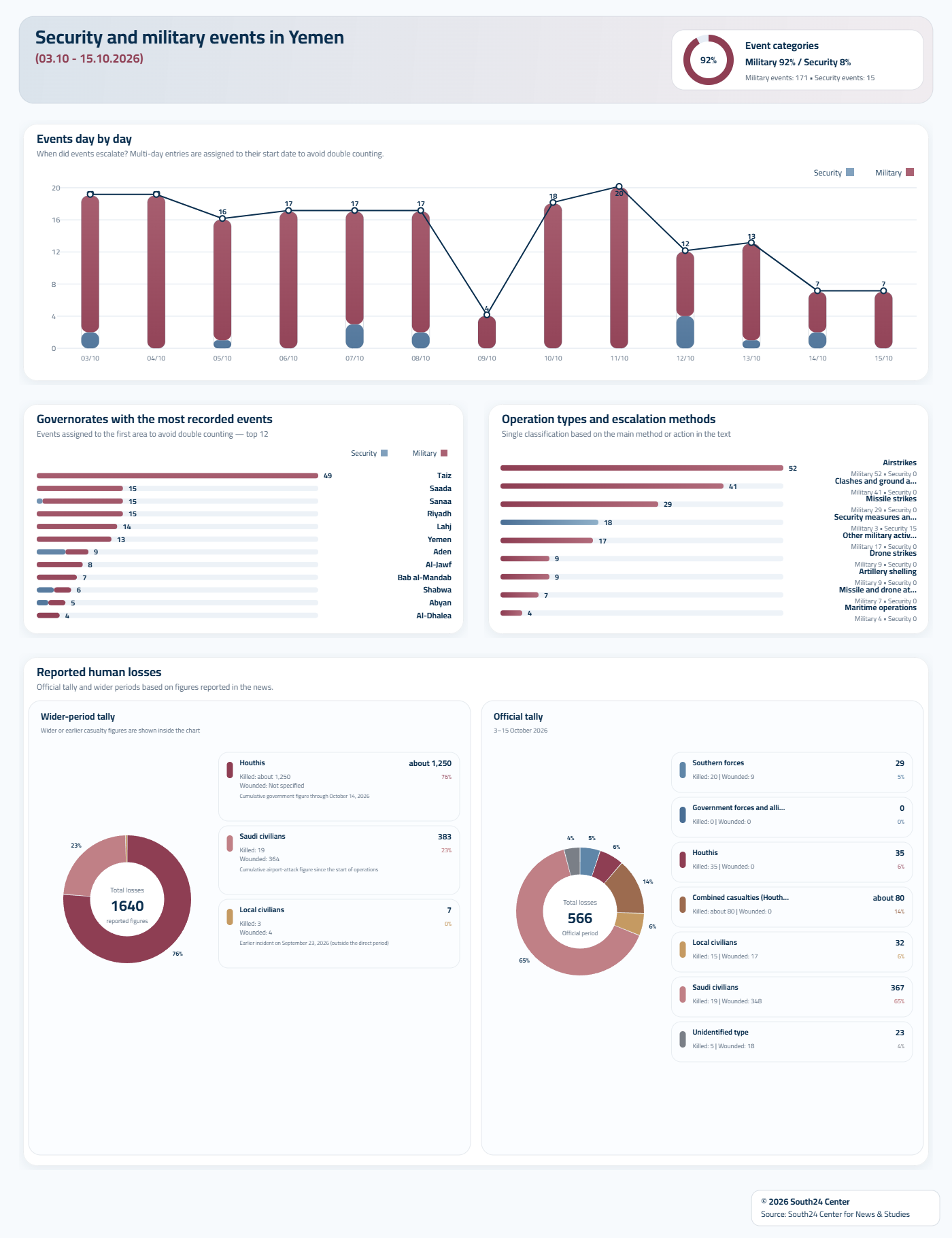
According to interactive monitoring conducted by South24 Center for News and Studies, 186 security and military incidents were recorded across Yemen and Saudi Arabia during the period. These developments were accompanied by shifts in territorial control, increased use of warplanes, missiles, drones and artillery, and the Yemeni government's announcement of military operations to reclaim Houthi-held territories. The escalation also coincided with calls for general mobilization by the President of the Southern Transitional Council (STC), in his first televised appearance since January 2026, and mass rallies in Aden and several South Yemen governorates marking the 63rd anniversary of the October 14 Revolution.
The monitoring documented 174 deaths and 392 injuries, bringing the combined casualty toll to 566, based on figures that could be verified from statements and announcements issued during the reporting period. The casualties included members of the Southern Armed Forces, Houthi fighters and civilians in Yemen and Saudi Arabia, as well as combined losses among Houthi fighters and pro-government forces for which no precise breakdown by side was available.
The toll included 20 Southern Armed Forces personnel killed and nine wounded, and 35 Houthi fighters killed. Another approximately 80 people were killed on both sides during a single day of fighting in Taiz, according to Agence France-Presse (AFP). The monitoring also documented 15 civilian deaths and 17 injuries inside Yemen, alongside 19 deaths and 348 injuries in Saudi Arabia. A further five people were killed and 18 wounded, although their civilian or military status could not be determined.
These figures differ from the broader cumulative casualty and operational totals announced by the warring parties. On October 14, pro-government forces announced that they had carried out 2,309 strikes and targeting operations since the start of their campaign, claiming to have killed approximately 1,250 Houthi fighters and destroyed more than 460 military vehicles and pieces of equipment. The following day, the Saudi military spokesperson said Houthi attacks on the Kingdom's airports had killed 19 people and injured 364 since the operations began. Of these, 17 deaths and 333 injuries resulted from 20 attacks on King Khalid International Airport in Riyadh since the beginning of October.
The data showed that the escalation was concentrated primarily in Taiz Governorate, which accounted for 49 incidents, followed by Sanaa, Saada and Riyadh, with 15 incidents each, and Lahj with 14. Aden recorded nine incidents, while Bab al-Mandeb accounted for seven. These figures do not fully reflect incidents involving multiple governorates or locations.
In terms of military activity, airstrikes were the most frequently recorded category, accounting for 49 incidents, followed by clashes and ground attacks with 36, other military activities with 33, and missile attacks with 30. The monitoring also recorded 18 security operations and incidents, seven drone-related incidents, seven artillery shelling incidents, five combined missile and drone attacks, and one naval operation.
In Taiz, the developments began with fierce clashes in Jabal Han, Al-Kadahah, Jabal Habashi and Samea, before the Houthis expanded their control over areas in the south and west of the governorate, including Al-Turbah and parts of Al-Mawasit and Jabal Habashi. Their advances also reached areas associated with the hometowns of Presidential Leadership Council (PLC) Chairman Rashad Al-Alimi and Yemeni Parliament Speaker Sultan Al-Barakani.
These advances cut off vital roads connecting Taiz city to Aden and increased military pressure on the city, where fighting continued along the western, eastern and southern fronts. However, Taiz city did not fall entirely under Houthi control.
Along the southwestern front, the fighting expanded further when the Southern Giants forces launched a military operation in Bab al-Mandeb and Dhubab on October 5, with the participation and support of Nation Shield Forces and local tribesmen, according to field reports. Military sources said the operation resulted in the capture of large parts of Dhubab district, including its military airport, the cutting off of Houthi supply lines and the Dhubab–Mokha road, the destruction of military vehicles, and the capture of dozens of Houthi fighters.
Clashes continued in the area over the following days, with Southern forces announcing further advances in Bab al-Mandeb and the repulsion of Houthi attacks north of Dhubab airport and along the western coastal fronts. Border areas between Lahj and Taiz also witnessed sustained fighting in Al-Mudaribah, Ras Al-Arah, Al-Suqya, Al-Aghabarah and Al-Khuzam. The Houthis used ballistic missiles, drones and artillery during these confrontations, while Southern forces carried out defensive operations and counterattacks backed by air support.
Southern forces suffered casualties during these battles, including the killing of Muadh Al-Houd, commander of the Emergency Forces within Al-Dhalea Governorate's Security Committee, his deputy, commander Abdulrahman Khalid, and four other military personnel from Al-Dhalea during clashes in Bab al-Mandeb on October 9. The casualties also included Mufeed Al-Jamali, a combat photographer with the Southern Giants Brigades' Media Center, who was killed during operations along the western coast.
In Aden, the escalation moved beyond the front lines to the targeting of vital civilian and government facilities. On October 7, Aden International Airport was attacked with two ballistic missiles, while hostile drones were detected over the city. Security authorities said the attack caused no casualties but threatened the safety of civilian aviation.
The escalation peaked on October 15, when the Houthis targeted Maashiq Presidential Palace, the headquarters of Yemen's internationally recognized government, with five ballistic missiles. Yemeni Health Minister Qassem Buhaibeh announced that five people had been killed and 16 others wounded, including security guards and civilian employees working at the presidential compound. The Houthis acknowledged carrying out the attack, claiming they had targeted a military operations center run by Saudi officers inside the palace.
The security repercussions also extended to the arrest of cells accused of working for the Houthis in Aden and neighboring governorates. Yemen's Interior Ministry announced the arrest of an 18-member cell that it said had been planning to target security and military commanders and supply routes. Aden police subsequently announced the arrest of additional suspects accused of monitoring security sites and officials, possessing explosives, and planning attacks using improvised explosive devices.
In Saudi Arabia, Houthi attacks were concentrated on King Khalid International Airport in Riyadh, as well as airports in Abha, Najran and Dammam, and oil facilities and military sites in Khurais, Rabigh, Dhahran and other areas. According to Saudi authorities, the attacks caused deaths, injuries and material damage, while temporarily disrupting flight operations at some airports.
In the latest Saudi military figures included in the monitoring, dated October 15, the Saudi military spokesperson said the Houthis had launched 1,104 missiles and 1,135 drones toward the Kingdom since the start of the operations. He also confirmed the destruction of 127 Houthi storage facilities and several missile launch platforms as part of ongoing Saudi military operations inside Yemen. Saudi airstrikes also targeted the Yemen Petroleum Company's facility in the Al-Sabaha area west of Sanaa and the coastal Ras Issa area.
On the political and public fronts in South Yemen, the Southern Transitional Council called for general mobilization in defense of the South and its national cause, amid intensifying battles and Houthi threats along the borders of the southern governorates, particularly in Lahj and Bab al-Mandeb, as well as attacks targeting Aden.
STC President Aidarous Al-Zubaidi renewed the call for mobilization in a televised address on the evening of October 13, his first since January 2, 2026. During the speech, he condemned Houthi attacks on Saudi Arabia, stressed the importance of protecting the South, and reaffirmed the Council's commitment to the January 2 Political Declaration.
On October 14, tens of thousands of people gathered at Al-Aroud Square in Aden to mark the 63rd anniversary of the October 14 Revolution. Participants waved the flags of the State of South Yemen and chanted slogans calling for the restoration of an independent southern state. Parallel rallies were also held in Shabwa, Hadramout, Al-Mahra and Socotra in response to the STC's call.
The 13-day monitoring period reflects a multi-front military escalation in which territorial shifts in Taiz and Bab al-Mandeb coincided with long-range attacks on Aden and Saudi Arabia. Airports, government facilities and oil infrastructure emerged as prominent targets of missile and drone strikes.
The developments also highlighted the growing role of Southern forces in military operations in southwestern Yemen, alongside public and political mobilization across the southern governorates, as front lines remained vulnerable to rapidly changing battlefield conditions.
The interactive map can be downloaded and explored below:
Previous article