SOUTH24 CENTER FOR NEWS & STUDIES
SOUTH24 CENTER FOR NEWS & STUDIES


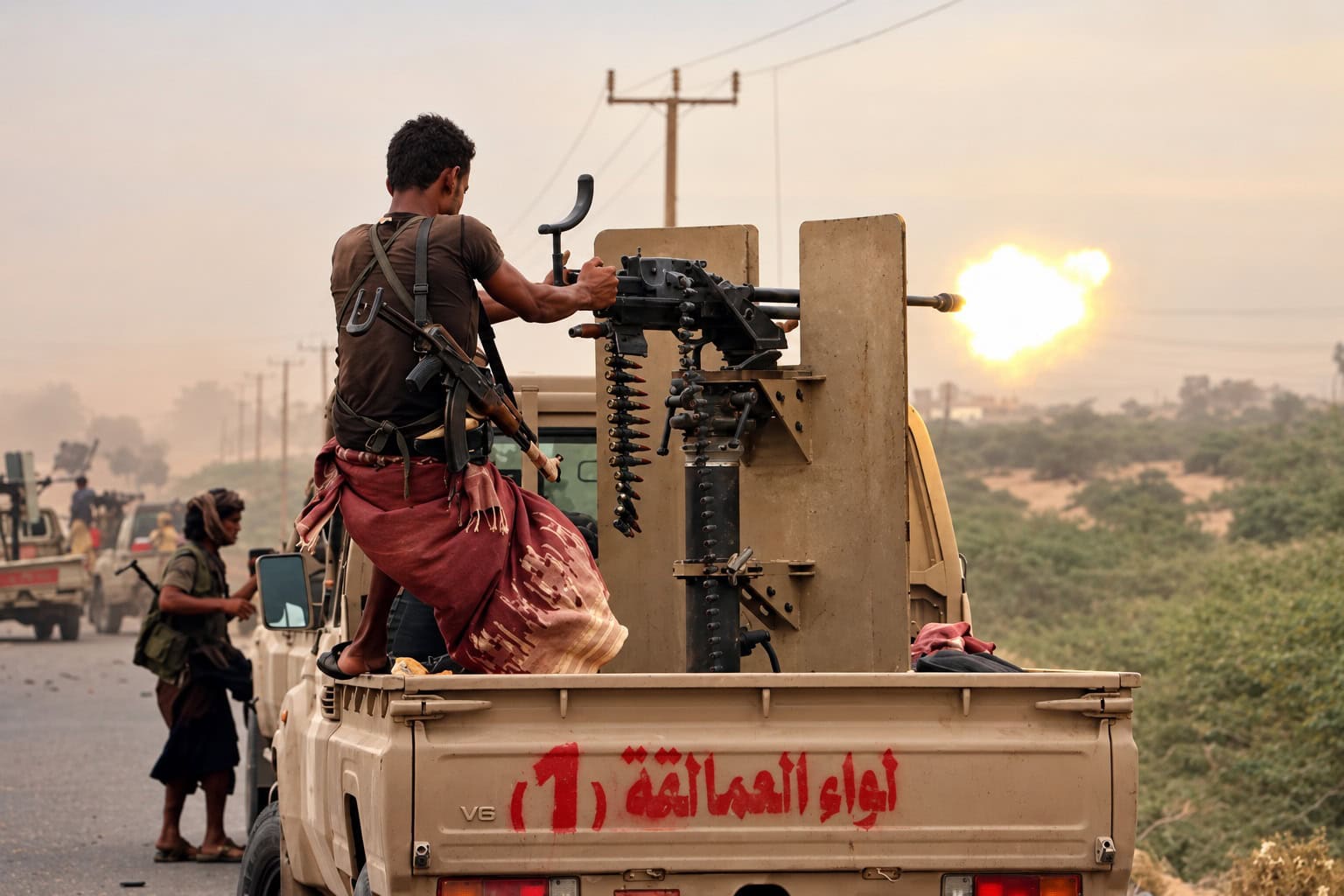
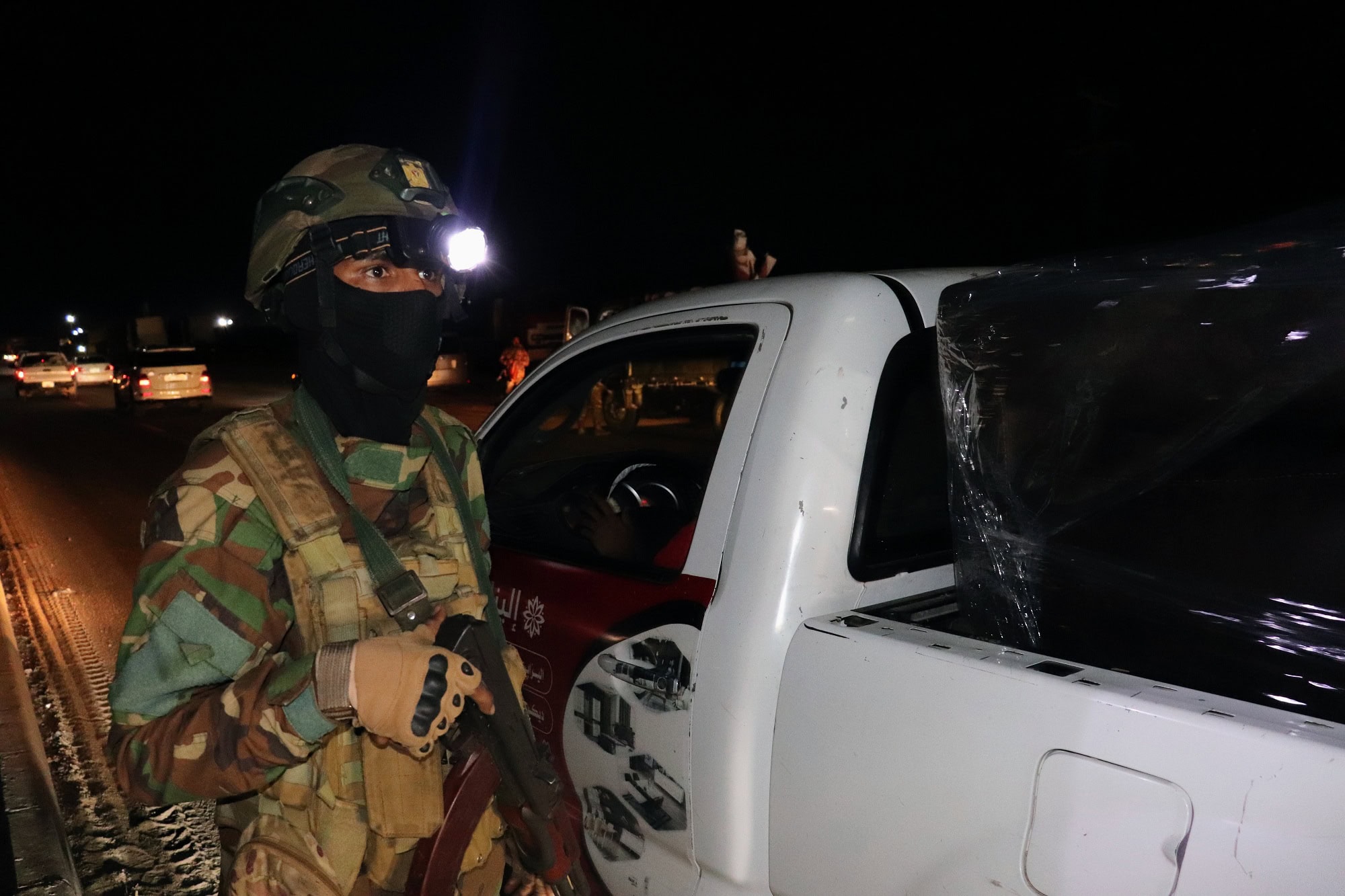
A Southern Giants Brigades fighter during fighting against the Houthis in Al-Hodeidah in 2018. (File Photo/Internet)
Last updated on: 05-09-2026 at 4 PM Aden Time
Aden (South24 Center)
Fighting widened west of Taiz and along Yemen’s West Coast on Saturday (September 5), as the Southern Giants Forces and the National Resistance launched counterattacks against Houthi positions, while warplanes that official military media described as belonging to the Yemeni Armed Forces struck the group’s sites and reinforcements in Taiz and Al-Hodeidah.
The escalation followed a large-scale Houthi offensive launched early Thursday that achieved initial territorial gains west of Taiz before anti-Houthi forces mounted counterattacks across several West Coast fronts.
At least 129 people were killed during the first two days of fighting, according to Agence France-Presse (AFP), while the United Nations said around 1,790 families had been displaced from areas near the frontlines since the clashes began.
The Yemeni Armed Forces Media Center, which is affiliated with the Ministry of Defense, said that “warplanes of our armed forces” had carried out more than 15 airstrikes against Houthi positions, gatherings, and vehicles along the West Coast fronts in Taiz and Al-Hodeidah.
The statement explicitly attributed the aircraft to the Yemeni Armed Forces but did not identify the military branch operating them, the types of aircraft used, their bases, or the command under which the strikes were conducted.
South24 Center could not independently verify the attribution. Military sources who spoke to the center suggested that Saudi Arabia may have carried out the strikes. However, Riyadh has not officially confirmed any involvement, and no further official details have been released to establish the identity or operator of the aircraft.
The fighting stretches across a broad area from Maqbanah, Al-Kadhah, and Jabal Habashi west of Taiz, through Mawza and Al-Barh, to Hays and Al-Jarrahi in southern Al-Hodeidah. The roads and military fronts in this area are linked to the city and port of Al-Mokha, north of the Bab Al-Mandab Strait.
The latest round of fighting began early Thursday (September 3), when the Houthis launched simultaneous attacks across several fronts west of Taiz and along the West Coast, deploying ground forces, ballistic missiles, and drones in one of their most extensive operations in the area in recent years.
Government military media said the Houthis fired 14 ballistic missiles toward fronts and other areas along the West Coast, in addition to launching drones. Military sources also reported successive attacks across several axes.
Since the first hours of the offensive, South24 Center has monitored fierce clashes, missile and drone attacks, and attempted maritime strikes. These included an effort to target Al-Mokha Port using an explosive-laden boat, which forces deployed in the area said they destroyed before it reached its target.
Local media reported that the Houthis struck Al-Wazi’iyah Bridge with a ballistic missile. Anti-Houthi forces, meanwhile, said they destroyed three Houthi vehicles and targeted a support position on the Al-Barh front west of Taiz.
The main Houthi ground pressure was concentrated in Maqbanah District and the areas extending toward Jabal Habashi and Al-Kadhah.
Local sources told South24 Center that the Houthis seized the positions of Al-Ghayli, Al-Sawda, and Al-Tuwair in Maqbanah during the first hours of the offensive before advancing toward the outskirts of Jabal Habashi District.
A military source told South24 Center that the group also captured the areas of Al-Udhair, Tariq School, Darkhaf, Al-Qurun, and Al-Darb on the Al-Kadhah front.
The source added that several members of the National Resistance, led by Presidential Leadership Council member Tariq Saleh, were captured by the Houthis while travelling along the Al-Kadhah–Al-Mokha road.
South24 Center could not independently verify the full extent of the territorial changes or the number of soldiers taken captive.
Government media said anti-Houthi forces subsequently launched a counteroffensive in Maqbanah and Al-Kadhah. It also reported that the forces had recaptured positions in Mawza District that the Houthis had seized hours earlier.
By Saturday, the Southern Giants Forces had assumed a more prominent role in the operations alongside the National Resistance.
The National Resistance said its forces launched a ground offensive south of Al-Jarrahi District in Al-Hodeidah, supported by units from the Giants Forces. It added that drones targeted Houthi reinforcements moving toward the frontlines.
The Southern Giants Forces said they had advanced on several West Coast fronts and forced the Houthis to retreat from a number of positions.
The National Resistance also announced advances on the Saqam and southern Al-Jarrahi fronts, saying it had inflicted personnel and material losses on the Houthis. The announcement coincided with clashes in the Al-Muharraq Mountains on the Saqam axis in Maqbanah District.
South24 Center could not independently verify the extent of the advances or the losses claimed by the warring parties.
Military and media sources also reported fighting in Hays, Al-Barh, and other areas, indicating that the clashes had spread beyond the sites of the initial Houthi breakthrough in Maqbanah and Jabal Habashi.
The National Resistance said its naval forces and the Coast Guard destroyed two explosive-laden boats that attempted to target the Al-Fajrah area south of Al-Khawkhah and Al-Mokha Port. It also announced the interception of two attack drones that it said were controlled through fiber-optic cables on the Al-Barh front.
Alongside the ground fighting, the Yemeni Armed Forces Media Center attributed more than 15 airstrikes across the Taiz and Al-Hodeidah fronts to what it described as “warplanes of our armed forces.” South24 Center was unable to independently establish who operated the aircraft.
The Houthis said the strikes caused civilian casualties. The Associated Press cited authorities affiliated with the group as saying that a father and his daughter were killed when a house was struck in Al-Jarrahi District in Al-Hodeidah. The Houthi-run Al-Masirah channel said another person was killed and one was wounded in Taiz.
South24 Center could not independently verify these accounts or determine the circumstances surrounding the strikes and their intended targets.
On August 20, AFP cited three Houthi military sources as saying that the group was preparing a major operation to seize territory held by anti-Houthi forces in southern Al-Hodeidah.
The sources said around 2,000 fighters and missile launchers had been transferred to the Taiz and Al-Hodeidah fronts. The Houthis did not officially announce such an operation at the time.
However, the offensive that began on September 3, about two weeks after those reports and across a similar geographical area, suggests that the earlier movements may have been connected to the current operation.
The location of the fighting carries particular significance because of its proximity to Al-Mokha and the Bab Al-Mandab Strait.
Maqbanah, Al-Kadhah, and Al-Barh are located within the mountainous zone separating the interior of western Taiz from the coastal plain. Al-Mokha, meanwhile, serves as the National Resistance’s main military base and an important Red Sea port north of the strait.
Holding additional high-ground positions west of Taiz could allow the Houthis to increase pressure on some transport and supply routes linked to Al-Mokha, even without advancing directly toward the coast.
AFP cited government military sources as saying that the Houthi offensive was intended to isolate Al-Mokha and advance toward areas bordering Bab Al-Mandab.
The governor of Taiz also said the Houthis were seeking control of the Red Sea and Bab Al-Mandab, linking the offensive to what he described as Iranian objectives in the region. The Houthis have not publicly outlined the aims of their offensive or responded to these allegations.
Al-Mokha and the West Coast had already witnessed growing escalation throughout August, including attacks involving ballistic missiles, drones, and explosive-laden boats.
On August 9, a major attack on Al-Mokha killed at least 11 people and wounded 32 others, according to figures documented by South24 Center.
Amid the fighting, Presidential Leadership Council Chairman Rashad Al-Alimi held calls with fellow council member Tariq Saleh, Fourth Military Region Commander Major General Hamdi Shukri, and several other military commanders to discuss developments on the ground.
The involvement of southern units in the current theater of operations has also prompted criticism among some southern circles that oppose deploying these forces in battles outside South Yemen.
AFP reported on Friday evening that at least 129 people had been killed since the offensive began. It cited a military official from the anti-Houthi forces as saying that 66 personnel from those forces and their allies had been killed.
Medical and military sources close to the Houthis said at least 62 of the group’s fighters had been killed, along with one civilian.
The escalation also triggered displacement from villages near the frontlines in Maqbanah and Al-Kadhah.
The United Nations Office for the Coordination of Humanitarian Affairs said around 1,790 families had been displaced since fighting began on September 3, particularly from Maqbanah and Jabal Habashi districts.
Some families moved to other areas within the two districts, while others fled toward Al-Ma’afer, Al-Shamayatayn, Mawza, and Dhubab as displacement continued alongside the fighting.
The current escalation is among the fiercest rounds of fighting in western Yemen in recent years and comes amid the gradual erosion of the military calm that followed the United Nations-brokered truce in April 2022.