SOUTH24 CENTER FOR NEWS & STUDIES
SOUTH24 CENTER FOR NEWS & STUDIES


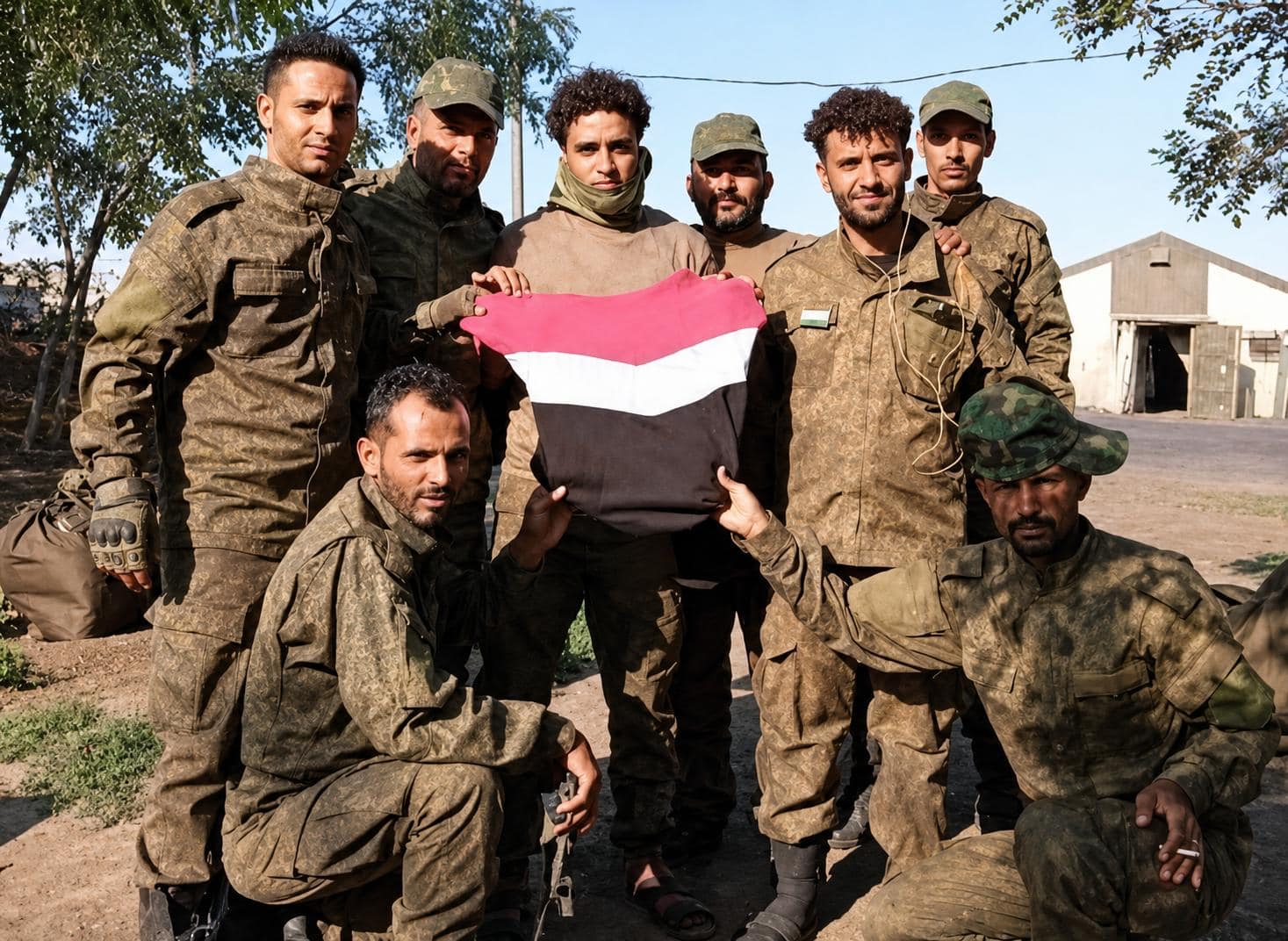
Yemeni mercenaries in Russia before taking part in fighting alongside Russian forces on the frontlines in Ukraine. (Image circulated online)
23-08-2026 at 5 PM Aden Time
South24 Center (Aden)
Two brothers from Lahj Governorate in South Yemen were killed while fighting alongside Russian forces in Ukraine, in the latest incident highlighting the continued flow of Yemeni recruits into a war taking place thousands of kilometers from their homeland.
A local source told South24 Center that Mohsen Hussein Al-Jabri and his brother Ahmed Hussein Al-Jabri, both from Sharaa village in Halmin District of Lahj Governorate, were killed on one of the battlefronts inside Ukraine while serving with Russian forces.
The source added that the brothers’ family received news of their deaths on Friday, August 21, and began receiving condolences the following day.
People close to the family told South24 Center that the two brothers had left Yemen in search of work and a source of income for their families before eventually ending up on the battlefronts in Ukraine.
South24 Center was unable to independently verify the exact date or location of their deaths, while no confirmed information was available regarding when they traveled to Russia or the individual or network responsible for recruiting them.
These cases add to a growing number of incidents involving Yemenis who traveled to Russia amid difficult economic conditions at home, with some later saying they had been misled about the nature of the jobs for which they had traveled.
Investigations published since late 2024 have documented recruitment networks that offered Yemenis job opportunities and relatively high salaries, and in some cases promises of Russian citizenship.
Some recruits told international media that they believed they were traveling to work in civilian or security jobs, construction, or technical fields, only to find themselves bound by military contracts, subjected to short periods of training, and then sent to combat zones.
In December 2024, an investigation by ARIJ documented the enlistment of 227 Yemenis in the Russian military, including at least six killed and seven wounded by the time the investigation was conducted. Sources and witnesses interviewed by the platform estimated that the number of Yemenis recruited may have reached around 429 people, while the fate of others remained unknown.
The investigation traced one recruitment route from Yemen and the Sultanate of Oman, through Dubai, to Moscow, and identified Al-Jabri General Trading and Investment Company, registered in Oman and owned by former Yemeni military commander and parliamentarian Abdulwali Abdoh Hasan Al-Jabri, as one of the central entities involved in the recruitment process.
In March 2025, the U.S. Treasury Department imposed sanctions on Abdulwali Al-Jabri and his company, accusing him of facilitating the transfer of Yemeni civilians to Russian military units fighting in Ukraine in exchange for money. The department described the operation as a revenue-generating scheme for the Houthis and said recruits were, in many cases, being drawn in through “false and misleading pretenses.”
Al-Jabri had previously denied deceiving Yemeni recruits. Germany’s ARD network quoted him as saying that the men had traveled voluntarily to enlist in military service and that their families were aware of their intentions.
Reports published during 2026 indicate that the phenomenon continued after recruitment networks were first documented on a broad scale in 2024.
In January, The Guardian documented cases of Yemeni recruits who were captured by Ukrainian forces after being deployed with the Russian military.
In May, the family of Yemeni Hamza Mahmoud Al-Habashi, from Al-Dhalea Governorate, said he had been killed while fighting alongside Russian forces after originally leaving Yemen in search of a route to Europe and an employment opportunity.
In July, Yemeni media also reported the death of Shawqi Mohammed Al-Fattahi, from Mawiyah District in Taiz Governorate, after he joined Russian forces, while two other men from the same district were reported missing.
Economic hardship appears to be a major factor driving many of them to accept such offers. Years of war, currency depreciation, irregular salary payments, and shrinking employment opportunities have made Yemeni youths more vulnerable to offers promising incomes far higher than what they can earn inside the country.