SOUTH24 CENTER FOR NEWS & STUDIES
SOUTH24 CENTER FOR NEWS & STUDIES


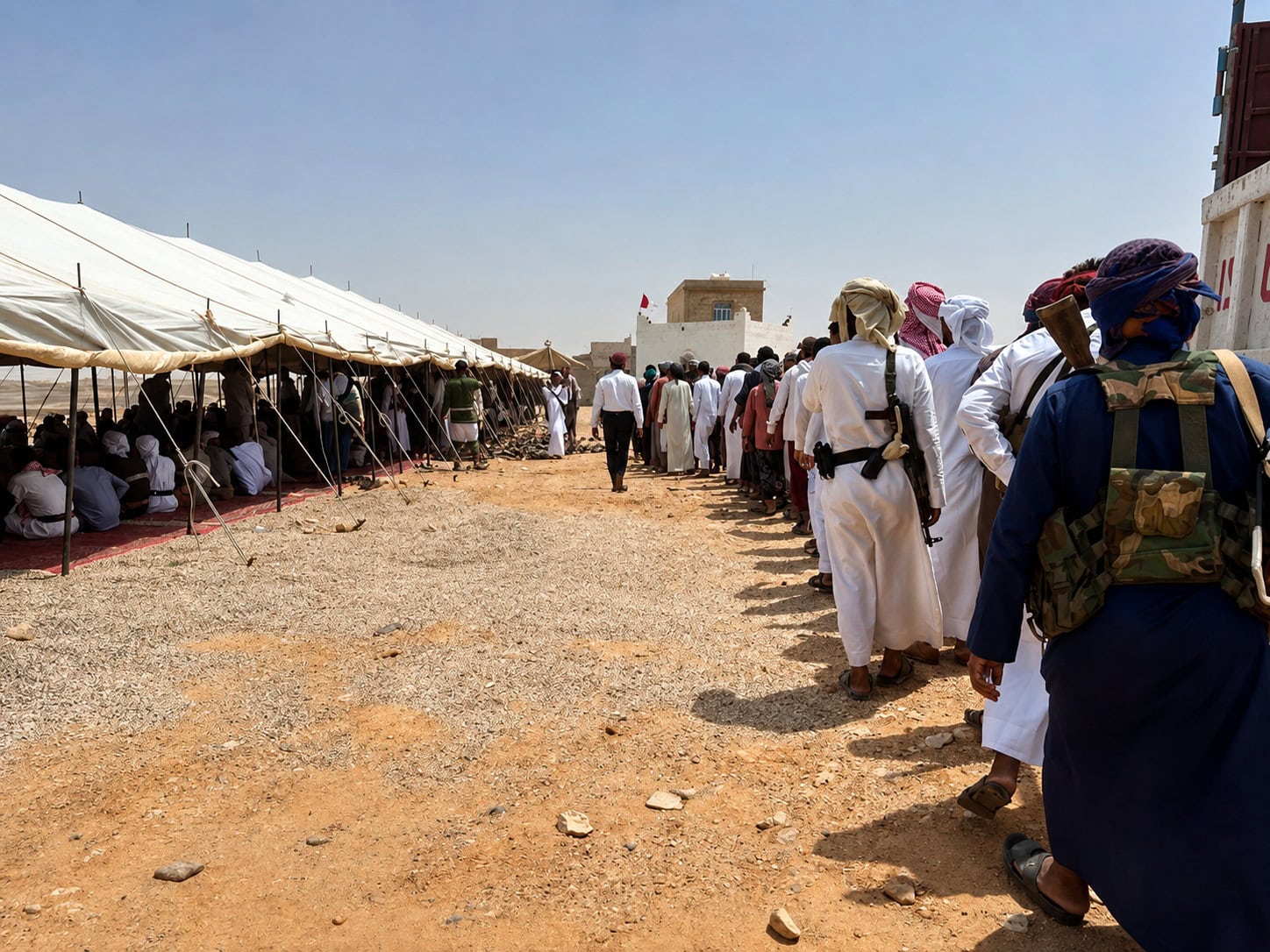
Members of the Kinda tribe in Hadramout (file photo)
02-08-2026 at 6 PM Aden Time
Aden (South24 Center)
Tribal tensions escalated in Al-Abr district in Hadramout Governorate on Sunday, August 2, after a large force from the Yemeni Emergency Forces raided the home of Sheikh Ali bin Ali Hatifan Al-Saiari, a prominent figure from the Kinda tribe, according to a tribal source who spoke to South24 Center.
The source, who described the troops as belonging to the “Northern Emergency Forces,” said the soldiers stormed the house, terrorized members of Al-Saiari’s family and seized valuable belongings and privately owned weapons. South24 Center was unable to independently verify the allegations.
The incident triggered widespread tribal mobilization, with delegations from Kinda and other Hadrami tribes beginning to arrive in Al-Abr in response to a tribal call for mobilization, locally known as a nakf.
In a subsequent development, a source told South24 Center that military checkpoints operated by the Yemeni Emergency Forces were attempting to obstruct the arrival of tribal delegations heading to the gathering site.
The source added that the checkpoints were also seeking to prevent the tribesmen from passing through with their weapons, amid continued mobilization following the raid and growing fears of a confrontation between the military force and the arriving tribes.
No immediate comment was issued by the Yemeni Emergency Forces or the local authorities in Hadramout regarding the raid or the allegations made by the tribal sources.
The incident comes amid growing security and tribal tensions in Al-Abr, a vast desert district where several Saudi-backed military formations are deployed.
Earlier in 2026, the First Division of the Yemeni Emergency Forces took control of several key checkpoints along the international highway in Al-Abr and began implementing measures aimed at restricting the carrying of weapons in public markets and along the main road.
The force said the measures were intended to reduce armed manifestations, protect travelers and strengthen security along the strategic route.
The latest tensions came one day after Southern Salafi leader Osama Abdulkarim Mohsen Al-Radfani, known as “Abu Al-Izz,” and several of his companions were killed in an armed ambush on the Al-Abr road.
The assassination followed a series of security incidents targeting military personnel in Al-Abr and the desert districts of Hadramout.
On July 17, five soldiers from the Fourth Brigade of the Nation’s Shield Forces were killed and three others wounded when gunmen attacked them inside a restaurant in the Ramah area.
The force described the incident as an attack carried out by “outlaws” and pledged to pursue those responsible.
In April, a military police officer from the Nation’s Shield Forces was killed and several soldiers were wounded in an armed ambush targeting their vehicle on the Al-Abr road.
No evidence has emerged establishing a direct link between these incidents. However, their recurrence has raised growing concerns over deteriorating security despite the deployment of the Saudi-backed Emergency Forces.
Al-Abr holds significant security and military importance due to its location along desert routes linking Hadramout with Marib and Al-Jawf and extending towards the Al-Wadea border crossing with Saudi Arabia.
The area is used by commercial travelers, military units, tribal delegations and smuggling networks, making control of its roads and military checkpoints particularly sensitive.
Previous article