SOUTH24 CENTER FOR NEWS & STUDIES
SOUTH24 CENTER FOR NEWS & STUDIES


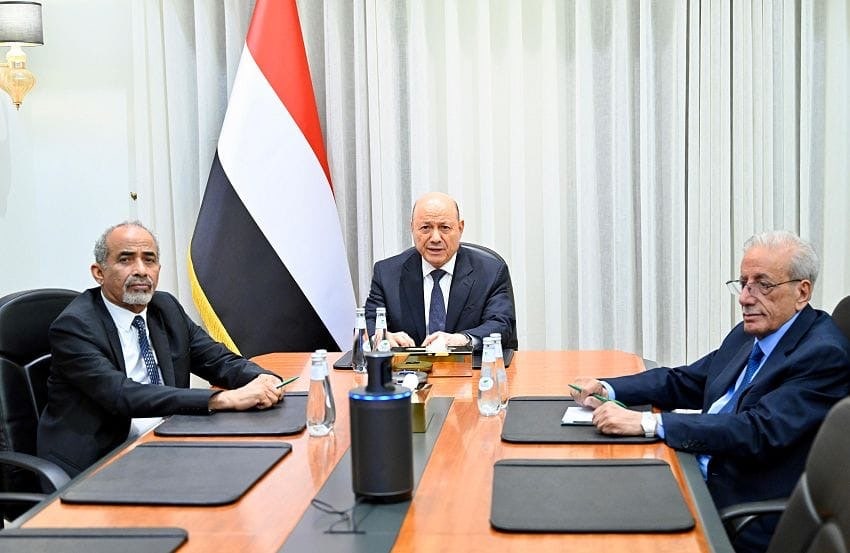
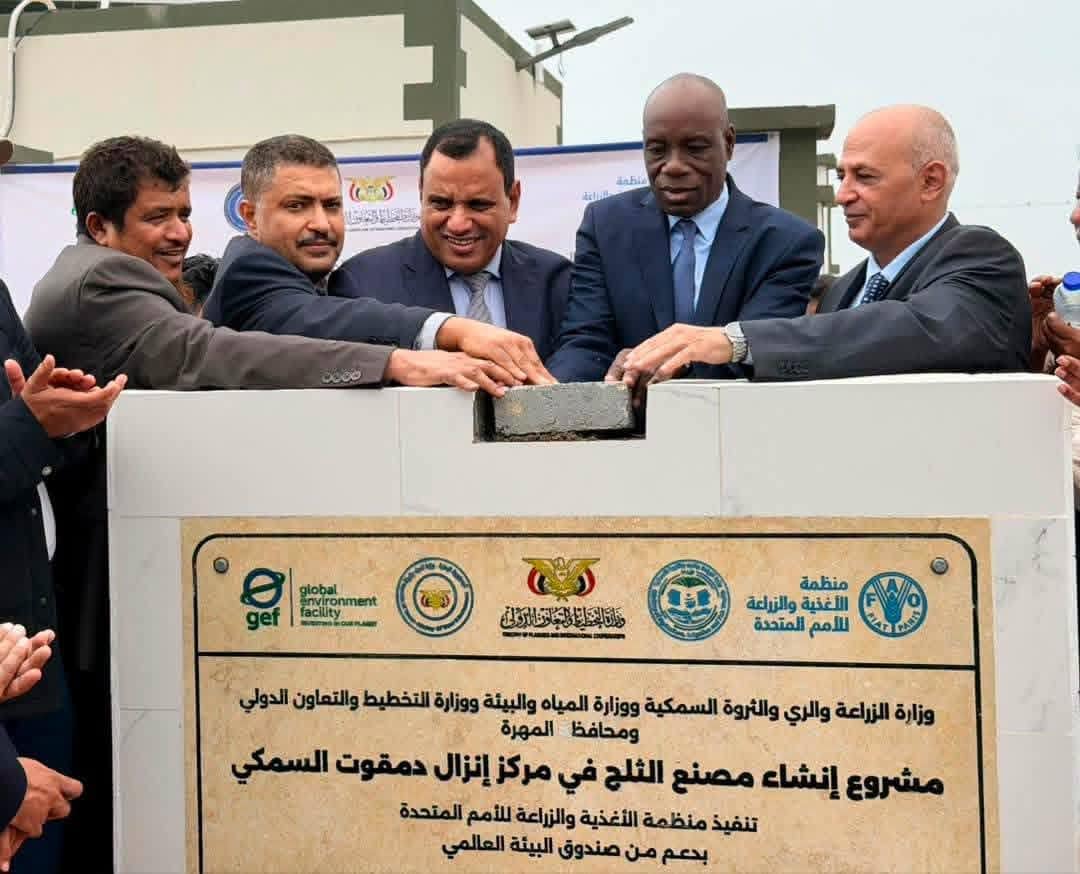
Members of Yemen’s Presidential Leadership Council attend a meeting in Riyadh, Saudi Arabia, July 9, 2026. (Saba News Agency)
11-07-2026 at 4 PM Aden Time
Aden (South24 Center)
The Yemeni Presidential Leadership Council (PLC) rejected an Iranian request to operate a new Mahan Air flight from Tehran to Houthi-controlled Sanaa, pledging political, diplomatic and military measures to prevent any further unauthorized Iranian flights.
At the same time, however, the Council proposed returning the Houthi delegation currently in Tehran aboard an aircraft chartered by Yemenia Airways, a move that could reduce a challenge to the sovereignty of the internationally recognized government to a dispute over which airline would operate the return flight.
The announcement came during an extraordinary meeting held in Riyadh on Friday, July 10, chaired by PLC Chairman Rashad Al-Alimi and attended by all Council members and Prime Minister Shaya Al-Zindani.
According to the state-run Saba news agency, the meeting discussed a request submitted by Iran through the leadership of the Coalition to Support Legitimacy, which currently consists only of Saudi Arabia following the withdrawal of Emirati forces from Yemen, to operate a Mahan Air flight from Tehran to Sanaa.
The proposed flight was intended to return Houthi members who had been transported to Iran aboard an aircraft that landed at Sanaa International Airport on July 3, before carrying an official Houthi delegation to Tehran to attend the funeral ceremonies of Iran’s late Supreme Leader Ali Khamenei.
The PLC described the July 3 flight as a “flagrant violation” of Yemen’s sovereignty, international law and relevant United Nations Security Council resolutions.
It said the government and armed forces would take all political, diplomatic and military measures permitted under the constitution and international law to prevent Iran and the Houthis from imposing direct flights to Sanaa as a fait accompli outside internationally recognized aviation procedures.
The Council held Iran and the Houthi group responsible for any consequences arising from further flights and called on Tehran to stop interfering in Yemen’s internal affairs and using the country as an arena for regional conflicts.
However, the statement did not explain what practical measures would be taken to prevent another Iranian aircraft from reaching Sanaa, or which party would enforce the announced restrictions over airspace that the internationally recognized government does not effectively control.
Instead, the meeting discussed the possibility of chartering an aircraft through Yemenia Airways to return the Houthi delegation from Iran.
The proposal would preserve Yemenia’s official status as the national carrier and prevent Mahan Air from operating the return flight. However, it does not address the broader challenge created by the July 3 flight: Iran’s ability to gain direct access to Houthi-controlled territory without the approval of the internationally recognized government.
The crisis began when an Iranian Mahan Air aircraft landed at Sanaa International Airport on July 3 before departing for Tehran with an official Houthi delegation aboard.
Houthi-run media said the aircraft arrived carrying more than 200 Yemenis, including patients, wounded people and stranded travelers.
The exact number and identities of those aboard, as well as the nature of the aircraft’s cargo, could not be independently verified.
Houthi military spokesperson Yahya Saree claimed that formations of Saudi fighter jets entered Yemeni airspace at approximately 5:20 am in an attempt to prevent the Iranian aircraft from landing.
He said Houthi air defenses fired missiles at the Saudi aircraft and forced them to withdraw.
No evidence was presented to confirm either the alleged Saudi interception attempt or the Houthi launch of air-defense missiles.
The group threatened a “comprehensive response” targeting Saudi airports and vital interests on land and at sea if Saudi forces again attempted to prevent flights or entered what the Houthis described as Yemeni airspace.
It also declared that flights between Sanaa and Tehran would continue “regardless of the results and consequences.”
The Saudi-led coalition command responded by warning that any attempt to target Saudi Arabia, its citizens, residents or national capabilities, or to violate Yemen’s sovereignty, would be met with “unprecedented determination and force.”
Saudi military spokesperson Turki Al-Maliki accused the Houthis of using their threats to divert attention from the economic and humanitarian crises in areas under their control and from growing tribal and social rejection of the group.
He also accused the Houthis of rejecting the political roadmap supported by the Yemeni government, Saudi Arabia and international partners, while instead escalating attacks against maritime navigation and international trade in the southern Red Sea and the Bab Al-Mandab Strait.
The Saudi statement neither directly confirmed nor denied the Houthi claim that Saudi fighter jets had attempted to intercept the Iranian aircraft.
The competing accounts remain unverified, but the aircraft’s arrival and departure demonstrated the practical possibility of operating direct flights between Iran and Houthi-controlled Sanaa for the first time in more than a decade.
The escalation also came amid a striking diplomatic paradox. While the Iranian flight triggered an exchange of threats between Saudi Arabia and the Houthis, Saudi Deputy Foreign Minister Waleed bin Abdulkarim El-Khereiji attended Khamenei’s memorial ceremony in Tehran and conveyed the condolences of King Salman bin Abdulaziz and Crown Prince Mohammed bin Salman to Iranian President Masoud Pezeshkian.
Saudi Arabia and Iran restored diplomatic relations in March 2023 under a China-brokered agreement, but Yemen has remained one of the most sensitive tests of that rapprochement.
Although Saudi statements continue to be issued under the institutional umbrella of the “Coalition to Support Legitimacy in Yemen,” the coalition no longer resembles the broad military alliance that launched its intervention in 2015.
The United Arab Emirates ended its broader military presence in Yemen in 2019 and later announced, in late 2025, the withdrawal of its remaining counterterrorism units. As a result, Saudi Arabia remained the principal state operating under the coalition framework.
At the latest meeting, the PLC said the government had repeatedly proposed maintaining civilian flights through Sanaa Airport using Yemenia Airways, including services between Sanaa and the Jordanian capital, Amman.
It added that Yemenia remained prepared to resume flights to Amman and any other agreed destinations, provided guarantees were offered to protect its aircraft and crews and prevent Houthi interference in the airline’s administrative and aviation operations.
The Council accused the Houthis of seeking to replace Yemenia Airways with Mahan Air and establish a direct Sanaa-Tehran route serving Iranian interests and Houthi leaders and their families.
It also cited the Houthis’ seizure of four Yemenia aircraft at Sanaa Airport in June 2024 after the planes transported Yemeni pilgrims returning from Saudi Arabia.
The aircraft were later destroyed during Israeli attacks on Sanaa Airport in May 2025. Three were destroyed in strikes on May 6, while another attack on May 28 destroyed the last Yemenia aircraft remaining at the airport.
Sanaa Airport had resumed a limited number of commercial flights following the start of the UN-mediated truce in April 2022. Flights initially focused on the Sanaa-Amman route before later arrangements allowed the resumption of services to Cairo.
Mahan Air is not regarded as a neutral commercial carrier in the broader dispute over Iranian regional influence.
The United States placed the airline under sanctions over what it describes as support for the Islamic Revolutionary Guard Corps’ Quds Force. The US Treasury accused the company of transporting personnel, weapons, equipment and funds in support of Iranian regional operations.
The European Union also imposed sanctions on Mahan Air in October 2024, accusing it of involvement in transferring and supplying Iranian drones and related technologies to Russia.
The Arab League condemned the July 3 aircraft landing, describing it as a violation of Yemen’s sovereignty and territorial integrity because it took place without coordination with the internationally recognized government.
It also expressed support for measures taken by the Yemeni government to protect national security, borders and state institutions.