SOUTH24 CENTER FOR NEWS & STUDIES
SOUTH24 CENTER FOR NEWS & STUDIES


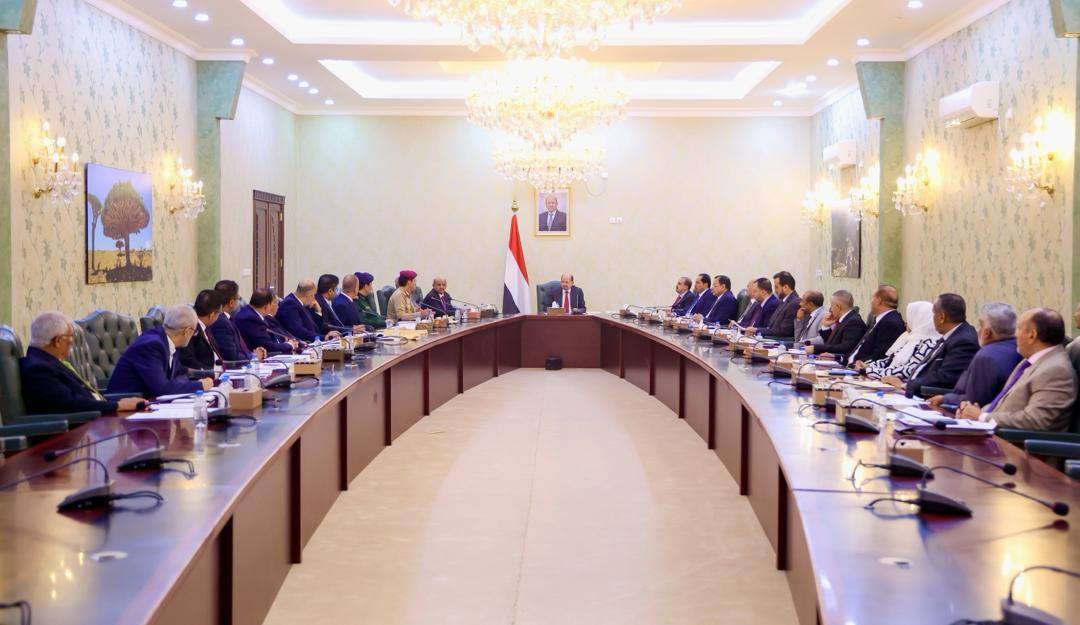
A meeting of the Yemeni Cabinet in the capital Aden, May 19, 2026 (SABA News Agency)
31-05-2026 at 8 PM Aden Time

Abdullah Al-Shadli (South24 Center)
Yemen’s newly formed government, headed by Prime Minister Shaya Mohsen Al-Zindani, began its first months in Aden not amid political or economic stability, but in the midst of a multifaceted crisis. Inheriting unresolved files from the previous administration, the government quickly faced a dual challenge: consolidating its presence in the capital Aden amid political tensions while demonstrating its ability to address mounting challenges related to salaries, electricity, currency depreciation, and public revenues.
More than 100 days after its formation on February 7, the central question is no longer about the government’s reform agenda itself, but whether it has begun translating its promises into measurable results.
The new cabinet emerged within a turbulent political context following sweeping changes within the camp of the internationally recognized government and after a wave of tensions in South Yemen that weakened the influence of the Southern Transitional Council (STC) within state institutions, including its exclusion from the new government. Announced on February 7, 2026, the cabinet consists of around 35 ministers in an expanded structure. The size of the government immediately raised questions over whether it reflected the need for an executive capable of managing Yemen’s severe economic and service crises, or merely a continuation of political power-sharing arrangements at a time demanding greater administrative efficiency.
The government’s first steps were inseparable from this political backdrop. Its first meeting at Al-Maashiq Palace in Aden coincided with protests by supporters of the STC, who rejected the arrival of northern ministers, including a defense minister perceived to have ties to the Muslim Brotherhood. While the government sought to present its return to Aden as a step toward restoring institutional governance from within the country, that return unfolded amid visible political divisions and significant security and administrative challenges.
Beyond the political inheritance, Al-Zindani’s government assumed office while confronting a complex economic and humanitarian landscape left by previous administrations. The government was formed amid the ongoing suspension of oil and gas exports, weak public revenues, severe liquidity shortages, declining purchasing power, irregular salary payments, and an ongoing electricity crisis affecting Aden and other South governorates.
Some of the indicators now cited as evidence of the current government’s performance, particularly the relative improvement in the exchange rate of the Yemeni rial and measures aimed at controlling spending and revenues, appear partly to be an extension of policies initiated before the cabinet was formed, rather than outcomes exclusively tied to its first months in office.
At the same time, Saudi Arabia’s financial support announced in February provided the government with critical breathing room. Riyadh pledged approximately 1.3 billion Saudi riyals to help cover salary-related budget shortfalls, enabling the government to meet part of its urgent obligations. However, the support also underscored the government’s continued dependence on external financing in the absence of stable sovereign revenues, particularly from oil and gas exports.
Despite this assistance and other Saudi-funded programs, service crises have continued to worsen, most notably the electricity crisis that affects Aden and other southern cities every summer. While there has been modest improvement in the regularity of salary payments for military personnel, some of whom are paid in Saudi riyals, public sector employees continue to face delays in government salaries and a steady erosion of purchasing power amid rising prices.
In May, the government attempted to shift its rhetoric from broad promises to measures more directly connected to growing public pressure over living conditions and fiscal hardship. On May 19, the Cabinet approved a package of economic, financial, and administrative decisions that included a 20 percent cost-of-living allowance for all state employees, payment of overdue annual bonuses, resolution of long-delayed employment adjustments, and the formation of the Supreme Tenders Committee. The package also included measures aimed at improving public spending efficiency, increasing revenue collection, and combating tax evasion and duplicate employment records.
Yet the practical impact of these measures remains limited when compared to the scale of salary erosion since 2015, as the Yemeni rial has lost most of its value against foreign currencies and public sector wages have effectively lost around seven times their purchasing power.
The government has also moved toward more politically sensitive revenue measures, most notably the liberalization of the customs dollar exchange rate, while stressing that essential goods exempt from customs duties would not be affected. Nonetheless, the move sparked debate over the government’s ability to increase revenues without generating additional inflationary pressures in an import-dependent market already suffering from weak oversight, multiple layers of taxation, and high transportation and energy costs.
Questions have also emerged regarding the government’s ability to centralize sovereign revenues through the Central Bank in Aden. According to economic reports and informed sources, several institutions and governorates continue to withhold revenues. Marib governorate remains among the clearest examples, as local authorities there continue to retain revenues from gas and other resources in the local branch of the Central Bank, from which expenditures are made directly.
In the services sector, electricity has once again become one of the government’s clearest tests. On May 17, the Supreme Energy Council approved a package of measures aimed at improving electricity services, securing fuel supplies, and upgrading energy infrastructure in Aden and government-controlled governorates. The measures included addressing diesel and fuel oil shortages and securing crude fuel needed to operate the President Power Plant in Aden at maximum capacity. However, these decisions came amid the continued persistence of the electricity crisis, one of the clearest indicators of the limited progress in public services thus far.
Persistent Structural Problems
Assessing the government’s economic performance after more than 100 days, Mustafa Nasr, head of the Economic Media Center, told South24 Center that evaluating the government “requires clear and fair criteria,” stressing that assessments should focus on what has actually been achieved rather than what has merely been announced.
Nasr said the government faced highly complex conditions from the outset, noting that “the security and military situation consumed a large portion of the government’s efforts,” affecting its ability to implement economic and service-related policies. He pointed to several initial indicators that could be viewed positively, including the government’s near-permanent return to Aden, approval of the state budget and government program, and strong regional and international backing, particularly direct Saudi support.
The approval of Yemen’s 2026 state budget represented one of the government’s most significant institutional steps after years of emergency-style spending. The budget prioritized regular salary payments for both civilian and military employees, financing essential services, and supporting the Central Bank in maintaining monetary stability and containing inflation. It also included plans to restructure public spending, improve tax and customs administration, strengthen revenue collection, prevent off-budget expenditures, and activate oversight and accountability mechanisms.
However, Nasr argued that these measures do not change the fact that the government still suffers from “a state of confusion” in setting economic and service priorities.
Political economy researcher Rania Khayali echoed this assessment from an institutional perspective. She told South24 Center that while the government has succeeded in producing a clearer financial and policy framework than previous administrations, it “has not yet succeeded in translating that framework into tangible results.”
Khayali noted that indicators related to salaries, liquidity, electricity, and the exchange rate “confirm the persistence of longstanding structural imbalances.” She added that although the government identified six major priorities, including political and security stability, economic recovery, sustainable public services, governance, social cohesion, and international partnerships, “the gap remains clear between announced objectives and actual implementation.”
Since August 2025, the Yemeni rial in government-controlled areas has witnessed relative improvement after reaching record lows, benefiting from monetary measures, external support, and a stabilization trajectory that began before the current government took office. However, the improvement has remained fragile and has not translated into sustainable economic stability or significant reductions in the prices of most goods, including essential commodities.
Economic analyst Dr. Osama Al-Saqqaf told South24 Center that while the government succeeded in slowing the pace of the currency’s deterioration, it has failed to achieve sustainable economic stability.
According to Al-Saqqaf, periods of improvement have resulted from external interventions or short-term measures whose effects quickly faded. He described this pattern as “fragile stability” unsupported by strong economic fundamentals such as increased production or an improved trade balance. He argued that the government is “managing the crisis more than solving it,” attributing continued currency volatility to overlapping structural, monetary, and political factors, including the fragmentation of Yemen’s financial system, the existence of parallel currency markets, the Central Bank’s limited ability to implement unified monetary policy, the halt in vital sectors such as oil and gas, and Yemen’s near-total dependence on imports.
Khayali agreed with this assessment, arguing that recent monetary stabilization remains fragile because it depends more on external support and Central Bank interventions than on sustainable production or revenue growth. She also pointed to the liquidity crisis witnessed in government-controlled areas during April 2026, which affected salary payments and fuel supplies for power stations, describing it as “a direct negative indicator of fiscal discipline.”
Worsening Service Crises
Public services remain the most direct benchmark for evaluating Al-Zindani’s government. Regardless of discussions surrounding budgets, reform programs, or international engagement, ordinary citizens judge performance through salaries, electricity availability, price stability, and the ability of public institutions to provide basic services.
In this regard, no fundamental shift has yet emerged that clearly distinguishes the current government from its predecessors. Electricity shortages in Aden and South Yemen’s governorates remain tied to fuel availability, weak generation capacity, deteriorating infrastructure, and accumulated administrative and financial failures within the energy sector. Meanwhile, salary delays, liquidity shortages, and inflation continue to place severe pressure on the population.
Khayali argued that the persistence of electricity outages in Aden and other southern governorates, combined with the dependence of power stations on fuel availability, demonstrates that the government “has not yet moved from daily crisis management toward clear and sustainable structural reform.” She described the UAE-funded solar power projects in Aden (120 megawatts) and Shabwa (53 megawatts) as “important experiences that can be built upon.”
Mustafa Nasr similarly stated that the government “has not achieved tangible progress so far” in the services sector, linking this primarily to the revenue crisis, continued unofficial levies, and weak financial resources. He added that despite some individual efforts, overall improvement remains limited because the government “continues to face severe revenue shortages.”
Nasr stressed that direct Saudi support remains a key factor enabling the government to meet its obligations, warning that “without this support, the government would face a major decline in its ability to fulfill even its minimum commitments.”
More than 100 days after its formation, Al-Zindani’s government appears less defined by completed achievements than by unresolved tests. The government has recorded several important institutional steps, including its near-regular return to Aden, approval of the state budget, presentation of a government program, acquisition of direct Saudi support, and the adoption of economic and administrative measures in May related to salary allowances, overdue bonuses, employment settlements, customs reforms, and the formation of the Supreme Tenders Committee.
However, these measures have yet to produce sustained improvements in the issues by which citizens most directly evaluate the government: salaries, electricity, prices, liquidity, and essential public services.
In this sense, the government’s first months do not offer a final judgment, but they do reveal the limits of its capacity so far. The administration began amid a profound crisis and has taken steps that cannot be ignored. Yet it still appears closer to a government managing the crisis than one capable of fundamentally altering its trajectory.
Its real test will be whether it can transform external support, policy decisions, and budgetary frameworks into tangible daily improvements, or whether it will ultimately join the long list of Yemeni governments that announced reforms while remaining constrained by political fragmentation, weak resources, and competing centers of power.