SOUTH24 CENTER FOR NEWS & STUDIES
SOUTH24 CENTER FOR NEWS & STUDIES


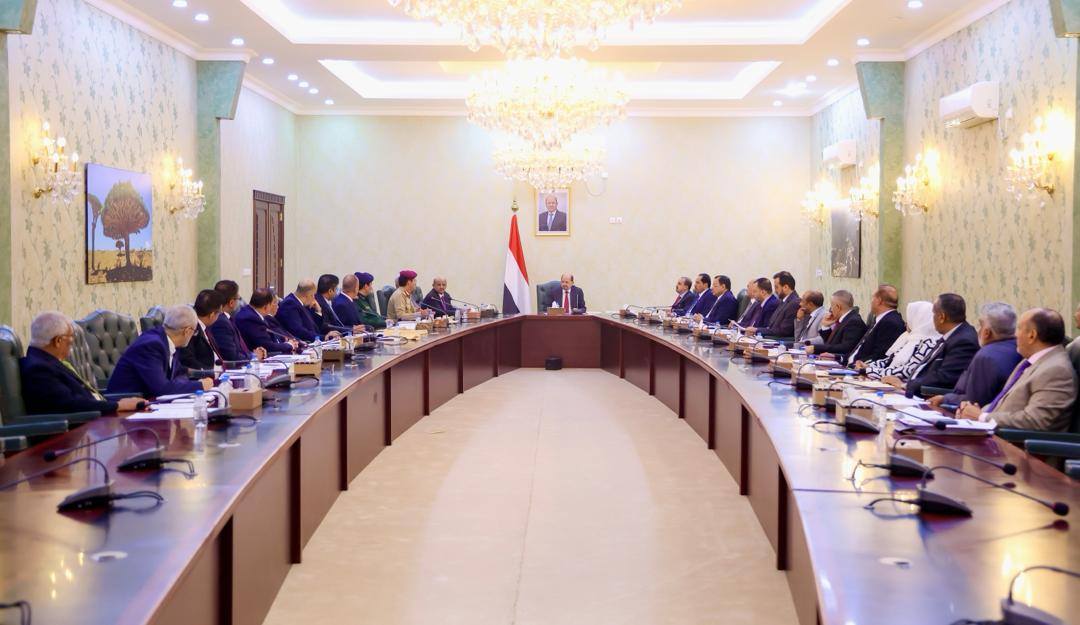
The Yemeni government meeting (official photo)
19-05-2026 at 5 PM Aden Time
Aden (South24 Center)
The Yemeni government approved on Tuesday (May 19) an increase in the customs dollar rate as part of a new package of economic and financial decisions, sparking widespread fears of a fresh wave of price hikes across government-controlled areas.
The decision was made during a cabinet meeting held in the capital, Aden, chaired by Prime Minister Shaya Al-Zindani and attended by Central Bank Governor Ahmed Ghaleb. The government described the measures as part of economic reforms aimed at “correcting price distortions and enhancing the efficiency of resource collection.”
The government emphasized that the decision “will not affect basic commodities, which are already exempt from customs duties,” noting that its impact would be limited to “luxury and non-essential goods.”
However, the government has not yet published an official list defining the commodities categorized as “luxury” items. This lack of clarity has raised concerns among residents and traders over the possible inclusion of essential goods in this category, which could lead to a new surge in prices.
While the government statement indicated that the step would increase the prices of complementary goods, economic observers fear that traders may exploit the decision to raise food prices, taking advantage of weak market oversight.
Last year, economic sources revealed a government plan to raise the customs dollar rate from 700 YER to 1,400 YER. At the time, the move was described as the largest increase since the adoption of the current reference price, amid reports linking it to reform demands by international donors.
In the same context, the Cabinet approved a 20% salary increase for state employees, along with the disbursement of delayed annual allowances for the years 2021–2024 and the settlement of job promotions that have been stalled for more than 13 years.
The wage increase comes at a time when salaries in Yemen have lost more than 900% of their purchasing power since 2015 due to the sharp collapse of the local currency and rising inflation.
Despite the relative improvement of the Yemeni rial in recent months — recovering from around 2,800 YER per USD in August 2025 to approximately 1,550 YER currently — this recovery has not been clearly reflected in the prices of goods and services in local markets.
The Cabinet directed the Ministry of Industry and Trade, along with regulatory bodies, to carry out field campaigns to prevent monopolies and unjustified price increases, while tightening control over ports and markets and combating smuggling.
Additionally, the Cabinet approved the formation of the Supreme Tender Committee, which the government said is part of steps to enhance transparency, strengthen oversight of government contracting, and support anti-corruption efforts.