SOUTH24 CENTER FOR NEWS & STUDIES
SOUTH24 CENTER FOR NEWS & STUDIES



The discussion seminar
Last updated on: 10-05-2026 at 2 PM Aden Time

Aden | South24 Center
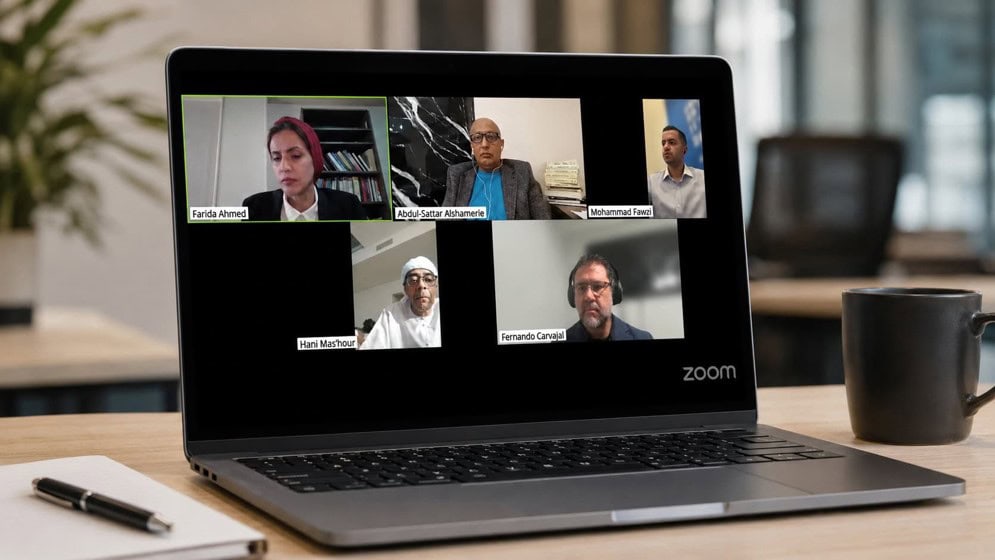
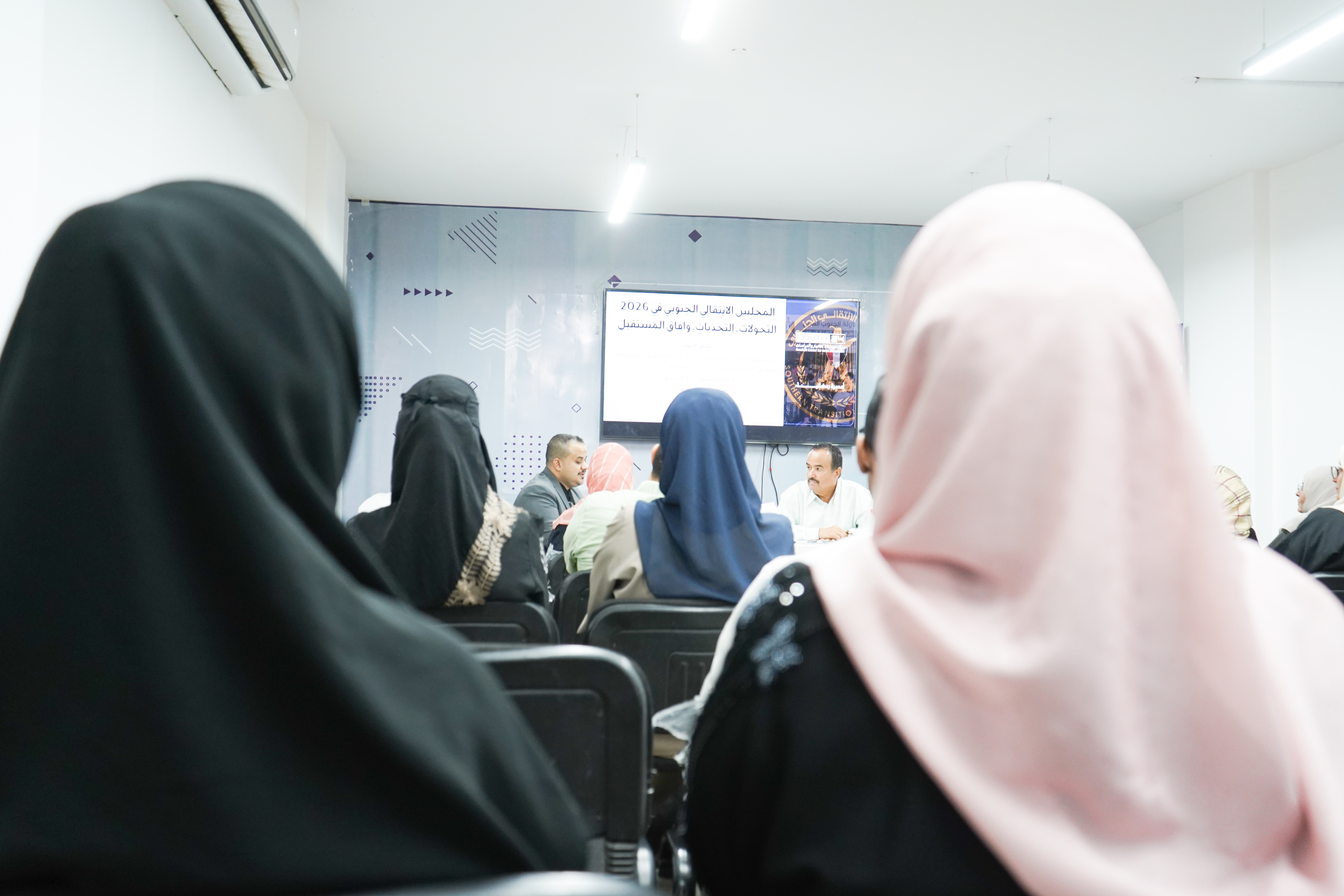
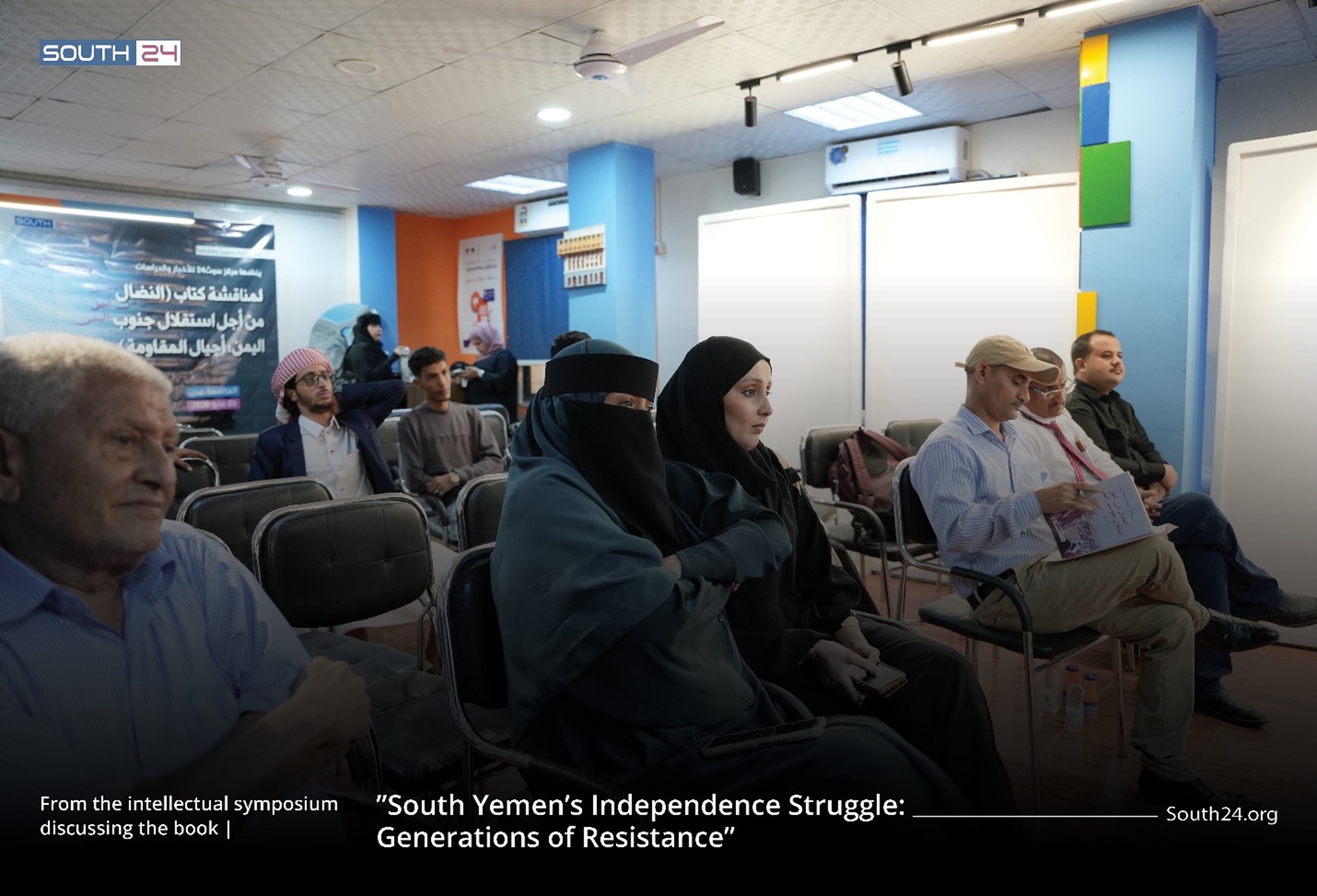
An intellectual seminar organized by South24 Center for News and Studies on Sunday, May 3, in the capital Aden, and simultaneously via Zoom, renewed attention to the social, humanitarian, and political dimensions of the Southern Cause through a discussion of German researcher Dr. Amira Augustin’s book, South Yemen's Independence Struggle: Generations of Resistance.
The symposium opened an in-depth dialogue on the role of collective memory and the transmission of political identity across generations in shaping Southern consciousness, moving beyond the conventional official and military-centered approaches through which the Southern Cause is often framed.
The Arabic edition of the book was released in early 2026 following its translation and review by South24 Center for News and Studies, before being published by Anaween Books Publishing and Distribution House. The book also participated in the 57th edition of the Cairo International Book Fair and is currently available in a number of bookstores in both Aden and Cairo. The English edition of the book was previously published in 2021 by The American University in Cairo Press.
The symposium featured the participation of the book’s author, Dr. Amira Augustin, alongside Dr. Asmahan Al-Allas, historian and professor at the University of Aden; Dr. Mahmoud Shayef, professor of sociology and social work at the Faculty of Arts at the University of Aden; and Egyptian journalist and translator Shaimaa Behery. The discussion was moderated by Ayad Qassem, Chairman of South24 Center for News Studies
The seminar presented an in-depth analytical reading of the experience of independence in South Yemen as an ongoing social and political process, with particular focus on the transformations of Southern identity within the context of historical developments and the mechanisms through which political consciousness is transmitted across generations.
In his opening remarks, Ayad Qassem explained that the book goes beyond the conventional narration of events and does not merely recount major political milestones. Instead, it delves into the social and human dimensions of the struggle, highlighting the role of collective memory, everyday experiences, and intergenerational relationships in reshaping political identity and articulating demands for independence.
He added that, through tracing the emergence of the Southern Movement since 2007, the book offers a different understanding of resistance as a cumulative process that extends beyond moments of direct protest to include the transmission of ideas, the invocation of memory, and the reproduction of collective consciousness across generations. He noted that one of the book’s central arguments is that the struggle for independence is not confined to visible political action but is also deeply rooted in the details of everyday life, within the family, school, the neighborhood, and the broader collective memory.
Qassem stressed that the importance of the book is particularly evident amid the current transformations following the recent events witnessed in South Yemen, which have revived fundamental questions regarding the nature of the Southern project, the limits of military power, and the challenges of representation and legitimacy. He also pointed out that understanding current developments cannot rely solely on reading military balances or regional calculations but requires examining the deeper structures that have shaped Southern consciousness over decades, where collective memory, marginalization, and mechanisms of transmitting identity across generations have intertwined to sustain a continuous aspiration toward independence.
Augustin: The Southern Movement as a Cumulative Product of Generational Memory
In the first segment of the symposium, Dr. Amira Augustin reviewed the background behind her interest in the subject of the book, explaining that it was closely tied to her personal experience while studying Middle Eastern Studies at Leipzig University. She noted that she had the opportunity to study as an exchange student at the University of Aden in 2007, the same year that marked the emergence of the Southern Movement.
She later joined Philipps University of Marburg in 2013 to pursue her doctoral studies, before defending the dissertation that would later become the book discussed during the symposium in 2018.
Augustin noted that what drew her attention most during that period was the broad participation of young people in the Southern Movement, despite the fact that they had not lived through the era of the People’s Democratic Republic of Yemen yet still spoke positively about it. She compared this to her own experience, pointing out that she herself was born in East Germany and possesses only very limited memories of that period.
She also discussed the questions that motivated her research, particularly why a generation born after 1990 became engaged in the Southern Movement and sought to restore a state they had never experienced firsthand, as well as the sources shaping their perceptions of that historical experience.
She explained that, in seeking answers, she relied on ethnographic research that included field interviews, observations recorded during her participation in demonstrations and school visits, as well as analysis of newspapers and online news platforms. She added that analyzing this large body of data took several months, alongside the application of the “Grounded Theory” methodology, which ultimately led her to develop the concept of “intergenerational resistance” in South Yemen.
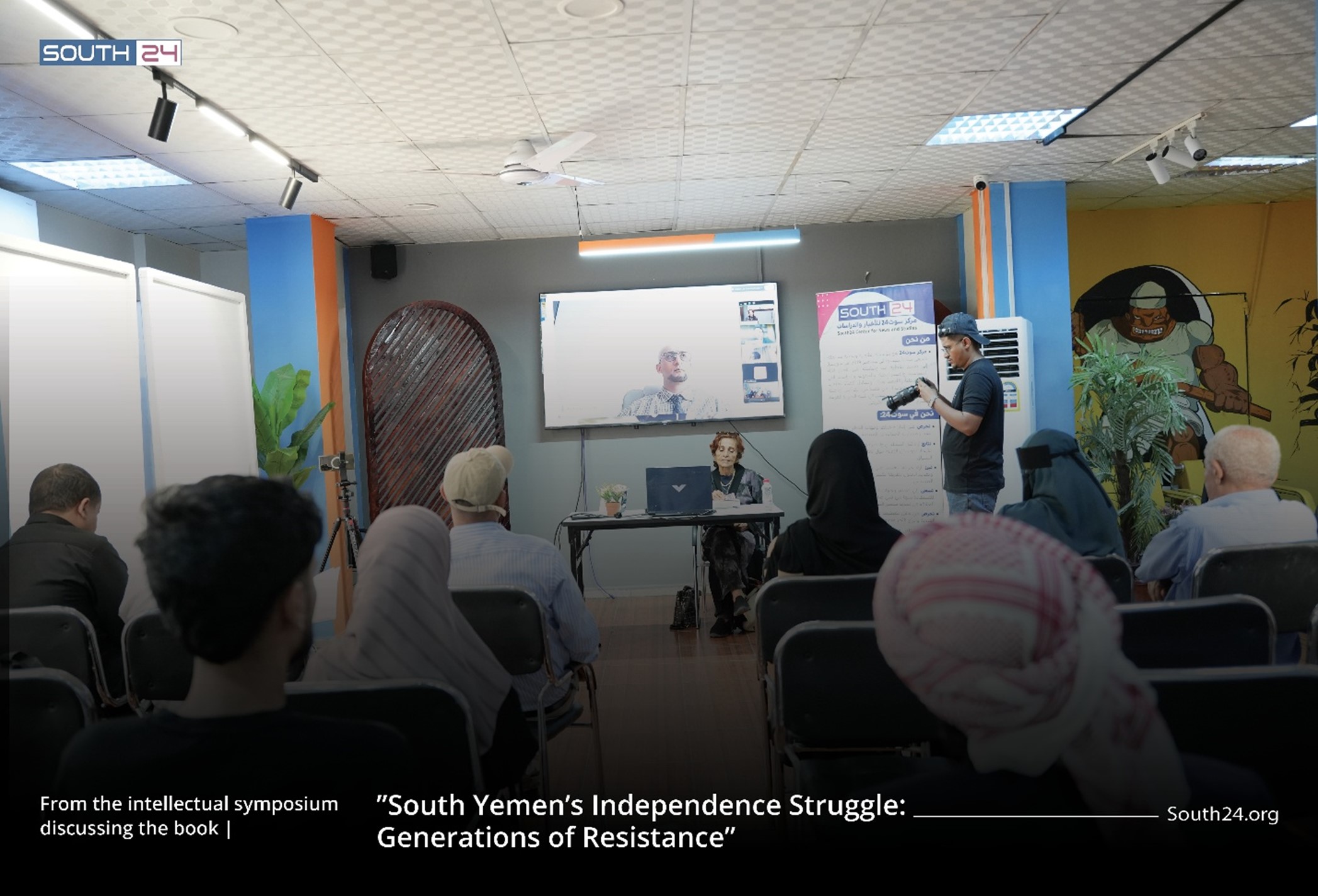
Augustin emphasized that the book serves as a documentary testimony to aspirations for independence in South Yemen prior to the outbreak of the recent war and can be regarded as an important historical document. For researchers and writers in the West, she added, the book also provides a key entry point for understanding one of Yemen’s most prominent contemporary conflicts.
Memory, Historical Evidence, and Documentation Reinforce Southern Consciousness
In response to a question raised by symposium moderator Ayad Qassem regarding the extent to which the book succeeds in explaining the role of collective memory in shaping awareness of the Southern Cause today, Dr. Asmahan Al-Allas stated that the author relied on tracing transitions across generations, considering this approach instrumental in enriching the research experience and giving it greater analytical depth.
Al-Allas pointed to several methodological observations, most notably the importance of establishing a clear chronological framework for the generations examined in the study, allowing for distinction between different historical phases. She also noted that the book opens the door to rethinking historical research methodologies by highlighting patterns of interaction between generations and their role in shaping the national experience.
She added that the author views the transmission of experiences and ideas across generations as a form of resistance, explaining that this transfer is reflected in the age gap between generations that led political action and others whose presence emerged within neighborhoods and community movements, as documented through the researcher’s fieldwork.
Al-Allas also stressed the importance of incorporating the first independence documents issued by the British government, alongside documentation of the independence negotiations, as essential sources that strengthen the documentary value of the work. She further raised questions regarding the impact of colonial movements on the region’s topography and whether they weakened or influenced demands to restore certain areas within the Southern framework.
Al-Allas also pointed to the differing historical patterns of control between northern and southern Yemen, explaining that the north came under the influence of powers such as the Ottoman Empire and Persia, while the south was subject to British colonial rule. She stressed the importance of documenting these transformations and analyzing their impact on rights-based political trajectories.
She also addressed the consequences of wars in the south, particularly in inland regions, citing the Al-Wadiah War and other conflicts, and the political and geographical effects they produced. In addition, she criticized the limited attention given to preserving historical landmarks and evidence in some areas despite their significant historical value.
Concluding her remarks, Al-Allas emphasized the need to strengthen attention to historical documents and field evidence, alongside reviving oral history through documenting testimonies from those who lived through those periods, considering them complementary elements of the historical narrative. She noted that some issues related to border demarcation and movement between the north and South Yemen, along with the resulting geographical overlaps, could pose challenges to the independence project and affect the clarity of the South’s geographical boundaries.
The “Unity Generation” Leads the Struggle for Southern Independence
Dr. Mahmoud Shayef described Amira Augustin’s book as one of the most significant academic works addressing the history of the Southern Cause, noting that it offers an analytical treatment from both a national and historical perspective, with a clear focus on the trajectory of the Southern Movement and its development across different generations.
Shayef explained that the book highlights the central role of successive generations in preserving historical and value-based identity and sustaining the struggle for independence, stressing that its importance lies in documenting the Southern struggle amid the scarcity of local documentation.
He added that the author succeeded in addressing one of the core challenges associated with documenting the history of the peaceful Southern Movement by linking it to a broader historical context extending from the period before independence from Britain to contemporary developments, thereby reflecting a methodological continuity between past and present.
He noted that the book clearly demonstrates how the spirit of resistance is transmitted across generations and its role in strengthening political consciousness and consolidating national identity. It also provides an analytical reading of the challenges faced by the peaceful movement in the south, reinforcing the idea of continuity and inspiring the spirit of struggle to achieve the goals of freedom and independence.
Shayef further explained that the work goes beyond historical narration, seeking instead to understand the Southern struggle as an idea, an identity, and an integrated historical trajectory. He praised the author’s ability to clarify the mechanisms through which historical identity is passed down across generations through systems of family and resistance-based values, as well as accumulated experiences in confronting British colonialism and various political transformations.
He stressed that the book conveys the message that the Southern Cause and the peaceful Southern Movement are not temporary phenomena, but rather the product of a long history of struggle and sacrifice involving various sectors of society, from youth groups to labor movements and armed resistance. He also noted that the author’s reliance on field research contributed to providing a deeper understanding of the nature of the movement.
Shayef also highlighted that the book raises a central question regarding why the post-unity generation adopted the demand to restore a state they had never lived under. He explained that this generation, often referred to as the “Unity Generation,” evolved into a principal force in driving the Southern Movement and breaking the state of political stagnation, moving beyond the traditional roles of established elites.
He added that the author addressed this question through three main determinants: the transmission of political memory across generations; the formation of awareness and identity among youth amid practices of exclusion and marginalization following unification and the 1994 war; and the emergence of the peaceful Southern Movement in 2007.
Shayef concluded by noting that the book represents a significant contribution to the historical documentation of the Southern struggle, despite his observations regarding the limited engagement with some earlier historical studies. He emphasized that the work successfully traces the roots of the Southern Cause and analyzes the transformations that followed the declaration of unity in 1990, with particular focus on the launch of the Southern Movement and the pivotal developments that accompanied it.
Translating the Book Revealed the Depth and Systematic Narrative of the Southern Cause
Egyptian journalist and translator Shaimaa Behery, who translated the book into Arabic, said that she initially did not possess an in-depth understanding of the Southern Cause. She explained that working on the translation gave her the opportunity to gain a broader and deeper understanding of its details and contexts, expressing her gratitude to South24 Center for News and Studies and to the author for their support and cooperation throughout the translation process.
Behery added that the book is distinguished by its smooth narrative style, accessible language, and detailed presentation. She noted that during the translation process she sought to convey the text in the author’s spirit and style in order to preserve the original message with accuracy and clarity.
Speaking also from the perspective of a reader, Behery explained that she initially expected the book to carry a politically “agitational” or emotionally charged tone, particularly due to the use of the term “struggle.” However, as she progressed through the text, she found that it relied instead on an analytical and systematic narrative that begins with the emergence of the Southern Movement in 2007 while tracing the historical roots of the Southern Cause.
She noted that this narrative approach gives readers the opportunity to gain a deeper understanding of the Southern Cause by documenting the memory of a society and presenting its historical evolution through a cumulative and methodical framework, encouraging readers to revisit details beyond preconceived impressions.
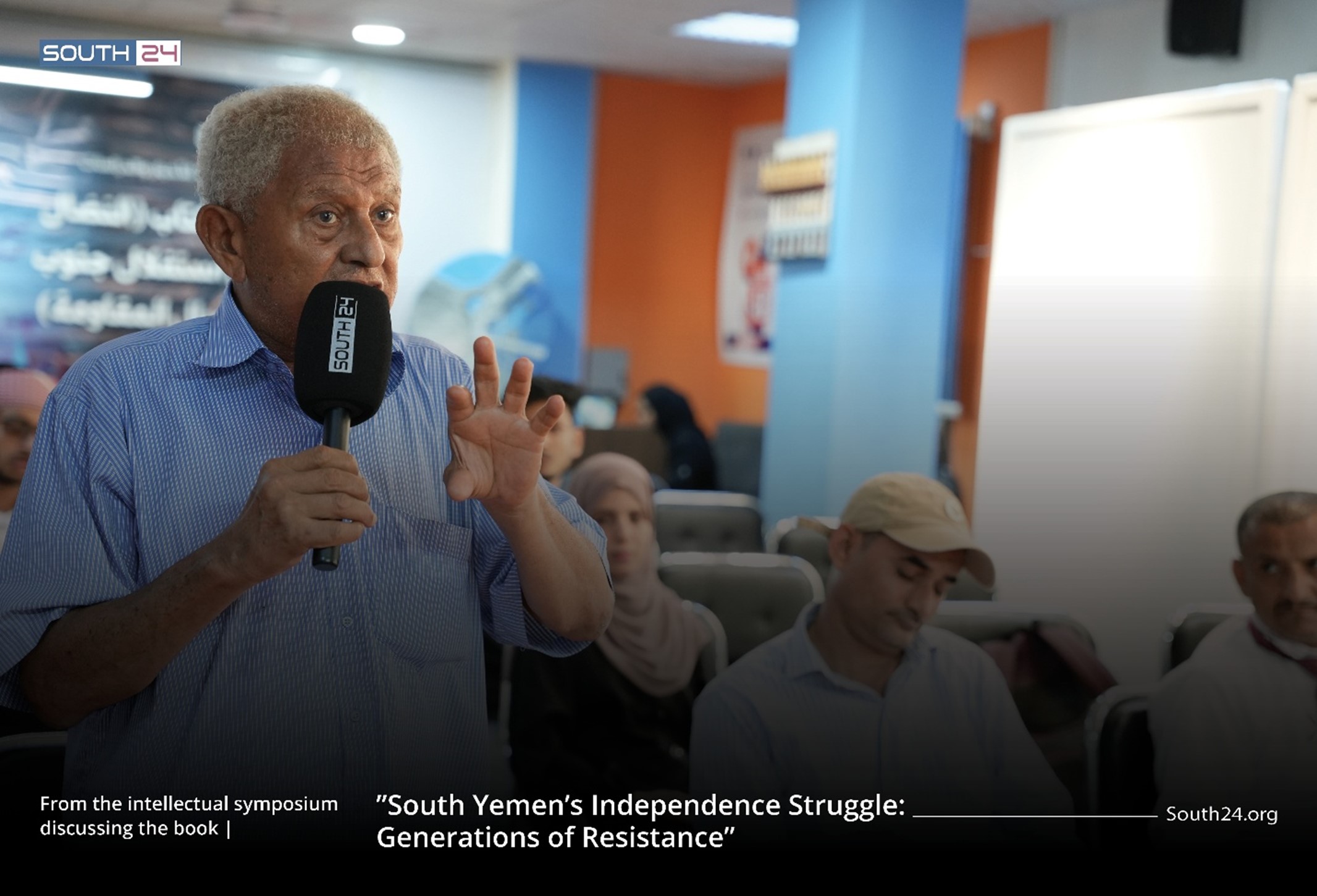
At the conclusion of the symposium, the floor was opened for interventions and questions from attendees at the event hall in Aden, in addition to participants joining through the virtual Zoom platform.