SOUTH24 CENTER FOR NEWS & STUDIES
SOUTH24 CENTER FOR NEWS & STUDIES



AQAP leader Saad bin Atef (Image cropped from Arab media – enhanced by South24 Center)
28-02-2026 at 10 PM Aden Time

“The Saudi-aligned factions, Islamist and Salafi, lack the “existential hostility” that characterized previous Southern Forces campaigns against AQAP”
South24 Center | Ibrahim Ali
Recent developments in Hadramout and Al-Mahra in South Yemen have created a new and complex landscape that has reshuffled the dynamics facing Al-Qaeda in the Arabian Peninsula (AQAP) in Yemen, imposing a reality markedly different from the one in which the group operated over recent years.
The organization, which had concentrated its military and media efforts on confronting the Southern Forces, engaging them in open battles in Abyan and Shabwa as its primary field adversary, suddenly found itself facing a fundamental shift in the balance of power and the overall shape of the conflict.
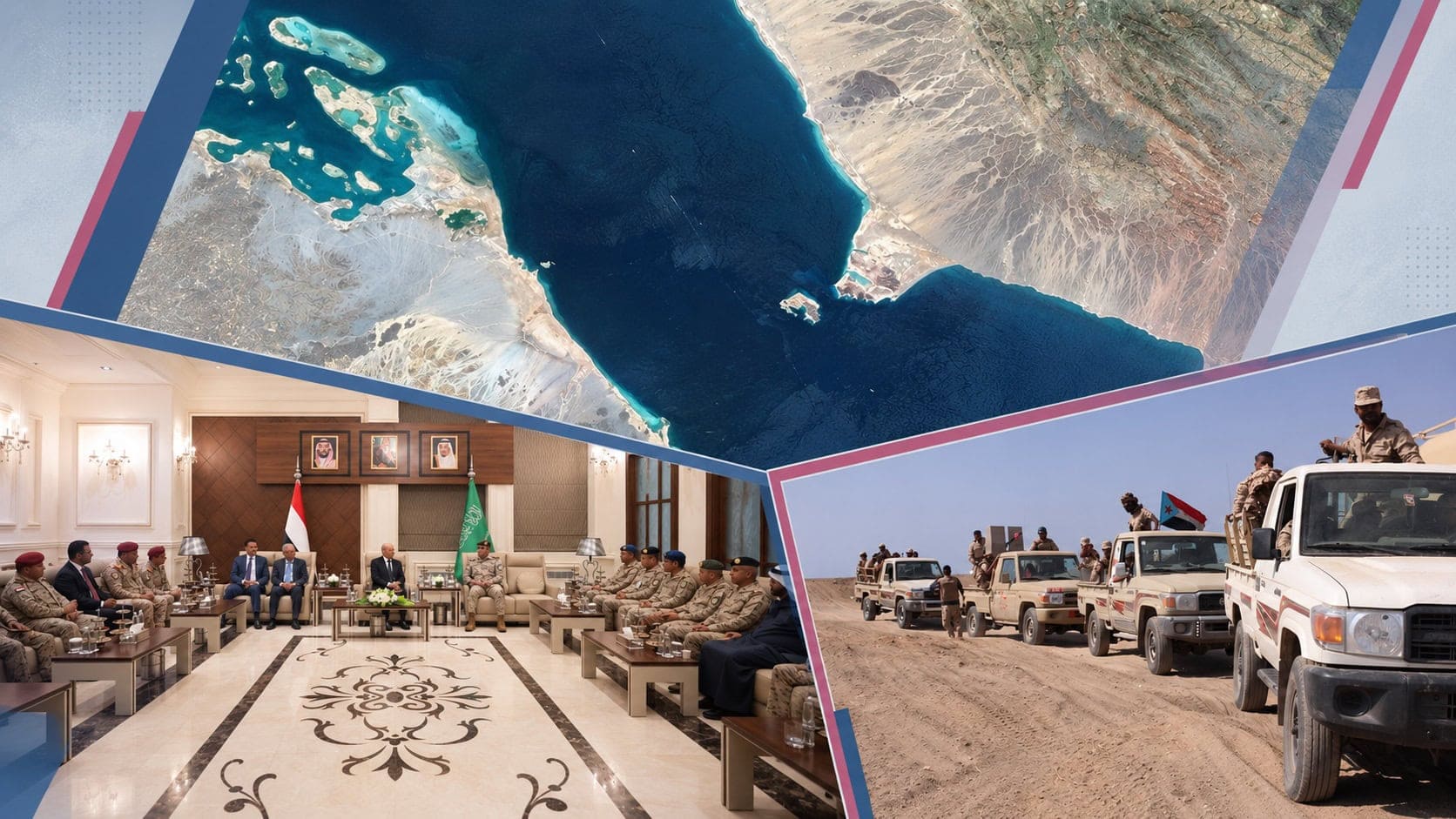
At the height of those confrontations, Saudi intervention dramatically altered the scene. Riyadh launched a military operation targeting the Southern Forces as they advanced toward Hadramout and Al-Mahra, relying on Salafi formations and units affiliated with the Islah Party.
This move was not merely military in nature; it carried clear political dimensions that redefined the character of the conflict in South Yemen and repositioned both local and regional actors.
Simultaneously, Saudi Arabia adopted a high-level political decision to end the Emirati role in Yemen and moved to dissolve the Southern Transitional Council, the political umbrella of the Southern Forces.
Regardless of its practical outcomes, this decision sent a direct message that the political and security order governing South Yemen was being redrawn, altering the rules that had shaped the previous phase.
Following the conclusion of operations in Hadramout and Al-Mahra and the withdrawal of the Southern Forces from both governorates, AQAP activity nearly ceased, both operationally and in its media output.
This silence was broken only by limited signals, most notably the group’s public celebration of the UAE’s departure from Yemen. While this reflects the depth of hostility between the two sides, it falls short of signaling a clear repositioning or the announcement of a new strategy.
Notably, the forces now expected to assume control in South Yemen are not entirely unfamiliar to the organization. AQAP previously operated in areas under Islah’s influence, such as Abyan and Shabwa, where it maintained a presence for extended periods without major confrontations, benefiting from a permissive environment and the absence of a decisive policy to eliminate it. This history makes it difficult to assume that AQAP will automatically treat the new reality as an immediate existential threat, at least in the short term.
Yet a central question remains: How will the organization respond to this evolving landscape, particularly amid growing expectations that the replacement forces will play an active role in counterterrorism? Here, security calculations intersect with political considerations.
If combating AQAP becomes a genuine priority rather than a rhetorical slogan, the organization will be forced either into open confrontation or into retreat and strategic repositioning while awaiting another opportunity.
If, however, counterterrorism remains selective and politically constrained, the current silence may represent only a temporary truce preceding a more cautious and less conspicuous and equally dangerous resurgence.
The Dilemma of Combat Doctrine
The issue lies not only in the presence of AQAP, but in the “combat doctrine” of the forces now expected to confront it. The Saudi-aligned factions, Islamist and Salafi, lack the “existential hostility” that characterized previous Southern Forces campaigns against the group. Those earlier confrontations were marked by direct and deeply personal enmity.
Experience suggests that the motivations that once placed these factions and AQAP in overlapping trenches, particularly against the Southern Forces in Abyan and Shabwa, may remain stronger than the incentives driving confrontation today.
Even with Saudi backing, any campaign against AQAP may remain limited and shaped more by external pressure than by an internally driven conviction to dismantle the organization.
Under such circumstances, the new factions may engage in what could be described as “symbolic” or politically calibrated operations, conventional and restrained engagements conducted within political limits, avoiding full-scale war. By contrast, AQAP would fight from a posture of “self-defense,” creating a cycle of persistent tension and limited clashes unlikely to culminate in a decisive military resolution or the dismantling of its on-ground presence.
Moreover, AQAP’s past experience operating in areas influenced by Islah provides it with relative reassurance. For years, it sustained its presence there without direct, decisive confrontation. That experience may now enable it to reorganize and adopt a cautious defensive strategy, aware that its new adversaries operate under a “cold doctrine” that constrains the effectiveness of any sustained campaign against it.
All of this suggests that the coming phase will be more complex than it appears: an organization prepared to maneuver and defend itself, facing factions that fight under external pressure and without personal conviction.
This “distorted equation” implies that the conflict is unlikely to be decisively resolved. Instead, it may persist in a state of chronic tension, with battlefield outcomes hostage to fragile political balances rather than to decisive military operations.
The Southern Forces
Although AQAP understands that the UAE’s departure from Yemen does not in itself end the war against it, nor constitute a decisive turning point, the group treated the withdrawal as highly symbolic and celebrated it openly.
Its leader, Saad Atef, described Abu Dhabi’s exit as the “breaking of the idol,” a phrase reflecting the strategic significance the organization attached to this development.
The rhetoric reveals that, despite recognizing that the next phase may be no less dangerous, AQAP understands that the nature of the coming war could differ from previous rounds.
The group appears to believe that the Emirati withdrawal could trigger the fragmentation, or at least the neutralization, of the local security and military architecture built with Emirati support.
However, this calculation remains fragile. Should the Southern Forces remain engaged in counterterrorism operations and avoid exclusion from that role, they would continue to pose an existential threat to the organization. Such a scenario would prevent AQAP from capitalizing on the shifts in Hadramout and Al-Mahra that it had hoped would enable it to reposition or expand its operational space.
Conclusion
Ultimately, AQAP appears to be in a phase of tactical “hibernation,” carefully observing the reshuffling underway in Hadramout and Al-Mahra.
On one hand, it may be breathing easier in the absence of what it viewed as its fiercest existential adversary, the Emirati-backed Southern Forces. On the other, it is betting on the “lukewarm” combat doctrine of the replacement factions, which may find themselves confronting the group under external pressure rather than internal conviction.
However, the organization’s celebration of shifting dynamics may be premature. Should the Southern forces remain an active field watchdog, AQAP’s aspirations to reclaim the comfort of its former positioning will collide with the hard wall of security realities. This leaves the scene open to all possibilities: either a token confrontation that grants the group a lifeline, or a renewed round of conflict that forces it into prolonged retreat, awaiting a political opening that has yet to materialize.