SOUTH24 CENTER FOR NEWS & STUDIES
SOUTH24 CENTER FOR NEWS & STUDIES


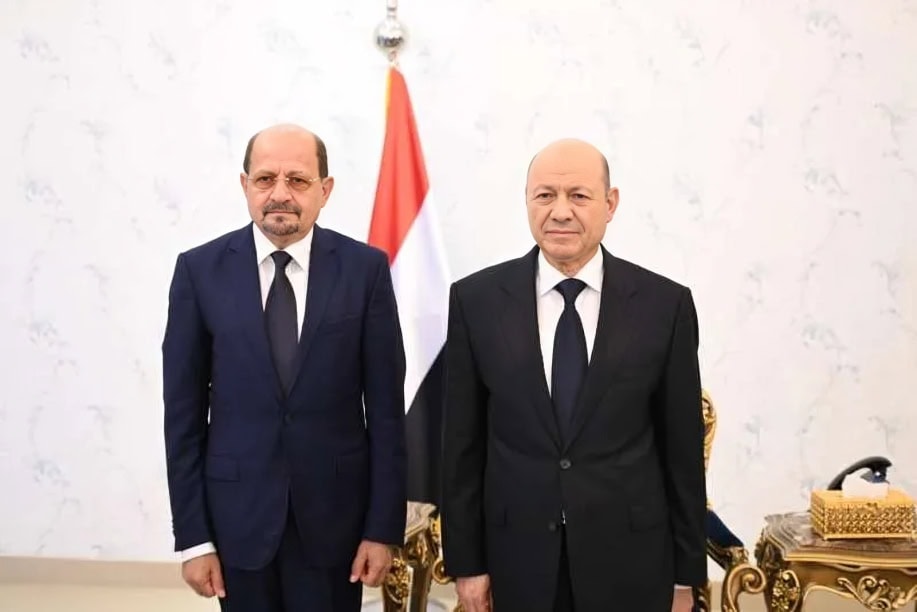
Newly appointed Prime Minister Dr. Shaya Al-Zindani, following his appointment as Minister of Foreign Affairs and Expatriates, Aden, April 3, 2024 (official).
24-01-2026 at 9 PM Aden Time

“The timing of the new government is linked to Saudi-led efforts to consolidate a political, administrative, and security track in South Yemen and to recalibrate the internationally recognized government’s camp in line with Riyadh’s priorities.”
Abdullah Al-Shadli (South24 Center)
On January 15, 2026, Yemen’s official Saba News Agency announced that Prime Minister Salem Saleh bin Brik had submitted his government’s resignation to Rashad Al-Alimi, Chairman of the Presidential Leadership Council (PLC). The move was described as paving the way for the formation of a new government aimed at keeping pace with current developments and improving executive performance.
On January 16, a decision was made to appoint Dr. Shaya Mohsen Al-Zindani, the current Minister of Foreign Affairs, as Prime Minister and task him with forming a new cabinet.
The resignation came less than a year after Bin Brik assumed office, following his appointment in early May 2025 as successor to Ahmed Awad bin Mubarak. His appointment took place during what was widely described as one of the most sensitive periods since the outbreak of the war, marked by continued currency collapse, declining public revenues, and the deterioration of basic services in areas under the control of the internationally recognized government.
During his tenure, Bin Brik recorded several indicators that were viewed as relatively positive compared to previous periods. Most notably, the Yemeni rial improved by approximately 33% against the US dollar. His government also launched a reform track that included tightening oversight of public revenues, attempting to curb certain manifestations of corruption, seeking to unify financial decision-making, and restricting the use of foreign currencies in several transactions.
However, his efforts were constrained by major obstacles, including the failure of many state institutions to remit their revenues to the Central Bank in Aden. These challenges were compounded by rapid political developments that led to his departure from Aden in December, following a crisis between the Southern Transitional Council (STC) on one side and Saudi Arabia and PLC Chairman Rashad Al-Alimi on the other.
In the days preceding his resignation, Bin Brik signaled the possibility of taking what he described as “firm measures,” including banning illegal levies at security checkpoints. The anticipated new government now raises fundamental questions, as it emerges amid military developments on the ground and an internal crisis within the PLC, placing the new cabinet in a complex political context that goes beyond purely administrative considerations.
Timing and Context
The decision to replace Bin Brik’s government and appoint Al-Zindani to form a new cabinet comes at a moment of political reconfiguration in government-controlled areas. This follows the PLC chairman’s announcement dismissing two council members, Aidarous Al-Zubaidi and Faraj Al-Bahsani, and appointing replacements. These controversial steps were part of a broader sequence of developments that began with the entry of Southern forces into Hadramout in early December, and their withdrawal in early January following Saudi airstrikes.
According to analysts who spoke to South24 Center, the timing of the new government is linked to Saudi-led efforts to consolidate a political, administrative, and security track in South Yemen and to recalibrate the internationally recognized government’s camp in line with Riyadh’s priorities.
Bin Brik’s resignation coincided with the January 15 announcement of $90 million in Saudi financial support, used to cover two months of salaries for military and civilian employees. This provided the incoming government with an initial margin of maneuver after months of stalled salary payments, amid an extremely complex economic situation and an almost complete decline in sovereign revenues, particularly with oil and gas exports remaining suspended since October 2022.
Commenting on the resignation, Dr. Mohammed Jamal Al-Shuaibi, an economics professor at the University of Aden, said that assessing Bin Brik’s departure requires an understanding of the exceptional conditions under which he managed a highly complex economic file.
Speaking to South24 Center, Al-Shuaibi noted that Bin Brik assumed office amid a sharp currency collapse, scarce resources, multiple decision-making centers, and the absence of political and security stability. These factors, he argued, severely limited any prime minister’s ability to achieve a fundamental and sustainable economic transformation.
Al-Shuaibi added that Bin Brik should be credited for attempting to address this reality through measures taken at the Ministry of Finance and revenue management, describing them as “partial reforms” that collided with political and institutional constraints rather than shortcomings in vision or competence.
He stressed that the resignation should not be interpreted as a personal failure, but rather as an acknowledgment that continuing in office with the same limited authorities would not lead to a substantive shift in the economic trajectory without real tools of influence.
For his part, academic and economic analyst Dr. Osama Mohammed Al-Sakkaf told South24 Center that Bin Brik’s resignation can be understood from two interrelated perspectives. The first is administrative and professional, as Bin Brik is credited with efforts to manage resources and address certain fiscal imbalances despite limited tools. The second is political and institutional, reflecting the scale of structural challenges facing any economic official amid the overlap of economic decision-making with political considerations and ongoing instability.
In contrast, Fares Al-Najjar, economic adviser at the Office of the Presidency, argued that Bin Brik’s resignation does not signify his exit from the political scene. Speaking to South24 Center, he said it reflects a “redistribution of roles within the decision-making system,” noting that Bin Brik’s appointment as adviser for economic and financial affairs underscores the state’s continued need for his expertise.
Al-Najjar emphasized that Bin Brik operated under extremely complex financial and political conditions and largely succeeded in managing a difficult phase with limited resources. He described the move as a transition to a position offering broader scope to influence economic policymaking, away from the pressures of daily executive work.
Al-Najjar further argued that appointing Dr. Al-Zindani as prime minister should be read within a broader political and diplomatic context. He described the choice as favoring a figure with political presence and diplomatic experience capable of leading a government at a time when economic files intersect with foreign policy, international support, and regional relations.
He added that the decision reflects a growing recognition that economic crises can no longer be managed through technical tools alone but require political capacity to mobilize international support and translate external commitments into domestic implementation, expertise Al-Zindani has accumulated throughout his diplomatic career.
Al-Najjar believes the decision to appoint Al-Zindani is primarily political, but one that carries clear economic and service-delivery objectives, particularly amid a chronic economic crisis whose core problem now lies less in diagnosis than in the absence of unified executive decision-making.
He argues that the fragmentation of power centers, the multiplicity of authorities, and weak internal cohesion within previous governments have hindered any serious efforts to address economic and service challenges. This, he says, led the Presidential Leadership Council to pursue government reshuffling as a political entry point to reorganize the landscape and create a more enabling environment for economic action.
Key Challenges Ahead
The incoming government under Dr. Al-Zindani will inherit a heavy burden of economic and service-delivery crises requiring unconventional solutions and broad authorities. Despite the previous government’s relative success in stabilizing the currency, the resumption of oil and gas exports, halted due to Houthi threats, remains the cornerstone of any sustainable financial stability.
The government also faces entrenched power centers benefiting from illegal levies and refusing to remit sovereign revenues, particularly gas revenues from Marib. Restoring state authority at security checkpoints and addressing the chronic electricity crisis remain pressing priorities.
In what appears to be a Saudi effort to prepare the political and economic environment for the new government, the Saudi Development and Reconstruction Program for Yemen announced on January 21 the signing of a cooperation memorandum with the Saudi Authority for Foreign Trade to support economic development pathways. This coincided with an agreement with Yemen’s Ministry of Electricity to purchase fuel derivatives from PetroMasila and operate more than 70 power stations nationwide, aimed at easing service pressures and improving energy supplies.
Economist Dr. Issa Abu Haliqa noted that Al-Zindani’s appointment comes at a highly sensitive stage marked by rapidly evolving political and economic variables. While acknowledging Al-Zindani’s diplomatic competence and international network, Abu Haliqa stressed that the real challenge lies not in the prime minister himself, but in the composition of the forthcoming cabinet and the authorities granted to it.
He warned that continued suspension of oil and gas exports leaves any financial stability fragile and predicted that cabinet formation would be subject to political and regional pressures and internal balances involving key actors such as the STC, the General People’s Congress, and Islah Party.
Abu Haliqa added that the most pressing on-the-ground challenges are economic and livelihood-related, particularly in Aden, which faces mounting population pressure on services. Addressing employment, income levels, and salary crises in both civilian and military sectors is critical, as is managing the rising wage bill following the unification of military and security formations. He also highlighted the need to shift toward solar and renewable energy to address Yemen’s chronic electricity crisis.
Ultimately, Abu Haliqa stressed that the success of the new government hinges on achieving security stability, activating institutional governance, strengthening accounting systems at ports, customs, and tax authorities to combat corruption, resuming oil and gas exports, hosting investment conferences, and securing effective international support.
In the same context, Dr. Osama Al-Sakkaf concluded that while the coming phase offers an opportunity to reassess policies, it does not absolve the ruling system of responsibility for success or failure. The real challenge, he said, lies in bridging the widening gap between growing public needs and limited resources.