SOUTH24 CENTER FOR NEWS & STUDIES
SOUTH24 CENTER FOR NEWS & STUDIES


United Nations
14-01-2026 at 11 PM Aden Time
Aden (South24 Center)
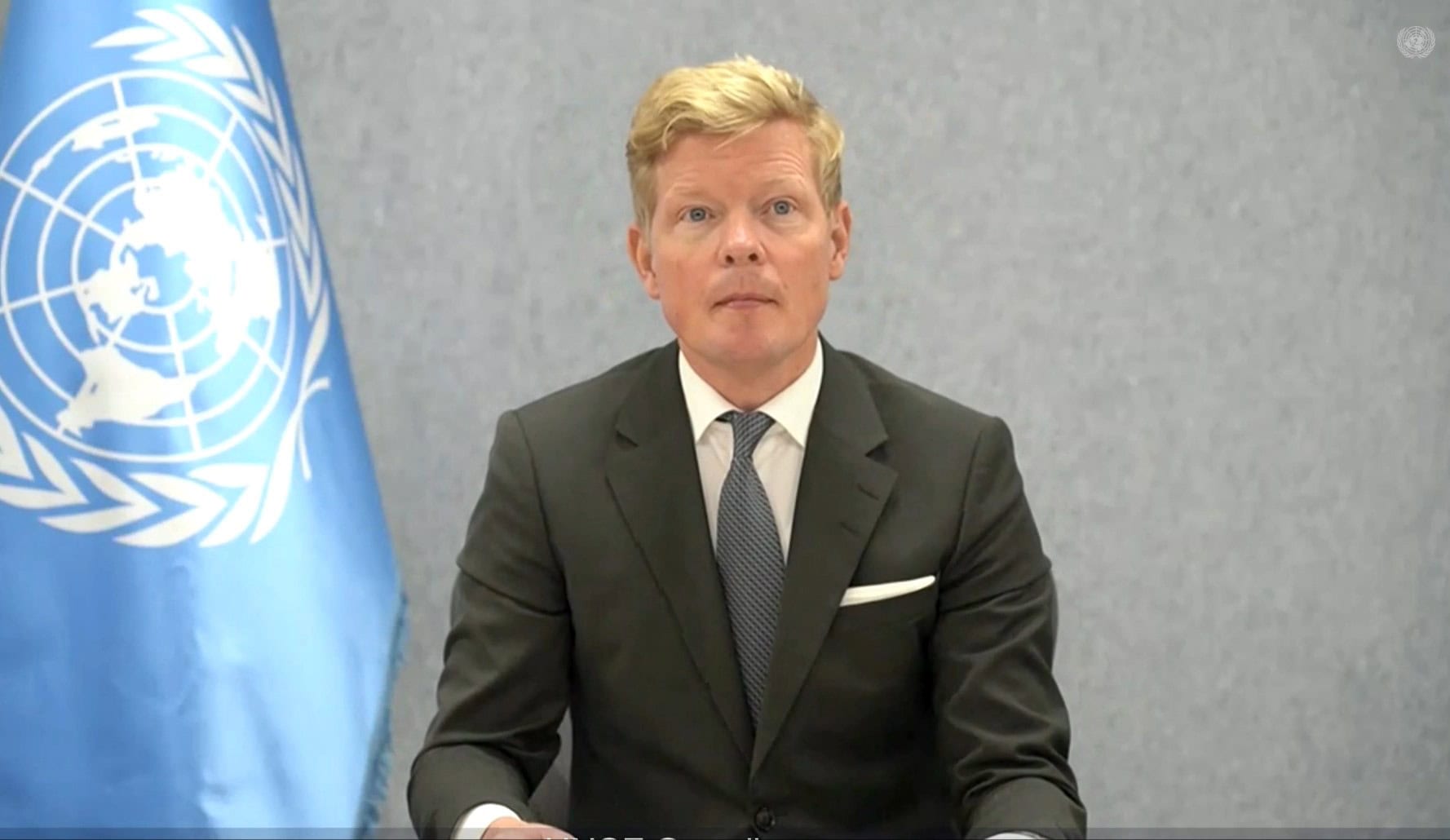
The UN Special Envoy for Yemen, Hans Grundberg, stated that the future of South Yemen "cannot be determined by any single party or imposed by force," stressing that addressing the South issue must take place through a comprehensive, Yemeni-led political process that encompasses the full political and social diversity of the South.
In his briefing to the UN Security Council on Tuesday (January 14), Grundberg noted that Yemen has witnessed rapid political and security developments over recent months that have reshaped the balance of power on the ground.
He warned that the relative calm achieved since 2022 was not a final state, but a temporary window intended for political investment to transform fragile stability into a sustainable settlement.
Grundberg explained that the recent developments in South Yemen highlighted the fragility of this balance. He pointed out that forces linked to the Southern Transitional Council (STC) sought to expand their deployment in Hadramout and Al-Mahra governorates last December, before pro-government forces, including the Nation's Shield Forces (Deraa Al-Watan), backed by Saudi Arabia, moved in early January to re-establish control over the two governorates.
The UN Envoy confirmed he has closely monitored these developments, conducting intensive consultations in Cairo, Muscat, and Riyadh with Yemeni parties and regional and international partners to contain tensions and push for an alternative political path. He welcomed regional and national efforts to address the crisis through dialogue.
In this context, Grundberg welcomed the dialogue initiative involving a spectrum of Southern forces under the auspices of Saudi Arabia, considering it an opportunity to address the South issue through political engagement.
He stressed that the future of the South cannot be decided by one party or through force, stating that it is for the Yemenis themselves, encompassing the full diversity of Southern visions, to address this complex issue with deep historical roots.
He added that the priorities expressed by Yemenis across different regions are similar -- functioning services, paid salaries, freedom of movement, and institutions that serve citizens rather than factions.
Grundberg emphasized that Yemen's political, security, and economic challenges are interconnected, noting that the South issue is linked to fundamental questions regarding the future shape of the state, security arrangements, and economic management.
In his intervention, the Saudi Representative to the Security Council stated that the STC's recent movements in Hadramout and Al-Mahra were carried out unilaterally and represent a threat to national security.
He confirmed that Riyadh is organizing a conference on the South issue with the participation of all components to reach just solutions through comprehensive dialogue.
For his part, the UAE Representative stated that his country's presence in Yemen came at the official request of the government. He highlighted the UAE's contribution to the liberation of Aden, the expulsion of AQAP from Mukalla, and the securing of the West Coast and Marib, while providing over $8 billion in aid.
The UAE Representative added: "At this critical stage in Yemen, the Security Council must not succumb to the approach of managing the conflict instead of resolving it."
The Russian Representative emphasized the importance of the diplomatic path to ensure stability, while the US Representative stressed that Houthi threats undermine global trade and require a firm stance from the Security Council to protect freedom of navigation.
Meanwhile, the Chinese Representative to the Security Council stated: "We welcome the Riyadh dialogue for South Yemen's factions and call for settling disputes through political dialogue."