مركز سوث24 للأخبار والدراسات
مركز سوث24 للأخبار والدراسات


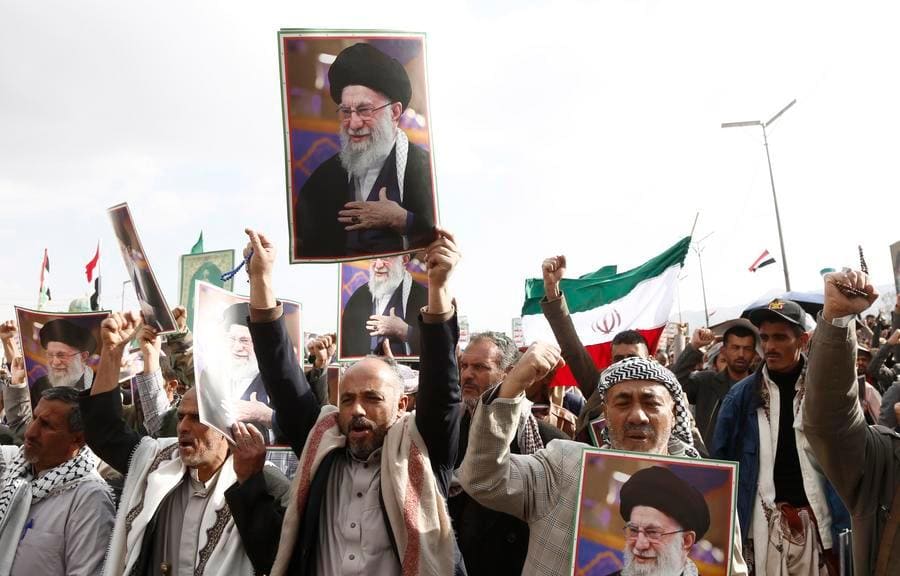
Houthi supporters take part in a rally in solidarity with Iran in Sanaa, Yemen, on March 1, 2026. (Xinhua)
03-11-2026 الساعة 8 مساءً بتوقيت عدن
Aden (South24 Center)
The Yemeni government on Tuesday (November 3) accused Iran's Islamic Revolutionary Guard Corps (IRGC) and Lebanon's Hezbollah of directly managing Houthi military operations through 21 military experts deployed across areas under the group's control, warning of the implications for regional security and international navigation in the Red Sea.
Yemeni Interior Minister Ibrahim Haidan said in an official statement that the group comprises 14 IRGC experts and seven Hezbollah members whose responsibilities extend beyond training and supplying weapons to directly planning and managing military operations and overseeing the development of Houthi military capabilities.
According to Haidan, eight experts are stationed in Hodeidah, four each in Sanaa and Saada, two each in Hajjah and Amran, and one in Al-Khokha District of Hodeidah Governorate.
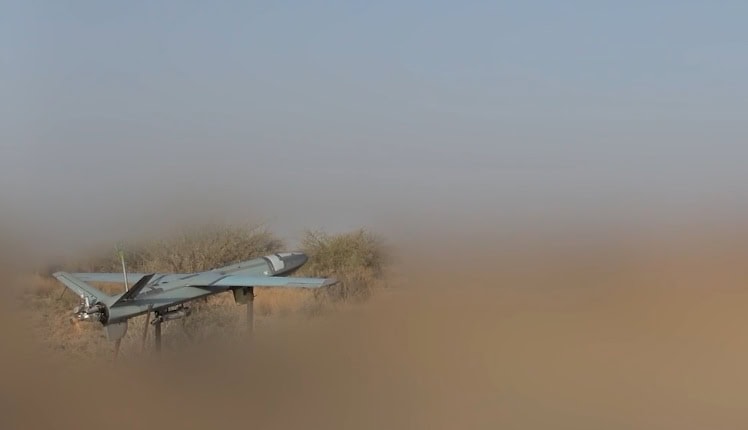
He said their responsibilities include developing ballistic missiles, drones, surveillance and communications systems, and electronic warfare capabilities, as well as managing supply networks and smuggling military components.
The experts also coordinate maritime operations, select commercial shipping targets, oversee the development of explosive-laden boats and autonomous underwater vehicles, and train Houthi fighters in mine-laying and urban warfare tactics, according to the minister.
Haidan claimed that the group is led by an IRGC military officer who publicly presents himself as Iran's ambassador, without identifying him by name. He described the experts as a "fully functioning general staff" responsible for operational planning, military command and capability development rather than merely a training mission.
In a separate statement, Yemen's Foreign Ministry condemned what it described as direct military intervention by the IRGC and Hezbollah, saying their presence violated Yemen's sovereignty and international law.
The government called on the international community to condemn the alleged intervention, take practical measures to halt the flow of weapons and military expertise to the Houthis, and dismantle the group's financing and arms supply networks.
The allegations follow earlier United Nations reports documenting aspects of foreign military support for the Houthis, although these reports have not independently confirmed the specific number of experts announced by the government on Tuesday.
In its October 2024 report, the UN Panel of Experts on Yemen said information it had gathered indicated that the Houthis received technical assistance, training, weapons and financial support from Iran, Hezbollah and Iraqi armed groups.
The report identified a role for IRGC Quds Force commander Abdul Reza Shahlai and a Hezbollah deputy within the Houthis' command-and-control structure, citing confidential sources. It also described training and technical assistance provided by Iranian, Lebanese and Iraqi experts.
In a subsequent report published in October 2025, the UN experts said foreign personnel remained active in Houthi-controlled areas, including Hezbollah members who continued to advise the group on missile and drone operations, according to confidential sources. The report also indicated that Shahlai had left Sanaa.
In July 2026, Reuters cited four informed sources, including two Iranian sources, as saying that an aircraft arriving in Yemen on July 13 had carried IRGC commanders and advisers alongside equipment linked to missiles and drones. The Iranian sources estimated that between 10 and 21 IRGC personnel were aboard, although no connection has been established between those individuals and the group identified by the Yemeni government.
Iran, however, has repeatedly denied providing military support to the Houthis or directing their operations. In a formal letter to the UN Security Council in January 2025, Tehran rejected the findings concerning its military role in the 2024 UN experts' report, describing the allegations as unsupported by credible evidence.
Houthi spokesman Mohammed Abdul Salam also previously denied Iranian and Hezbollah involvement in directing the group's maritime attacks, telling Reuters in January 2024 that the Houthis made their decisions independently. He nevertheless acknowledged that the group had benefited from Iranian expertise in military training and weapons manufacturing.
In July 2026, a Houthi media official similarly denied reports that Iranian military experts had arrived in Yemen aboard an aircraft, insisting that its passengers were civilians.
Tuesday's Interior Ministry statement did not identify the 21 experts by name or provide detailed evidence allowing independent verification of their numbers and deployment locations. It was not immediately clear whether Iran or the Houthis had responded to the latest allegations.